Mind the gap.

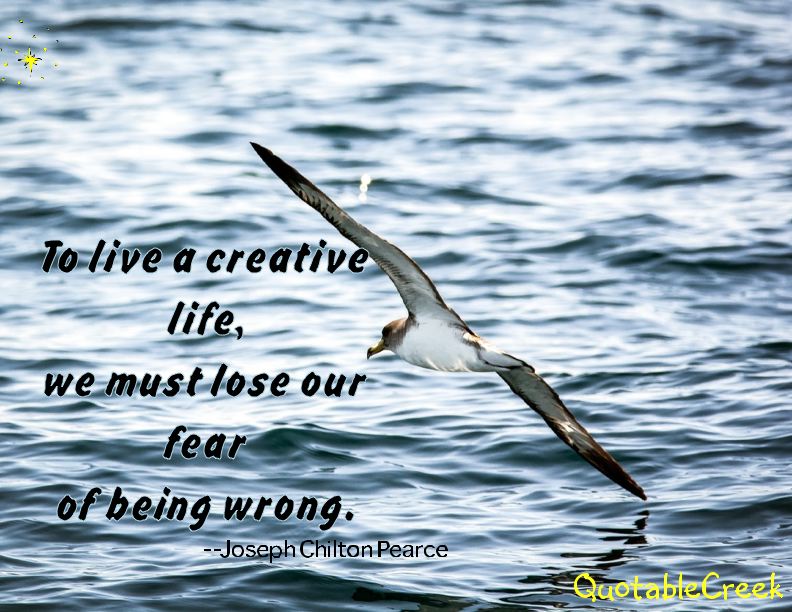
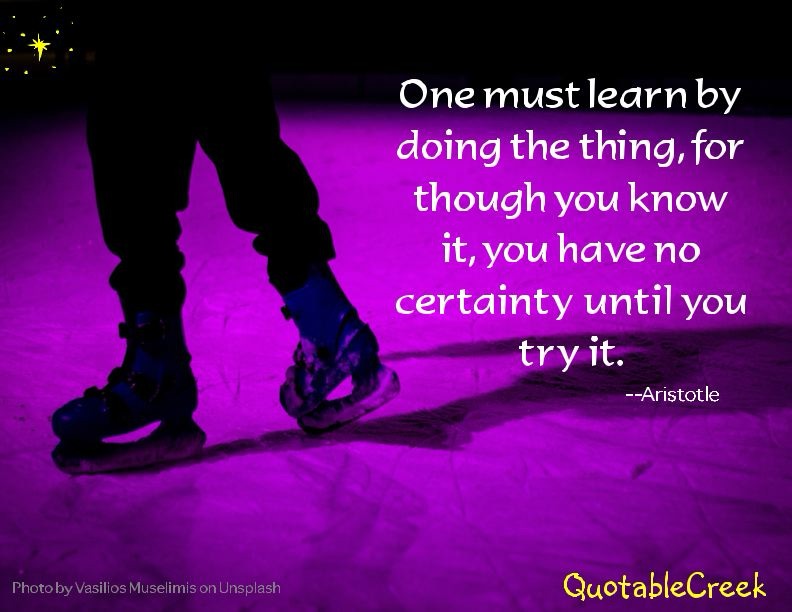
How lovely things would be if the way we picture ourselves doing something in our heads is the way it plays out in real life. The beautiful prose, perfect plotting, and subtle characterization all laying themselves down on the page when pen is lifted rather than being cruelly translated into the awkward phrasing, cliched plots, and stilted characters plaguing a first draft. If perfect leaps, spins, and arabesques just happen rather than the more likely falls on the bum. If we were already perfect rather than striving. If there were no gap between where we are and where we would like to be.

With all the armchair quarterbacks and critics out there on virtually every issue, you’d almost think effort and expertise don’t count for anything. And yet, mastery is always the result of effort. Full stop. Every master painter, skater, dancer, author, was once a novice. In fact, that journey from novice to master is the important thing, and those hacks on the sidelines are missing the point. As Theodore Roosevelt said:

It is not the critic who counts; not the man who points out how the strong man stumbles, or where the doer of deeds could have done them better. The credit belongs to the man who is actually in the arena, whose face is marred by dust and sweat and blood; who strives valiantly; who errs, who comes short again and again, because there is no effort without error and shortcoming; but who does actually strive to do the deeds; who knows great enthusiasms, the great devotions; who spends himself in a worthy cause; who at the best knows in the end the triumph of high achievement, and who at the worst, if he fails, at least fails while daring greatly, so that his place shall never be with those cold and timid souls who neither know victory nor defeat.

So this gap, between where we want to be and where we are, is where we focus our efforts and attention. Not on the critic, because everyone stumbles. But we press on. For to be great at anything takes practice and effort, and our attempt is awkward and halting, ungainly and bumbling at first. But it gets better. And those sitting on the sidelines, afraid or busy criticizing others, aren’t moving forward unless they, too, mind the gap and try.

Putting the wind underneath your wings.

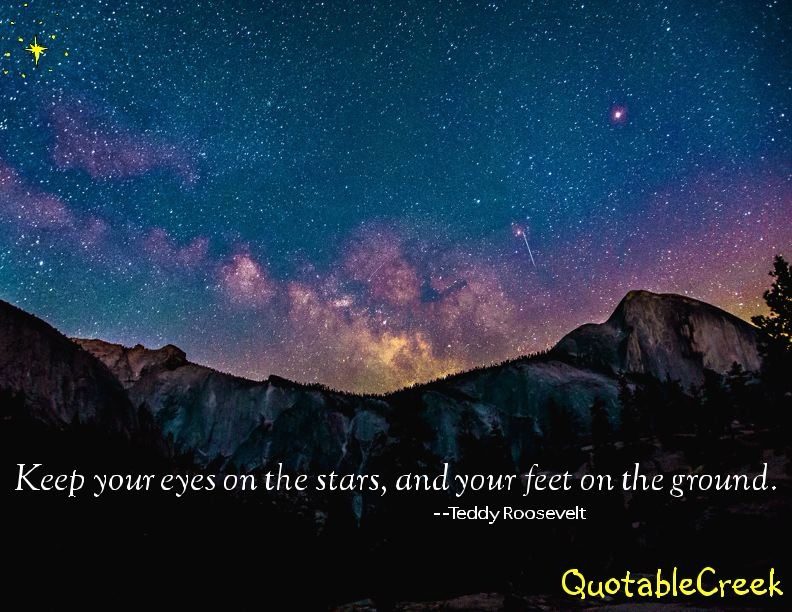
Do you have a dream? Maybe to meet someone special, learn a language, write a book, learn an instrument, play a sport, travel? What is that dream?

Now, more importantly, what work are you doing to realize that dream? There are a plenty of people who dream of being musicians who never practice their instrument, or people who dream of being published who never write, or people who dream of traveling but never save up. Why is that?

One reason is it is fun to dream that you have God-given natural talent that will be discovered by the world someday like Lana Turner sitting at the counter sipping a Coke at the Top Hat Cafe. And, while those kinds of stories may happen occasionally, the much more common story is that someone who achieved their dream worked for it, and worked hard. Michael Jordan didn’t make his high school basketball team. Frank Sinatra spent hours holding his breath to improve his phrasing. Vincent van Gogh’s early work was, well, not that great.

And plenty of people who have become successful want to perpetuate the notion that they were just born that way. It was natural talent not hard work. It was their own efforts, not a result of having many people in their corner, helping them move forward. And sometimes it seems this way, doesn’t it? We see the Olympic performance, but not the struggle that led there. We read the best-selling novel from the overnight success, but don’t see all the drafts in the desk drawer. And something in us wants to believe that those people, those success stories, are different from us. They were just born different. But that’s not the truth.

Success isn’t like winning a lottery; it’s like running a marathon. Hard, grueling, and long-term. Some people achieve their dreams because they pursue them. They don’t just dream, although the dream–something that ignites your passions–is the first step. The dream isn’t all they needed though.

But the dream gave them curiosity to explore it from every angle. And that curiosity gave them energy to practice. And that practice brought improvement. That improvement was encouraging. And that encouragement helped them stay the course. Now sometimes following the dream will result in financial or other success, but that shouldn’t be the yardstick. The yardstick should be if you are doing what you dreamed of doing.

So, yes, dream of all you can be. But then figure out some concrete steps you can take to help you get there.

Here is your country.

When we think of America, what do we picture? Surely the abundance of natural beauty, much of it, 230 million acres worth, protected by President Roosevelt. National Parks, wildlife refuges, forests, oceans, Great Lakes.

Perhaps we also think of American ideals like freedom in religion and speech, the right to petition the government for redress of grievances, the concept of equal justice under the law, the notion of the American dream that no matter where you come from, you can rise above your circumstances with integrity and hard work. American values.

Perhaps we picture our strength in diversity, of backgrounds, countries of origin, viewpoints, and culture. A heterogeneous mix of people coming together e plutibus unum, out of many, one.

President Roosevelt urged us to cherish our country, its natural wonders and resources, its history and romance, its sacred heritage for our children and children’s children. Let us heed his words. America is a special place and must be protected, valued, and nurtured.

Step into the arena.

fearwrong

There’s always a critic. Someone to point out what you did wrong, how you should have done it, what you missed. That may be just a fact of life; they’re everywhere. Sadly.

But if those critics stop us from creating, from expressing our opinions, from being unique, that’s unacceptable. We each have our own song to sing, our own art to create, our own way to play. And we must be unwilling to have that creative spirit smothered.

How empty it must be to spend all your time on the side line criticizing someone else instead of creating yourself. Why listen to those sad unfortunate souls? We need to step into the arena and let our creative spirit take shape instead.

As Teddy Roosevelt said:

It is not the critic who counts; not the man who points out how the strong man stumbles, or where the doer of deeds could have done them better. The credit belongs to the man who is actually in the arena, whose face is marred by dust and sweat and blood; who strives valiantly; who errs, who comes short again and again, because there is no effort without error and shortcoming; but who does actually strive to do the deeds; who knows great enthusiasms, the great devotions; who spends himself in a worthy cause; who at the best knows in the end the triumph of high achievement, and who at the worst, if he fails, at least fails while daring greatly, so that his place shall never be with those cold and timid souls who neither know victory nor defeat.

Yes, you will err. Yes, you are subject to criticism if you try. But just stepping into the arena is a success. Let your gifts see the light of day.

Shine.