The world lost a great comedian last week. Bob Newhart, the mild-mannered former accountant with his disarming stammer and boy like charm, always delivered the funny.
Here’s a classic to enjoy in honor of his passing:
People with a sense of humor tend to be less egocentric and more realistic in their view of the world and more humble in times of success and less defeated in times of travail.
To be humble in times of success and less defeated in times of travail is a worthy goal because no matter what comes, there will always be ups and downs. Such is life.
This moment we are in is but one in the collection of moments that make a life, a story, a history. Each moment building on the last, forward toward a powerful culmination. To stay hopeful and earnest in each moment, no matter how dire, is a testament to what we hold dear, to hope, to a belief that all things will ultimately work together for good.
As Howard Zinn says,
TO BE HOPEFUL in bad times is not just foolishly romantic. It is based on the fact that human history is a history not only of cruelty, but also of compassion, sacrifice, courage, kindness. What we choose to emphasize in this complex history will determine our lives. If we see only the worst, it destroys our capacity to do something. If we remember those times and places—and there are so many—where people have behaved magnificently, this gives us the energy to act, and at least the possibility of sending this spinning top of a world in a different direction. And if we do act, in however small a way, we don’t have to wait for some grand utopian future. The future is an infinite succession of presents, and to live now as we think human beings should live, in defiance of all that is bad around us, is itself a marvelous victory.
Do not give up on the beliefs you have. To be decent, kind, not returning hate for hate, to speak truth to power, to retain hope for a brighter future, a future willing to work for. That is a marvelous victory.
One of the most frustrating things is to be misunderstood. To have your explanations fall on deaf ears or a hardened heart.
Once I lost a friendship because my friend believed I had done something I hadn’t done. My assurances fell flat. Worse, I knew who had actually done the thing I had been accused of but didn’t say because that might jeopardize their friendship. So I became the exiled one. And watched that other friendship prosper. The protected friend knew I had paid the penalty for their own actions but wasn’t about to confess.
Misunderstandings can be so frustrating. Much better to be punished for something you actually did, a choice freely made, even if wrong. There is sense in that. But misunderstandings bring a helpless feeling coupled with an anger at the injustice of it all.
I wonder how many relationships have been lost over misunderstandings, for reasons that weren’t even true. Or how many people, even, wrongfully convicted. What of all that hurt and loss over things that aren’t even true?
What do you do in the face of that kind of senseless tragedy? One thing, of course, is to fess up if someone is bearing a penalty for something you did. But beyond that maybe is the way we open our own ears and soften our hearts to make sure that we’re not the ones cutting people off and ending relationships over things we might be wrong about.
No one captures this angst of being misunderstood better than Nina Simone with her prayer, O Lord, please don’t let me be misunderstood.
One of the most joyful things about teaching is finding the method that leads to a particular child learning where perhaps they struggled before. Finding the right key for the lock. Teaching, in this way, is one of the most creative and challenging jobs because each child is unique. Not every child can simply sit at a desk and listen to their teacher drone on and somehow absorb and master the material. In fact, a student who would prefer this lecture method is rare.
A vibrant classroom is filled with hands-on, group work, mentoring, art, music, activities, and so on. There are so many ways to teach and pair the right method with the right child. This is why a good teacher will always feel they learn as much as they teach. Of course, implicit in this challenge is having as the goal, helping the child learn. When obedience and regiment replaces learning as the goal, and the teaching method is rigid and unyielding, often students will struggle and fall through the gaps.
Teachers need to always keep their eye on the ball. The bottom line, the mission, is helping children learn.
There are so many areas where the same analysis applies. Where perhaps we fail to keep our eye on the right ball.
My pastor posted the following:
The method v. The mission. There are many ‘This is the way we’ve always done it’ or ‘Technology isn’t our thing’ or ‘Let’s just keep to ourselves’ sentiments behind each failing church. And misplaced beliefs that perhaps there’s just no space for church anymore in today’s world.
And yet.
In both teaching and ministry, there remains the mission. To help children learn. To help God’s people. And these needs in the world are growing, not shrinking.
So then the question becomes, and really always has been, how can we adapt our methods to fulfill our mission?
In his letter to the early church at Corinth, Paul sets out how love shows up in the world in his effort to help them get along. It is a frequent text for weddings:
“Love is patient and kind; love does not envy or boast; it is not arrogantor rude. It does not insist on its own way; it is not irritable or resentful…” 1 Corinthians 13:4-5.
To those about to marry, an interesting exercise is to substitute the name of your beloved each time the word ‘Love’ appears. And an even more interesting exercise, for all of us, is to substitute our own names instead of the word ‘love’:
I am patient and kind; I do not envy or boast; I am not arrogant or rude. I do not insist on my own way; I am not irritable or resentful….
How did you do? For many of us, this simple recitation shows us the exact ways and times we are being less than loving and calls us to consider those actions. Must we insist on our own way? How do we know what is right? Isn’t it possible that someone else may be right, too? Are we becoming impatient with others? Can we take a minute to rein ourselves in, breathe deeply, and begin again? Are we holding grudges? Can we let the past go and try to make our present the best possible? And so on.
These checks we can do to measure our progress and monitor our moods against the ideal of love can be very helpful to keep us on track showing up in this world as close to lovingly as we can get.
It’s okay to be heartbroken for more than one group of people at the same time. When it comes to showing compassion, we don’t have to pick sides. Sometimes, often really, maybe even always, there is hurt and anguish everywhere, and we can mourn the lot of it.
Beware people who tell you not to be concerned for this group or that group and the hurt they feel.
Beware those who try to dehumanize others.
Beware those who lump you in as the ‘enemy’ for working to assure people are treated humanely.
Beware people who draw lines between us and them.
Beware those who try to limit you to a label or single identity.
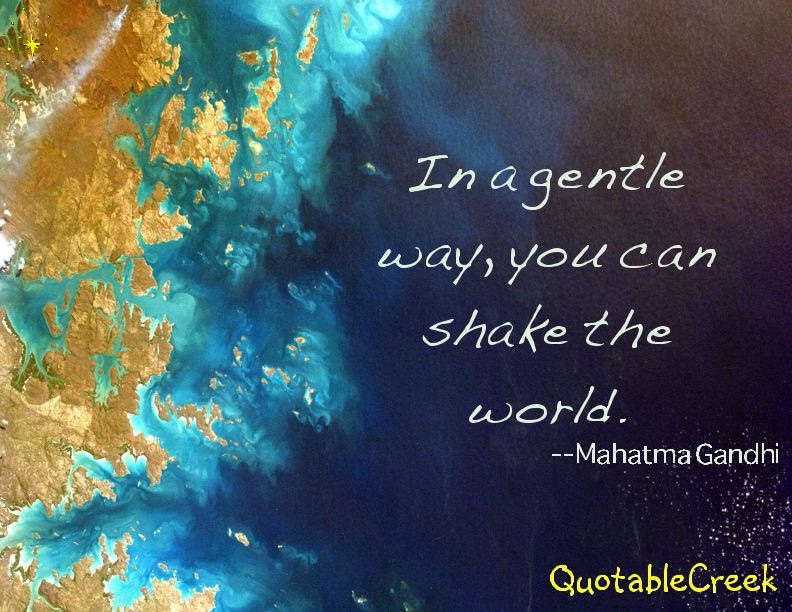
Our hearts are big enough to embrace it all. What we must save is love.
I was scrolling on what used to be called Twitter and read the following post.
This really struck me. What am I doing with the power, life, opportunities, strengths, etc., that I actually have? Not the ones I dream of having, or used to have, or might someday have, or ones I admire in someone else. Mine. Right here, right now.
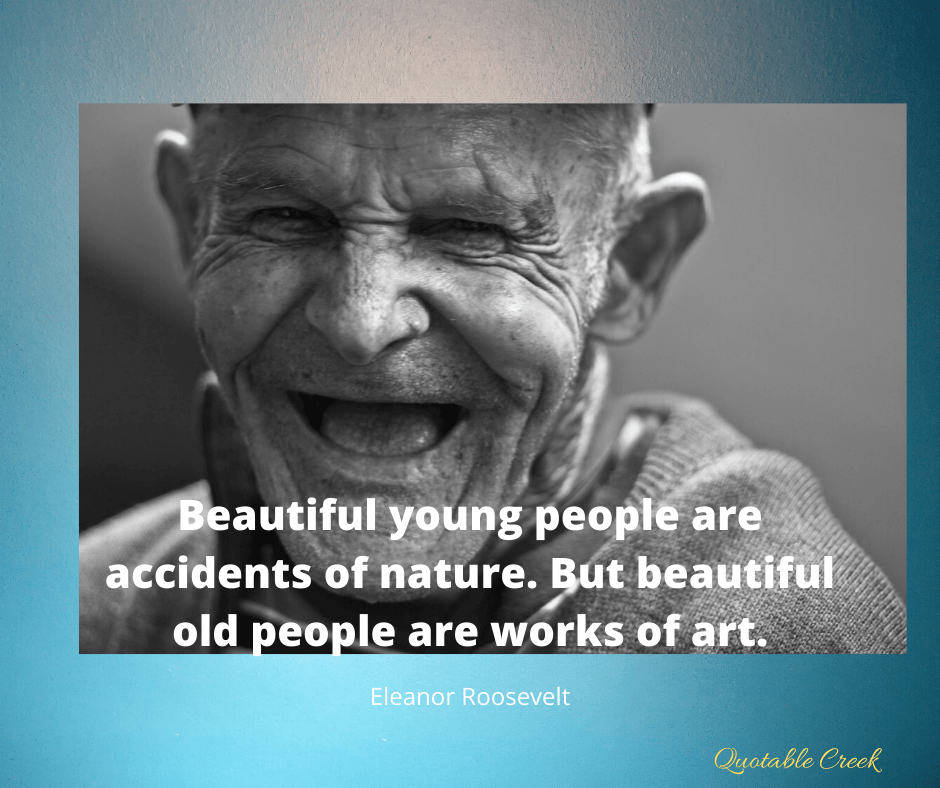
There is a certain tipping point where life becomes weighted with loss. Things shift from everything out ahead to having a full past. In many ways, it is challenging, sad, and frustrating. But in some, it can be liberating.
Consider these words from Anne Lamott:
“So many indignities are involved in aging, and yet so many graces, too. The perfectionism that had run me ragged and has kept me scared and wired my whole life has abated. The idea of perfectionism at 60 is comical when, like me, you’ve worn non-matching black flats out on stage. In my experience, most of us age away from brain and ambition toward heart and soul, and we bathe in relief that things are not worse. When I was younger, I was fixated on looking good and impressing people and being so big in the world. By 60, I didn’t care nearly as much what people thought of me, mostly.”
“I do live in my heart more, which is hard in its own ways, but the blessing is that the yammer in my head is quieter, the endless questioning: What am I supposed to be doing? Is this the right thing? What do you think of that? What does he think of that?”
“A lot of us thought when we were younger that we might want to stretch ourselves into other areas, master new realms. Now, I know better. I’m happy with the little nesty areas that are mine. For some reason, I love my softer, welcoming tummy. I laugh gently more often at darling confused me’s spaced-outed ness, although I’m often glad no one was around to witness my lapses.”
I do ‘feel I live in my heart more’ as she notes. And that grief is keen and biting. Almost as if my mind is at war with itself, one half realizing that death is a natural part of life, inevitable. While the other half refuses to accept the new reality. And yet, ultimately, it is our impermanence that gives our lives luster and meaning. And acceptance, if it should come, may not bring comfort, but peace.
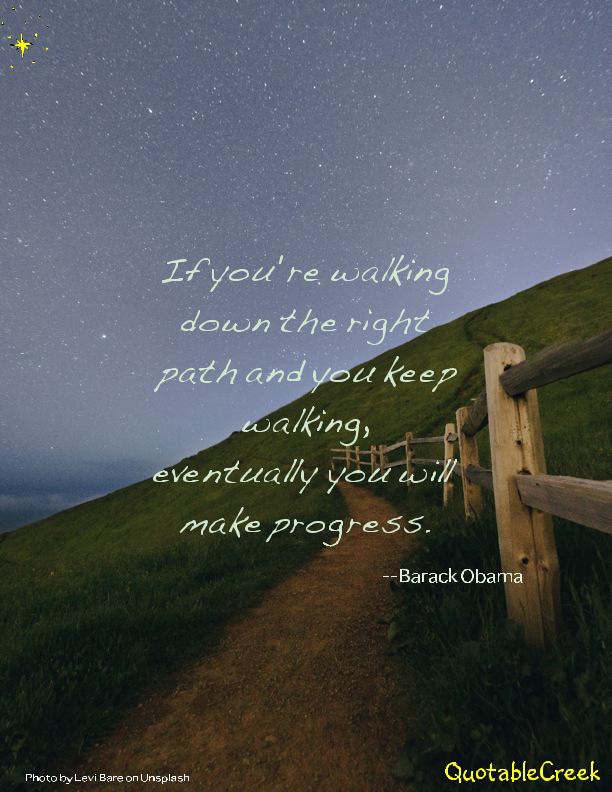
I’ve been watching Lessons in Chemistry, based on a wonderful book. One part stood out for me last night. A dog character, Six Thirty, remembers why his person, Calvin, said he loves running. Calvin said even when it is hard or you don’t think you can go on anymore, you just keep putting one foot in front of the other.
“One foot. One foot. And then sure enough, you’ll be home.”.
Isn’t that profound? In this life, we keep putting one foot in front of the other, until we’re home.
Slow and steady wins the race. We get discouraged and stop, or chase after another enticing goal, or turn back. But, if we stay true, we will make progress. One foot, one foot.
Remember the tortoise and the hare? They had a rematch recently:





 QuotableCreek.com