Caught unawares.

I was in a library once looking through a coffee table book about Los Angeles and stumbled on a picture of myself as a young teen painting a fire hydrant. I had no idea the picture had been taken and would show up years later in a book. It happened again when I was looking through a current catalog for my law school. There I was in a picture chatting with some friends in the dining area back when I had been a student. And again, in online materials for my MFA program, this time listening reasonably attentively to a lecture. Each time, I had no idea the pictures had been taken and would someday be out in the world, linking me to that place and time. What a strange feeling.

These days, though, that could happen to any of us at pretty much any time. Cameras are everywhere. It’s possible a picture of you could be captured doing who knows what. Thankfully, the pictures of me were innocuous, but imagine being in a picture like this
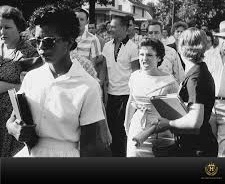
Or this
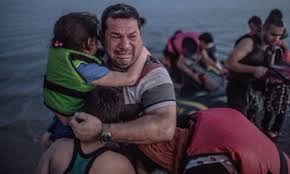
Or this
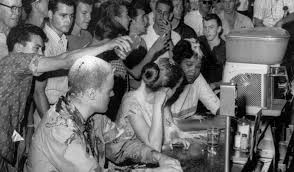
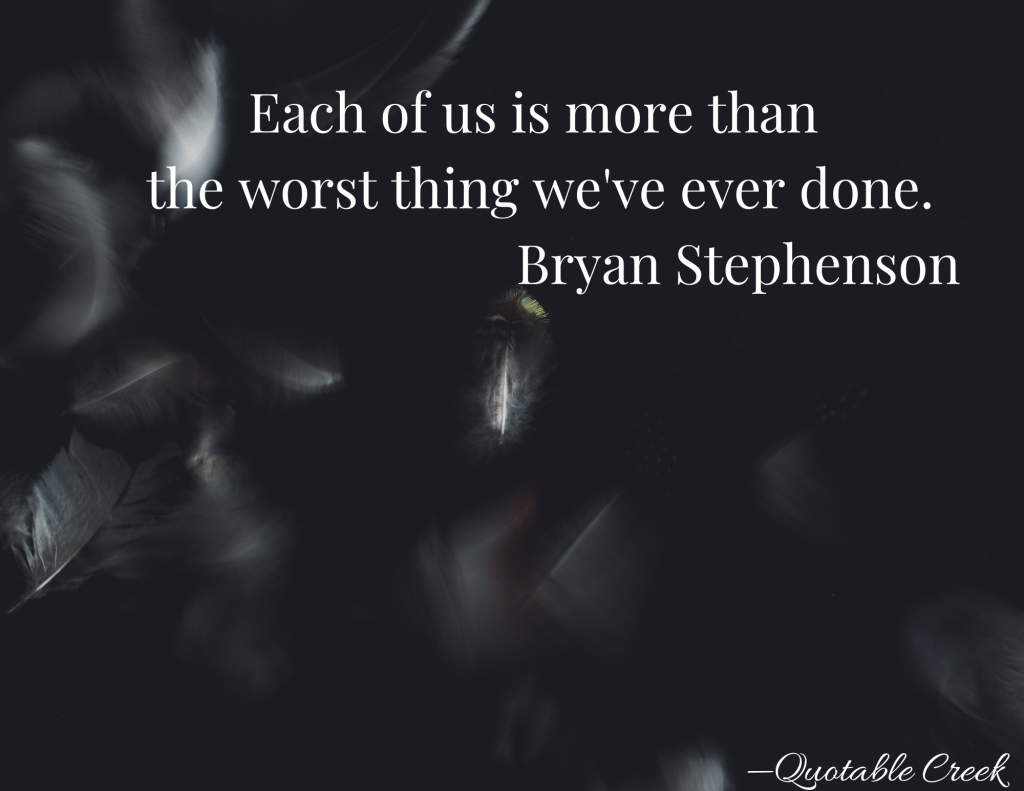
Your pain or hatred or suffering there preserved and public, forever. Bryan Stephenson, an advocate for those on death row cautions us to remember that we are each more than the worst thing we ever did. We are each complex:

Each of us is more than the worst thing we’ve ever done. My work with the poor and the incarcerated has persuaded me that the opposite of poverty is not wealth; the opposite of poverty is justice. Finally, I’ve come to believe that the true measure of our commitment to justice, the character of our society, our commitment to the rule of law, fairness, and equality cannot be measured by how we treat the rich, the powerful, the privileged, and the respected among us. The true measure of our character is how we treat the poor, the disfavored, the accused, the incarcerated, and the condemned.
We are all implicated when we allow other people to be mistreated. An absence of compassion can corrupt the decency of a community, a state, a nation. Fear and anger can make us vindictive and abusive, unjust and unfair, until we all suffer from the absence of mercy and we condemn ourselves as much as we victimize others. . . we all need mercy, we all need justice, and – perhaps – we all need some measure of unmerited grace.”

― Bryan Stevenson

In this world of prolific photos and snap judgments, we need to keep reminding ourselves that life is complex, and we each ‘need some measure of unmerited grace’.
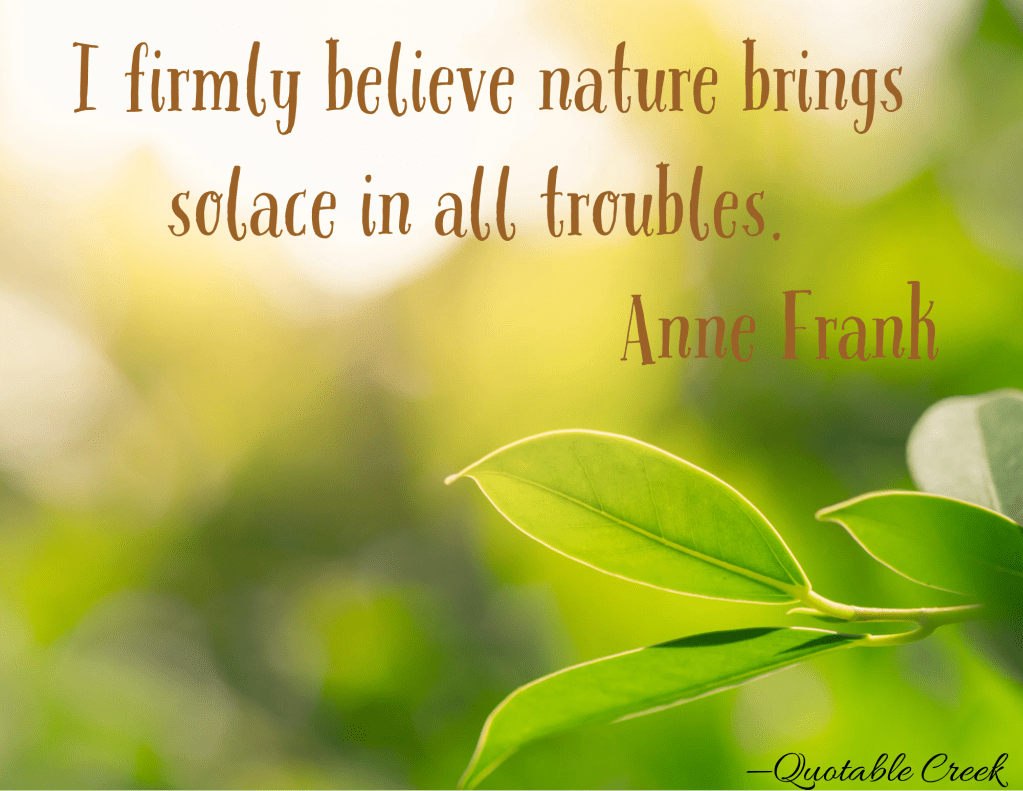
A nature prescription

Imagine going to the doctor, feeling sick and overwhelmed with the world, and getting a prescription to walk on grass. Sometimes, we just need to plug back into nature.

This article sets out some therapeutic and helpful options:

“Write Your Own Nature Prescription

You don’t need to see your doctor to start experiencing the benefits of being outdoors. Here are some simple tips from our experts on how to incorporate nature into your daily routine:

Match your sleep schedule to the sun. If your schedule allows, try to get up as the sun rises and wind down as the sun sets.

 Get early morning sun, preferably by walking outdoors. You could park farther away from your work entrance or take the dog out for a quick stroll after breakfast.

 Spend five to 20 minutes every day in green spaces. Sip your coffee on the deck instead of on the couch, or take your lunch break under a tree.

 Try “grounding” or “earthing.” This is where the “go touch grass” idea comes in. Walk barefoot to get the mail or kick off your shoes the next time you’re at an outdoor concert. (Just be careful to watch where you’re going so you don’t step on anything painful!)

 Practice nature mindfulness. When you’re outdoors, put away your phone. Instead, watch the clouds, listen to the birds or simply observe your surroundings.

 Grow a garden. And make sure to get your hands dirty: There are healthy microbes in the soil. If your access to outdoor space is limited, even an indoor herb garden can provide mental health benefits.”

Excerpt From “How Nature Heals” BY Charlotte Hilton Andersen, Reader’s Digest (May/June 2025)

Let grief be your sister.

So much of living is grief, I’ve found. Grief at the loss of people, places, times we’ve loved. Grief over relationships that are now stilted and strained which once felt unbridled and free. Grief over the not knowing, and sometimes the knowing. Grief over lost faith you once had in people who now are difficult to recognize. Grief everywhere, and it can lead to separation. Pulling away in anticipatory fear of yet more grief. And, that will lead to loneliness.

Perhaps our loneliness epidemic would be eased if we all were to slow down and notice each other, pause to realize we are here for each other,  and be vulnerable enough to allow ourselves to see and be seen.

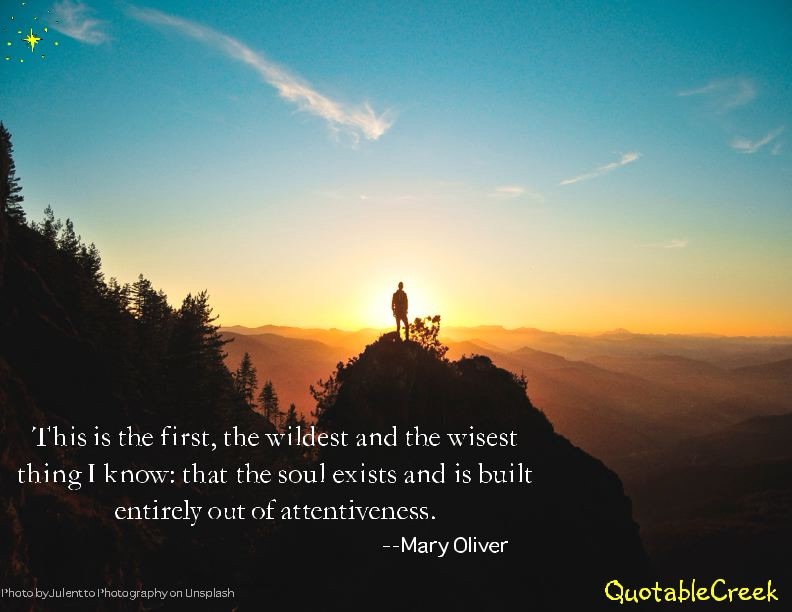
Perhaps the antidote to grief is attention, not because you will avoid the ultimate loss, but because you will capture the moments now. Cherishing our children while we are here. Nurturing our friendships while we are here. Noticing

Mary Oliver’s poems open us in so many ways– to nature, to each other, to our own hidden places. Perhaps this one on loneliness will speak to you today:

Loneliness

When loneliness comes stalking, go into the fields, consider
the orderliness of the world. Notice
something you have never noticed before,

like the tambourine sound of the snow-cricket
whose pale green body is no longer than your thumb.

Stare hard at the hummingbird, in the summer rain,
shaking the water-sparks from its wings.

Let grief be your sister, she will whether or not.
Rise up from the stump of sorrow, and be green also,
like the diligent leaves.

A lifetime isn’t long enough for the beauty of this world
and the responsibilities of your life.

Scatter your flowers over the graves, and walk away.
Be good-natured and untidy in your exuberance.

In the glare of your mind, be modest.
And beholden to what is tactile, and thrilling.

Live with the beetle, and the wind.

~ Mary Oliver ~

Situational awareness.

I was robbed recently. I was enjoying lunch with a treasured friend, undoubtedly lost in the delightful way she tells stories and looks at life, when my purse was taken right off my chair as I sat there unaware. The restaurant’s security cameras showed two women, the perps, dressed in hot pink and bright orange, casually taking my purse and then driving off in their Mercedes (!) to Target where they started to put my credit card to work. The nerve.

I realized this incident had affected me more than I realized when the dreams came. Home invasion dreams where I was in my childhood home trying desperately to figure out how to protect my mother. I grabbed her and ran to the bedroom door, but men were trying to get in there, too, in tactical gear and heavily armed. I was running through all the escape possibilities in my head, realizing we might be trapped and I wouldn’t be able to save her, when I woke up, heart pounding.

So how do I quell these troubled waters. First, of course, was to cancel the cards and block my phone. But the next step is maybe the best for easing the troubled mind. Mr. Rogers reminded children to look for the helpers in any crisis. For me, helpers would include that friend, a retired nurse, cool under pressure, who dashed to my car to prevent the thieves, who now had my keys, from stealing it. I had visions of her clinging to the hood while they used the windshield wipers to dislodge her, but that’s my brain in overdrive not the reality. Instead, there was another helper who found my purse, sans phone and credit cards, abandoned in the bushes. Due to the kindness of the people eating around us who had responded to my yelps of distress and pointed me out to her, I got my purse, and key, back. And then there was the restaurant manager who calmly rebuffed my repeated and emphatic suggestions to plaster warnings about thieves everywhere, but instead saved all the identifying information on video for the police to follow up. He mentioned we all need to cultivate situational awareness.

Situational awareness. And therein lies the rub. I want to live in a world where I can have a leisurely lunch with my friend and no one is casing the joint, looking for some unsuspecting mark to rob. That would be a better world! But it’s not this world. So if one of us needs to change, the world or me, it will need to be me.

And as I stewed on these words—situational awareness—it occurred to me that they apply to pretty much everything. We have to stay focused on the world we have, the reality, and bring our attention to that place and circumstance and base our decisions and actions on that. Not on the world we wish we had, but the one we do have. The place we are. The reality we must confront. That’s where the real work gets done and progress gets made.

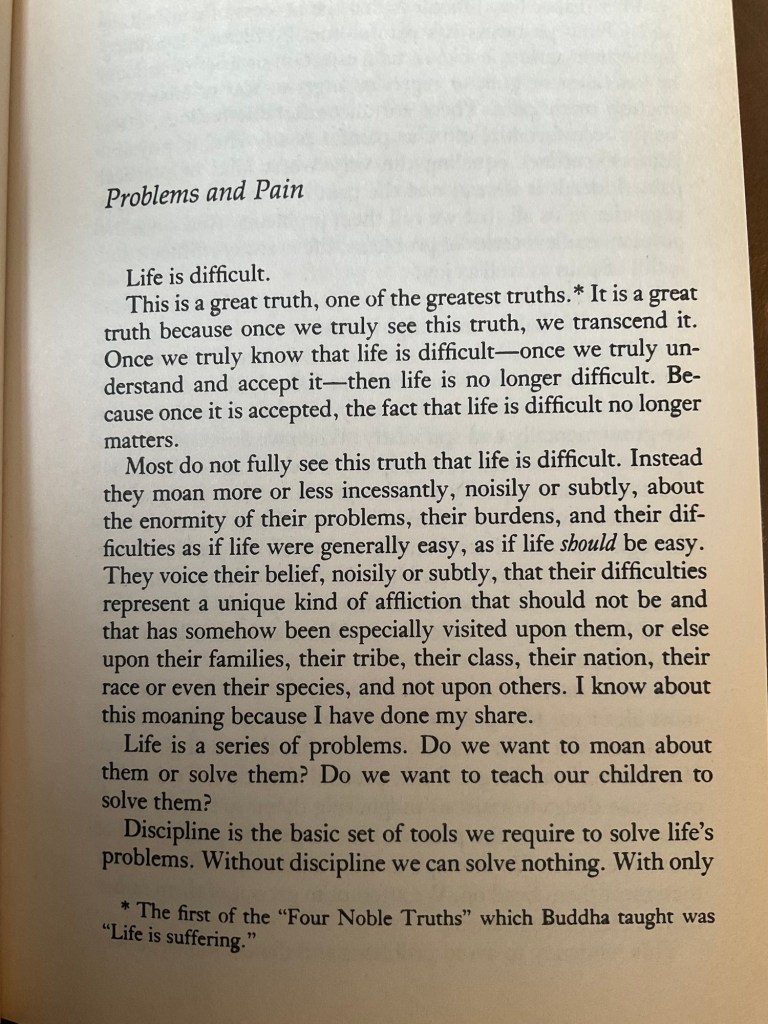
In his book, The Road Less Traveled, M. Scott Peck starts with the given, Life is difficult:

He goes on to say some equally profound things about how if the world isn’t aligning with our understanding of it, it is our understanding that must change, not that we should lie to ourselves to pretend the world supports our image. He likens it to maps. If the map you’re using isn’t getting you to where you want to go, it is the map that’s wrong, not the reality. The map must change.

As we look around, where are the places that things don’t make sense? The places our maps aren’t getting us where we want to be? Maybe things that are different now than they once were? Where do we need new maps?

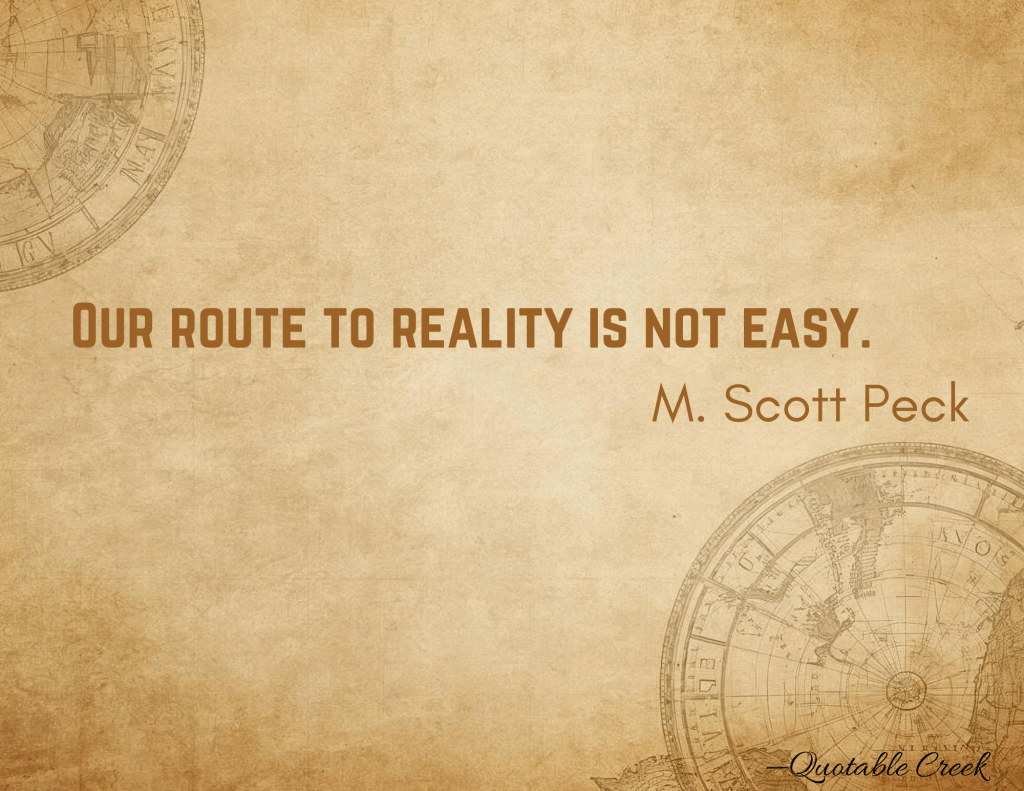
We need to stay dedicated to reality, as much as it might trouble us, and adjust our maps so we can get back on track. Peck concludes :

The more effort we make to appreciate and perceive reality, the larger and more accurate our maps will be. But many do not want to make this effort. Some stop making it by the end of adolescence. Their maps are small and sketchy, their views of the world narrow and misleading. By the end of middle age most people have given up up the effort. …Only a relative and fortunate few continue until the moment of death exploring the mystery of reality, ever enlarging and refining their understanding of the world and what is true.

Part of the jewel.

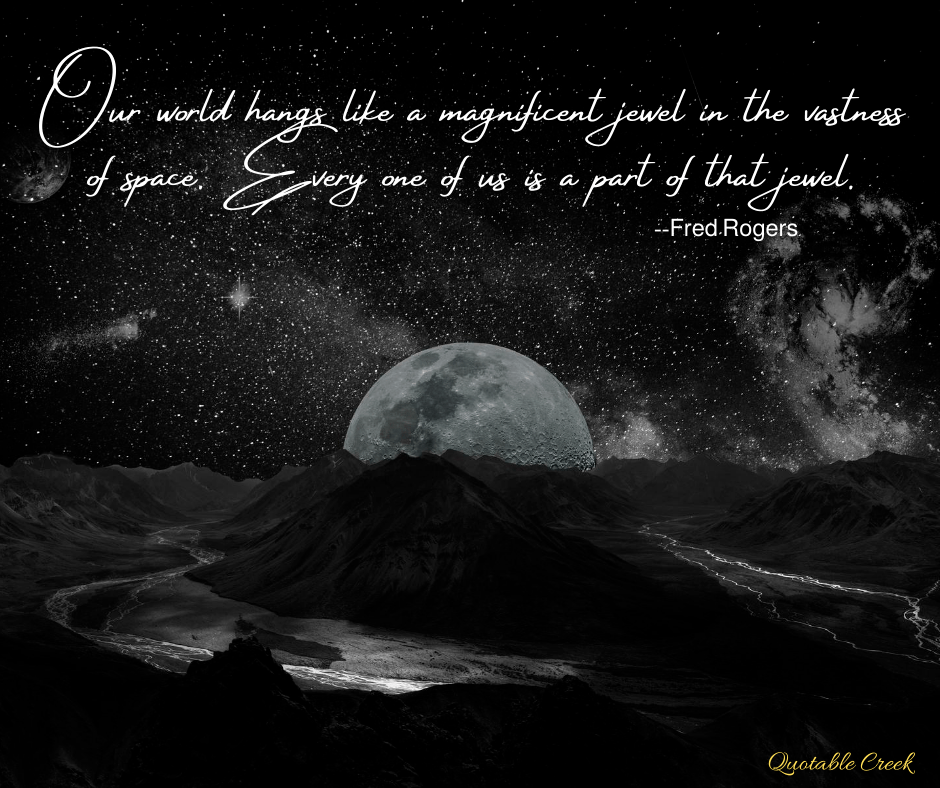
Mr. Rogers inspired generations to recognize the beauty of their neighborhoods, to search for the helpers for inspiration in any crisis, and to recognize that each individual has value and inherent worth. His words continue to echo through both good and bad times. He reminded us that it wasn’t our exteriors he liked or admired, but our interior selves, our character and trustworthiness.

Today consider his reminder to remember all those people who believed in you and made you who you are– someone capable of making the good choices to make this world a better place.

I’d like to give you all an invisible gift. A gift of a silent minute to think about those who have helped you become who you are today. Some of them may be here right now. Some may be far away. Some, like my astronomy professor, may even be in Heaven. But wherever they are, if they’ve loved you, and encouraged you, and wanted what was best in life for you, they’re right inside your self. And I feel that you deserve quiet time, on this special occasion, to devote some thought to them. So, let’s just take a minute, in honor of those that have cared about us all along the way. One silent minute.