Laugh. :)


vacationNeed to get away?

When cool tropical breezes and the gentle lap of ocean waves beckon but are not part of any realistic plan, try an alternate get-away.

Laugh.

Lose yourself in merriment.

Maybe you can rent a funny movie, or take turns telling the silliest jokes, or play a game that involves some degree of immaturity. Up the zany quotient. Find a way to laugh and lose yourself for a while at least in the funny.

To get you started, a joke:

You know why you never see elephants hiding up in trees?

–Because they’re really good at it.


What can’t you see?

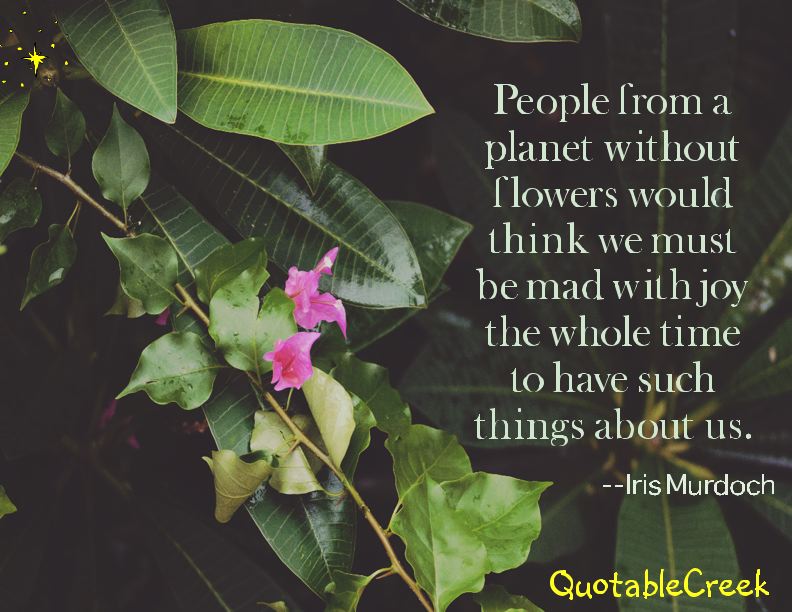
noflowers

Seeing what’s smack in front of your face is harder than it seems. We tend to take for granted things that we see day in and day out. We seek out the new novel thing and everything else becomes background. It is not that the sunset has dimmed in beauty; it’s that we have stopped pausing to watch the colors fade to black. It is not that the faces of our loved ones are any less dear and unique; it is that we have come to expect them to be there and our focus has shifted to what do we want from them now. It is not that the flower is less marvelous than when we bent down in awe as a child; it is that we have stopped bending down.

What is right there now, smack in front of you, its beauty just waiting to be noticed?

That’s revealing!

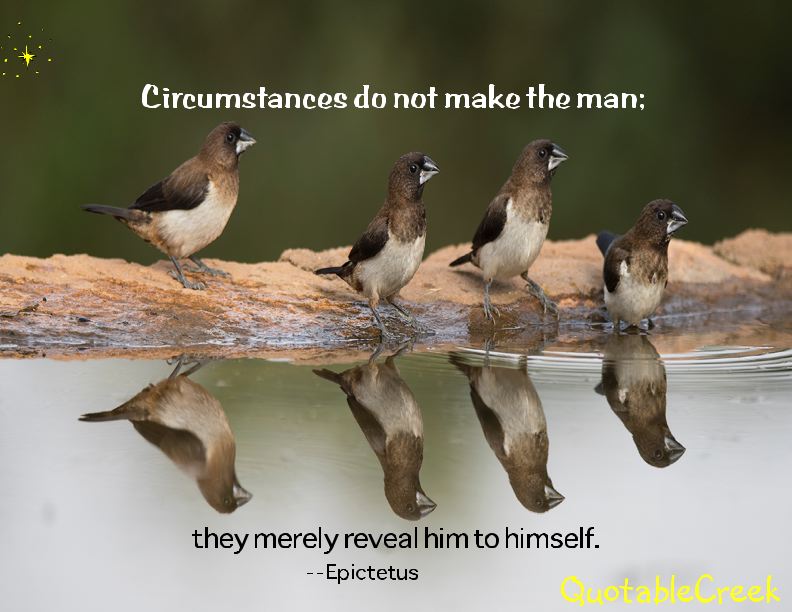
birdmirror

When the going gets tough, how do you get going? Angry, frustrated, sarcastic, insulting, sulky, controlling, mean? How we respond to stress or opposition tells us a lot about ourselves. It is in these moments where we can evaluate if we need to do some growing.

Say ahhh.

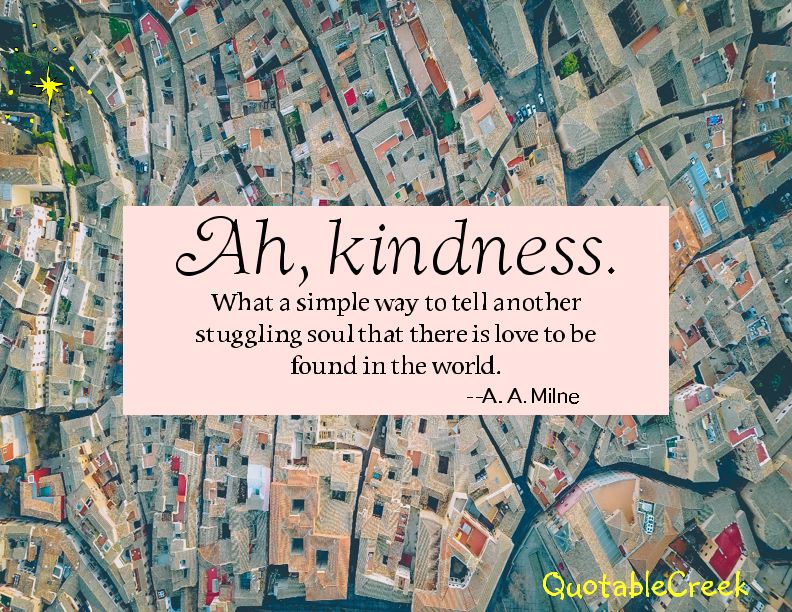
Ahkindness

What if kindness were contagious? Spreading from person to person like the most virulent flu? How might that transform a community or, even, the world?

In this classroom, kindergarteners are spreading kindness all around:

Some people might say that kindness isn’t a characteristic as common to American society as it once was.

Nevertheless, it’s standard procedure for a group of young students in one little corner of Texas County, as Plato Elementary School kindergarten teacher Amy Hathaway leads her class in an ongoing project called the “Kindness Konnection.”

Execution of the idea is three-fold: Kids mail cheerful letters to people all over the U.S., take walks to visit elderly “friends” around the Plato community and pick up trash during their outings. The first two aspects allow the students an unusual opportunity to make peoples’ days better.

“We have heard from many people who said they were having a bad day and got a letter,” Hathaway said. “They ask, ‘why me?’ I say we just do it to be nice.”

These five-year olds are spreading ripples of kindness that are reaching out across the country and making other people’s lives better. Those ripples are causing other people to send out ripples and so on and so on and so on. Their teacher marvels at the results of her little kindness experiment:

“I don’t know how not to any more,” she said. “It’s one of the most fantastic things I’ve ever done in my life. Instead of just teaching the kids to be nice, we’ve learned what friendship really is.

“We can all make a difference in this world; even a small child has the power to influence others. Kids are the greatest thing in the world, and I love sharing them with people.”

We can all send out ripples of kindness into our world. Those ripples may well create a tsunami of kindness.

Got tact?

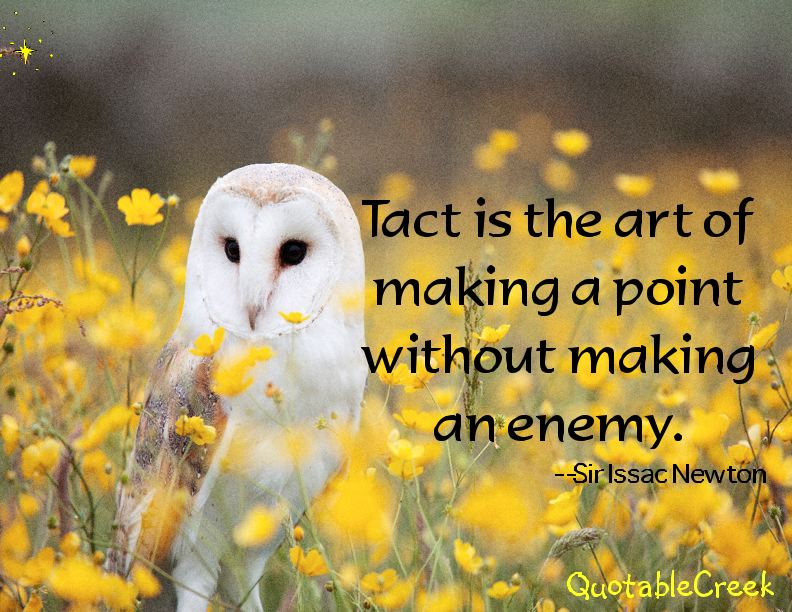
tact

Stakes are high. Tempers flare. People disagree about many things. And to defend the vulnerable and protect our world, we need to speak out. But there is a wrong way to do it–to attack the person making the argument rather than the argument itself, an ad hominem attack.

It isn’t really about whether a particular person is stupid, for example; it’s about what will best help us make progress forward. So let’s say you are able to establish conclusively with all sorts of arguments, research and data that the person you’re talking to is an ill-informed idiot. Has that moved us forward as a united people? What if instead, you were able to convince that person of a need to join together for the common good, focusing on shared values, common ground, and individual power? That just might help us all.

Focus on the issues. Fight fair.

Choose truth.

truth

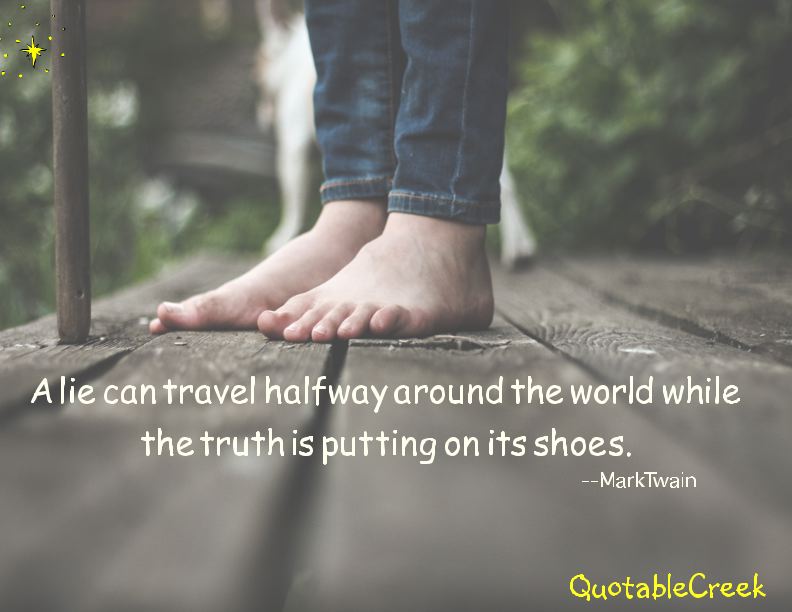
We are in the midst of a slander epidemic. In today’s world, someone can publish fake news, and it can go viral, spreading around the world in an instant. People eagerly like and share derogatory information about people they don’t care for or political candidates they oppose. Companies can crumble based on the public’s wrath over a false bit of news. People’s lives can be ruined.

And what of the effect on all of us? It is to the point where we can’t trust much of anything we read unless we do our own diligence with fact checking and research.

What happened to the truth? What happened to accountability?

As with most things, the buck stops with each of us. We can’t control the world, but we can choose whether we want to further lies. Take your time before you believe what you hear. Do your research. And let your words and actions shine with the light of truth.

Pay attention.

waterfallattn

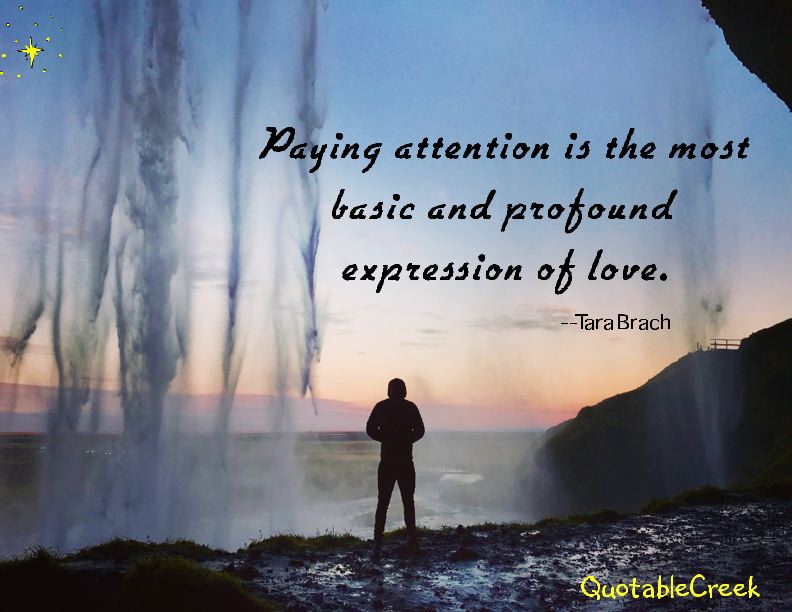
What do we miss simply by failing to pay attention? By rushing?

In 2007, in the arcade area of a subway in D.C., over a thousand people missed something spectacular. Joshua Bell, one of today’s foremost classical musicians, played a few pieces by Bach and Mendelssohn, among others, on his multi-million dollar violin. Three days before this, Bell had performed to a filled Symphony Hall in Boston where tickets for average seats went for over $100.

Over a thousand people rushed by on their way to work and failed to notice the free gift. Why?

Was it because of the context? Bell wasn’t in a tuxedo; he had an open violin case in front of him sprinkled with change and a couple bucks; the forum was mundane; Bell looked just like any other street musician.

Why didn’t Bell’s expertise and the difficulty and complexity of the pieces he played transcend the day to day and encourage people to stop and listen?

Perhaps it is because we have become a bit numb to beauty. We don’t look for it in the ordinary places. Maybe we even look away from the ordinary places.

We miss so much when we rush.

Slow down. What amazing thing is right there if only you stop to see?

What is your lens?

perception

What is your lens?

Do you see the world as friendly or hostile? How many of these biases do we bring to our relationships with each other and strangers?

So much of perception is bias. We see what we expect to see–based on what we think we know.

In this fascinating study, photographers were told different life stories about the man they were about to photograph– a millionaire, a hero, a former inmate, a psychic, a former alcoholic, a fisherman.

The photographers’ feelings about him based on those stories dramatically influenced the resulting portraits. It looked like they had photographed six different people.

How do your biases influence the way you see people? Can you set aside that perception to look a bit deeper?

Do your bit.

handsbutterfly

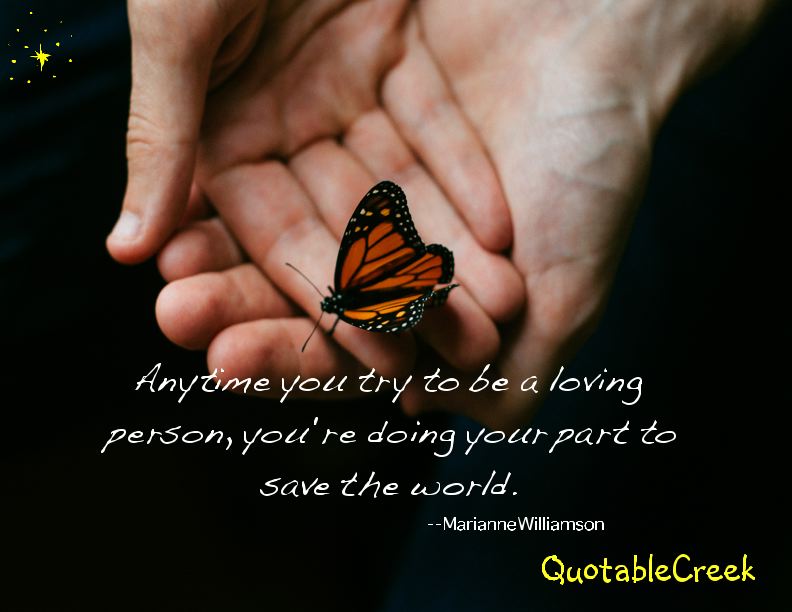
So much to do. Where to start? It is easy to get overwhelmed with the world’s problems and think there is nothing you can do to solve them. And that may well be true— if you had to work alone. But problems tend to be solved by many people, each doing their own little bit. Small actions multiplied by large numbers of people yield results.

And what about the smaller problems? Can you solve them? The answer is that you are far more powerful than you realize, and that by putting your love out there into the world you are making a difference. Maybe in profound ways.

For one guy, his little difference, his bit, saved an entire species:

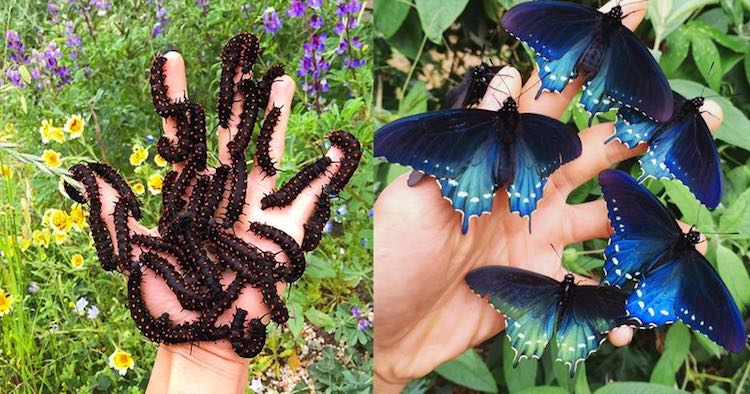
When [Tim Wong]  first learned of the predicament of the pipevine swallowtail, the 28-year-old swooped in to help by creating a screened backyard enclosure with ideal environmental conditions for the insect.

He filled it with specific plants that the insects like to feed on. Then, he gathered a group of 20 different pipevine swallowtail caterpillars from nearby areas. As he carefully nursed the small tribe of precious insects, their numbers began to quickly multiply.

Now years later, the DIY butterfly breeder brings dozens of caterpillars to the San Francisco Botanical Garden’s “California Native” exhibit every week—and thanks to Wong’s efforts, the pipevine swallowtail has been successfully repopulated in the city for the first time in decades.

Imagine that.

Pipevine-Swallotail-Butterflies-Tim-Wong

What is your little bit? What are the ways you can put love out there in the world?

Don’t for a minute think it doesn’t make a difference.

What’s your question?

soulchildren

Children have a way of cutting through the fake and getting to the real. They look around themselves and wonder why things are the way they are. Sometimes the questions they ask are tamped down, leading those kids to spend their adult lives trying to answer them:

Why can’t boys cry?

Why do we have to always pretend to be happy? (Or, to put it another way, What’s wrong with having lots of different emotions?)

Why can’t I play with those children?

Why are you lying?

Why must I accept things that seem wrong?

In this brilliant essay by Courtney E. Martin, she asks ‘What was your first question?’and taps into the power that comes from looking at the world with innocent eyes, OUR own innocent eyes. Dorothy Day, for instance, witnessed an outpouring of love and charity after the San Francisco earthquake in 1906 and wondered, why don’t people care for each other like that all the time. She went on to make that her life’s work in the Catholic Worker Movement. Susan Cain showed up at camp with books and wondered what’s wrong with wanting to be quiet. She went on to write the book Quiet about society’s preference for the extroverted. Oprah Winfrey, sexually abused as a child, went on to constantly unveil the light and dark of human existence asking, “What’s the cathartic story here?”

That child question is powerful. Things we may have gotten used to over time or now just accept as the way things are weren’t so simple to the little child in you who wondered why.

Martin says,

In some ways, these questions are so powerful because they are asked from such a pure place. Children are famously intuitive about underlying dynamics that adults assume they couldn’t possibly understand. They focus in on unspoken truths like homing pigeons and then have the audacity to speak them; the world hasn’t yet acculturated them to fearing the sound of a silence breaking. They are not, in the best of all possible ways, team players. They are inexhaustible witnesses and truth seekers.

Which is what we all are, underneath the home training and the wear and tear of decades of living on this brutal planet. Peel back the layers and we are still the little people we once were, looking around at the adults and wondering what the heck is going on. We are curious and outraged and perhaps sometimes naively sure that there is a better way.

So what was your first question? What is the question you weren’t allowed to ask as a kid? Are you still asking that question? Is there some way, now that you are an adult, that you can answer it, or at least expose it to the light of day?