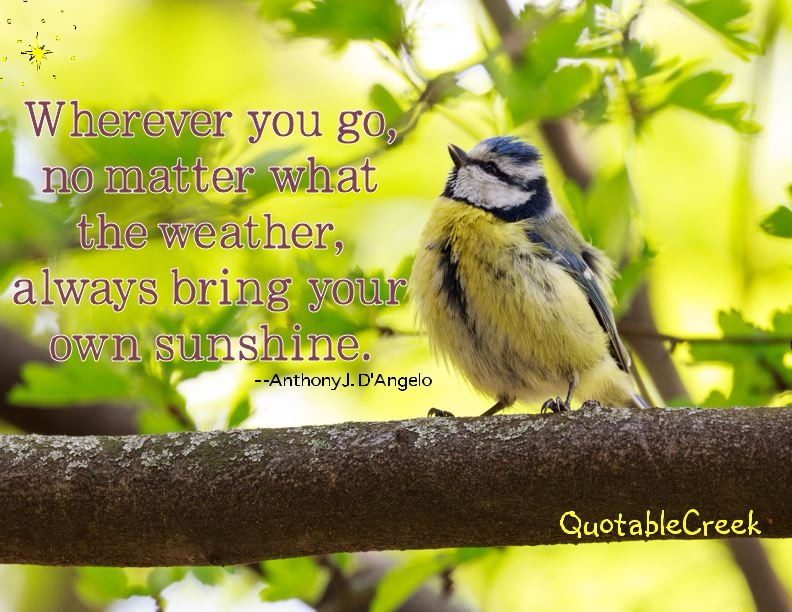
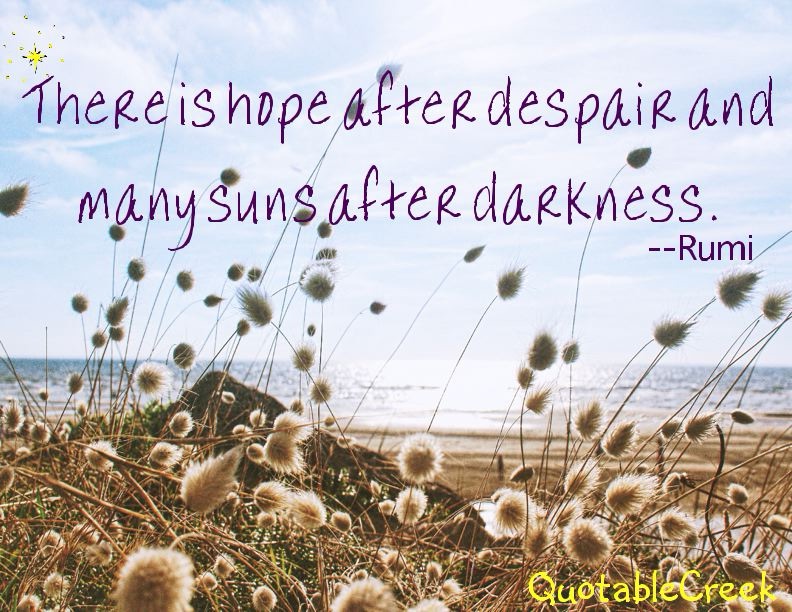
If you look carefully, can you tell who is suffering a storm in their lives? Maybe the fog of depression, the tumult of marital strife, the buffeting of indecision, the downpour of failure? Often a calm demeanor masks these inner storms. Maybe you’ve experienced some rough weather of your own. In all of these situations, your personal sunshine–a warm smile and cheerful disposition–can quiet the storms, or at least make people feel not quite so lonely until the sun shines again. Today, bring your sunshine with you; you never know who is in a stormy place.
Patience is tough. But even in the most aggravating times of waiting, nature keeps going and sends us messages of hope. Dead looking trees budding, flowers blossoming, birds singing and looking for places to build their nests. Warmth seeping back into the frigid ground.
Have you ever had a conversation where what you have to say doesn’t even seem to be part of the conversation? Someone can ask you how you are, and you reply, and they just go on talking about whatever is on their mind as if you’ve not said anything? It’s really more a monologue than a dialogue, since only their concerns are discussed.
It’s frustrating. And lonely to be in that kind of conversation.
Listening is such an easy way to show concern and care for someone else. Responding to what they say, being engaged, asking questions, actually including them in the conversation rather than treating them like they’re only there to hear what you have to say.
In this world of increasing narcissism, self-absorption, and loneliness, listening needs to make a comeback. Not just listening while you’re thinking up what your response will be or how you can divert the conversation back to you and your concerns, but listening. Real listening.
Perhaps the person you’re talking to could really use an opportunity to be heard.
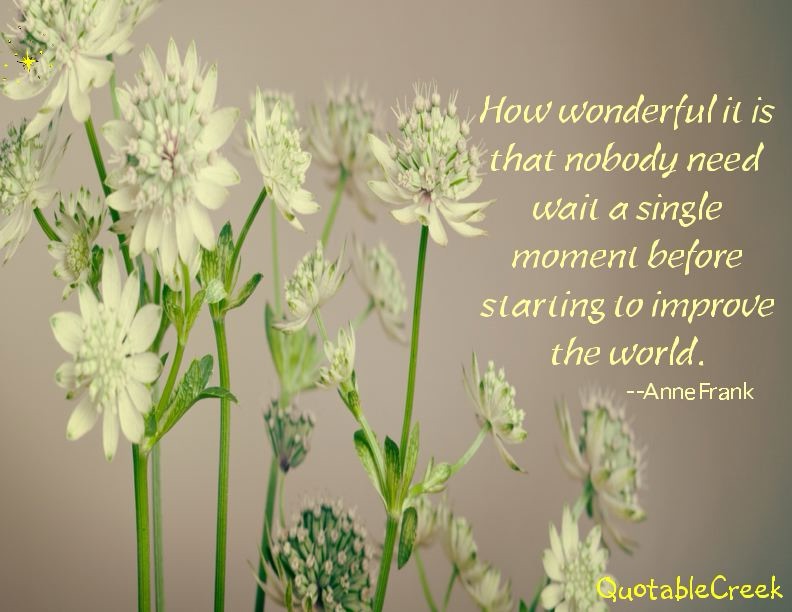
What tools do we need before we start to improve the world? What are we waiting for? Perhaps we are waiting for extra money or time. Perhaps we are waiting for retirement. Perhaps we are waiting to get all our own issues squared away first before we start thinking about helping someone else with theirs. Perhaps we are waiting for someone to ask us for help.
But consider Anne Frank. Forced to live in hiding to avoid the Nazi round-up and murder of Jews, she had little contact with the outside world. She, herself, was in mortal danger around the clock. She was just a kid, really, someone we think of helping rather than being the helper. And yet her attitude was so full of optimism and hope, it continues to shine now, decades later, lighting a weary world.
What a difference an attitude makes! She didn’t wait for the right time or resources. She didn’t wait until she could have a huge impact on the world. She didn’t wait until she was old or famous or wealthy. She didn’t even wait until she was safe. She started right then with what she had. A cheerful disposition, a concern for her family and the others in hiding with her, a willingness to step forward and try to make the world a better place.
What can you do to improve the world? Isn’t it wonderful that you can start right now?
What is one bright thing in your day? One shining star or saving grace? Sometimes the simplest of things can light up our mood and day, and start things in the right direction.
For inspiration, consider this poem:
Success by Ralph Waldo Emerson To laugh often and much; To win the respect of intelligent people and the affection of children; To earn the appreciation of honest critics and endure the betrayal of false friends; To appreciate beauty, To find the best in others, To leave the world a bit better, whether by a healthy child, A garden patch or a redeemed social condition; To know even one life has breathed easier because you have lived. This is to have succeeded.
Answer: Play. Question: What is something children do that adults need desperately?
What did you like to play when you were little? Can you remember losing track of time because you were busy tracking caterpillars or coloring or sculpting sandcastles or building a fort? Is there any way you can take a break today and play?
It can’t be all work, worry, stress, repeat. We need to find time to play, too.
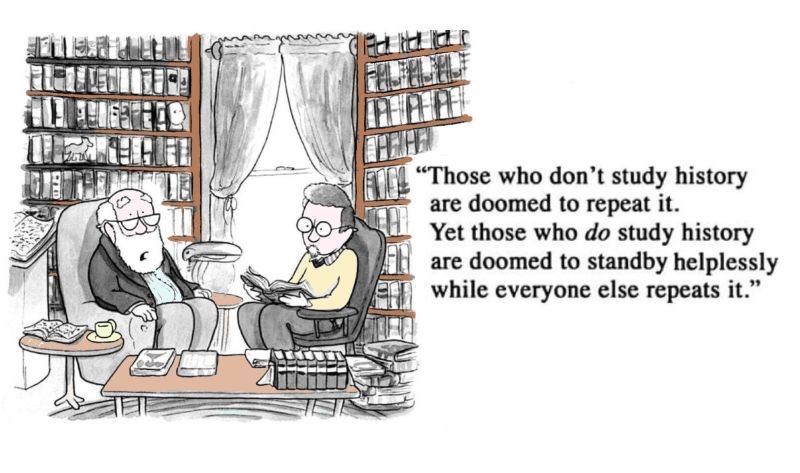
One of the greatest frustrations of life is not being able to change the past, whether it is to remedy that stupid thing you just said or the larger elements of fractures in society leading to war. The only things we can really do with the past are to live with it, learn from it, and figure out how to move forward. For those who study history, seeing ugly patterns reemerge and take shape can be horrifying.
And yet, it is not all gloom and doom. Indeed, we are not helpless:
One of the curses of history is that we cannot go back and change the course leading to disasters, no matter how much we might wish to. The past has its own terrible inevitability. But it is never too late to change the future.”
― Heather Cox Richardson
We can learn from history what it takes to resist. We can remember who the real heroes were in dark times and emulate them. We can draw on community and coalitions to fight for the common good. We can continue to believe that integrity counts, that honesty and fidelity and honor matter, that kindness will always heal, and that love is, not only good, but the answer to any question.
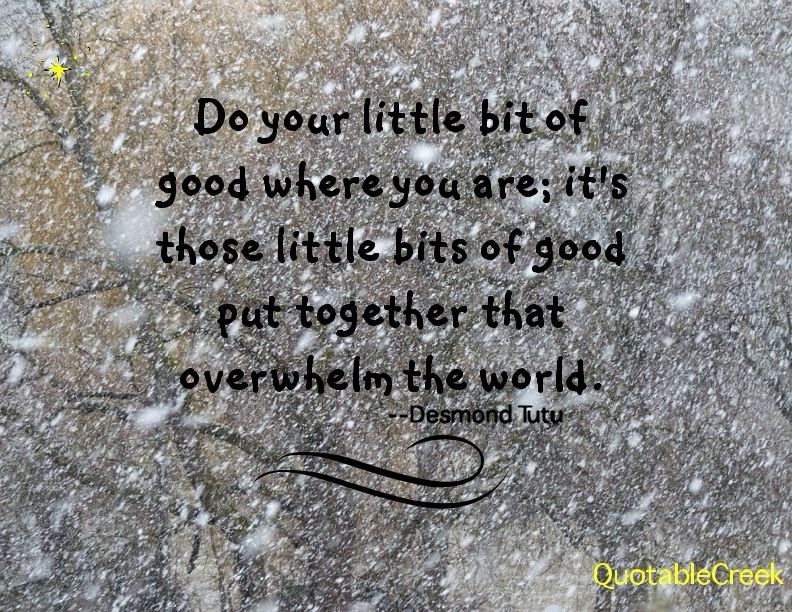
We can fight. With whatever tools we have: words, money, presence, we can take a stand, doing our little bit of good.
As Desmond Tutu said:
Do your little bit of good where you are; it’s those little bits of good put together that overwhelm the world.
There are things in this life that break us. Usually they involve some sort of loss—of health, of life, of relationship, of stuff. Despair is a crippler. You can’t breathe; you can’t think; you can’t see a way out. The world becomes very small until it feels like you are living in a tiny bubble apart from everything and everyone, floating along fragile in your pain. At times like these, you have to force yourself to hope and to push through. Start with your breath. In and out, in and out, until it is smooth and full, rather than broken with the catch in your throat from the threatening cry. Keep at that, smooth and full, smooth and full, smooth and full until you can open your eyes and start noticing beauty, maybe, at first, in the tiniest of things. A drop of dew on the grass, the feel of breeze on your skin, laughter of a child, the bud of a flower, birds in flight. Keep at it. No one said it would be easy. Keep at it. Smooth and full, smooth and full, smooth and full.
Bless the comforters, those who reach out and see others hurting and grief stricken, and offer them solace. Who sit with those going through difficult times, and give of their presence. Who offer kind, comforting words.
We sometimes think those who are good at comforting don’t know loss of their own, but the opposite is probably true.
As said by Rainer Maria Rilke:
Do not assume that he who seeks to comfort you now lives untroubled among the simple and quiet words that sometimes do you good. His life may also have much sadness and difficulty, that remains far beyond yours. Were it otherwise, he would never have been able to find such words.
Perhaps the only good to come of great loss is the ability to recognize it in others and offer them comfort and companionship.