How do we pray.

preciouslife

What does it mean to pray anyway?

Is it a prayer when we breathe in the scent of the baby in our arms as we close our eyes against the press of tears and think, “Thank you, thank you, thank you”?

Is it a prayer when we groan with the weight of hopes and dreams unrealized and unclear and seemingly out of reach?

Is it a prayer when we crumble to the ground, broken, and whisper, “Help. Please help me.”

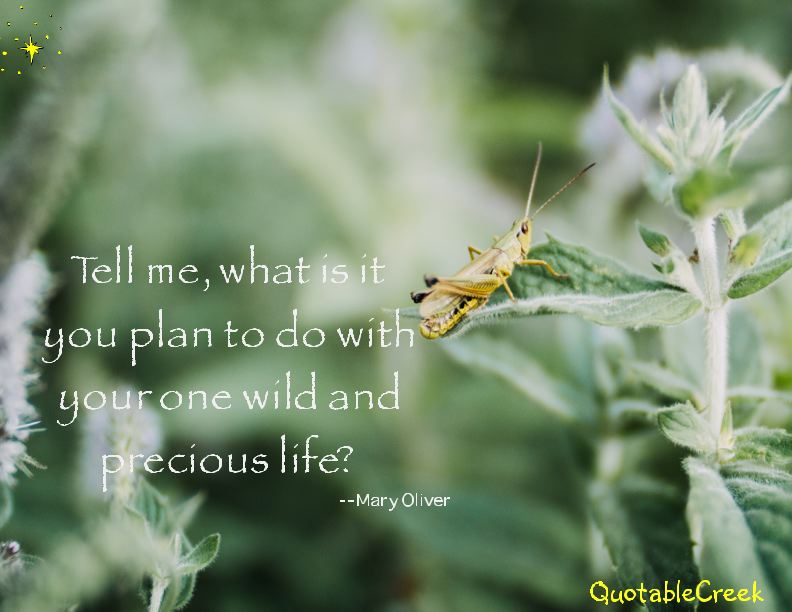
Is it a prayer when we stand in awe of creation as Mary Oliver does of this grasshopper:

The Summer Day

by Mary Oliver

Who made the world?
Who made the swan, and the black bear?
Who made the grasshopper?
This grasshopper, I mean-
the one who has flung herself out of the grass,
the one who is eating sugar out of my hand,
who is moving her jaws back and forth instead of up and down-
who is gazing around with her enormous and complicated eyes.
Now she lifts her pale forearms and thoroughly washes her face.
Now she snaps her wings open, and floats away.
I don’t know exactly what a prayer is.
I do know how to pay attention, how to fall down
into the grass, how to kneel down in the grass,
how to be idle and blessed, how to stroll through the fields,
which is what I have been doing all day.
Tell me, what else should I have done?
Doesn’t everything die at last, and too soon?
Tell me, what is it you plan to do
with your one wild and precious life?

Yes, all of it. It is a prayer every time you are grateful. It is a prayer when you reach out in hope. It is a prayer when you glimpse something more, deeper, wider than the here and now. Paying attention to whomever or whatever is right in front of you and to the longings of your own heart puts you in the middle of the miraculous unfolding all around us.

Tell me, what is it you plan to do with your one wild and precious life?

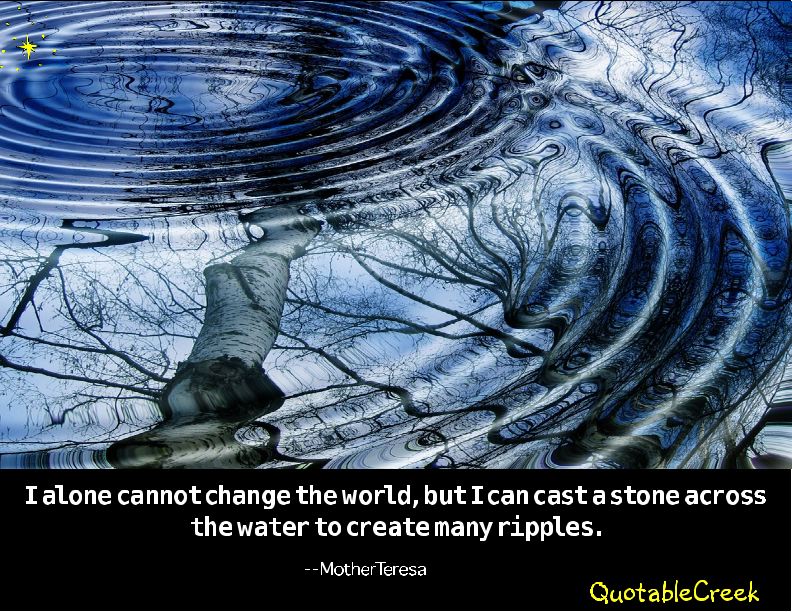
Make a ripple.

mtripples

In “Sound of Thunder“, Ray Bradbury introduced the idea that one tiny butterfly could have a far-reaching ripple effect on later historical events:

In the year 2055, time travel has become a practical reality, and the company Time Safari Inc. offers wealthy adventurers the chance to travel back in time to hunt extinct species such as dinosaurs. A hunter named Eckels pays $10,000 to join a hunting party that will travel back 65 million years to the Late Cretaceous period, on a guided safari to kill a Tyrannosaurus rex. As the party waits to depart, they discuss the recent presidential elections in which an apparently fascist candidate, Deutscher, has been defeated by the more moderate Keith, to the relief of many concerned. When the party arrives in the past, Travis (the hunting guide) and Lesperance (Travis’s assistant) warn Eckels and the two other hunters, Billings and Kramer, about the necessity of minimizing the events they change before they go back, since tiny alterations to the distant past could snowball into catastrophic changes in history. Travis explains that the hunters are obliged to stay on a levitating path to avoid disrupting the environment, that any deviation will be punished with hefty fines, and that prior to the hunt, Time Safari scouts had been sent back to select and tag their prey, which would have died within minutes anyway, and whose death has been calculated to have minimal effect on the future.

Although Eckels is initially excited about the hunt, when the monstrous Tyrannosaur approaches, he loses his nerve. Travis tells him he cannot leave, but Eckels panics, steps off the path and runs into the forest. Eckels hears shots, and on his return he sees that the two guides have killed the dinosaur, and shortly afterward the falling tree that would have killed the T. rex has landed on top of it. Realizing that Eckels has fallen off the path, Travis threatens to leave him in the past unless he removes the bullets from the dinosaur’s body, as they cannot be left behind. Eckels obeys, but Travis remains furious, threatening on the return trip to shoot him.

Upon returning to 2055, Eckels notices subtle changes – English words are now spelled and spoken strangely, people behave differently, and Eckels discovers that Deutscher has won the election instead of Keith. Looking at the mud on his boots, Eckels finds a crushed butterfly, whose death has apparently set in motion a series of subtle changes that have affected the nature of the alternative present to which the safari has returned. He frantically pleads with Travis to take him back into the past to undo the damage, but Travis had previously explained that the time machine cannot return to any point in time that it has already visited (so as to prevent any paradoxes). Travis raises his gun, and there is “a sound of thunder”.

Bradbury’s genius in considering how small seemingly insignificant changes can alter the future has, of course, become a standard sci-fi plot device. But how about applying the principle to the present. What can we do now to ensure a better future for us all? We can’t possibly know the effect of the small acts of kindness we do each day. But we do know that one kind act leads to another, ever onward, each person touched by kindness more likely to pass it on, creating an entire chain, then web, outward, expanding farther and farther as it goes. That ever-expanding ripple of kindness can perhaps circle the world if we could only track it.

In this heart-warming, and tear-jerking (in a good way) video, one man discovers just how powerful a little gesture of kindness can be.

What can you do today to start ripples everywhere you go?

SaveSave
Now is the time.

timebuddha

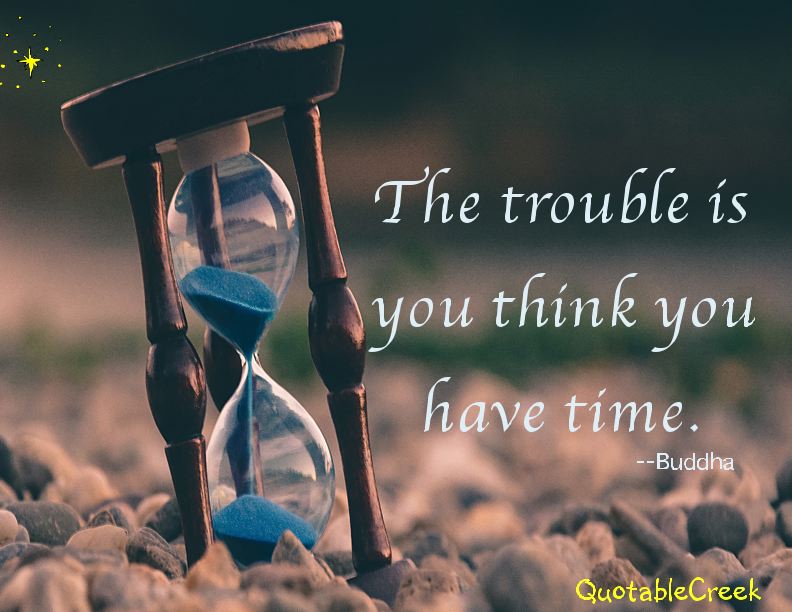
Many of us carry around the kind things we mean to say or do as some sort of internal To Do list for when we get to it. Maybe tomorrow. Maybe next year. But if those kind things are what you want to do or say before you have no more chances to do or say them, you had better get on it. The promise of a new day is not really a promise. It is definitely not a guarantee. At most, it’s a hope.

So say those kind words. Do those kind things. Not just because you may not ever get the chance if you wait, but because they will enrich the lives of those other people who have no idea about what thoughts and intentions you are carrying around locked up in your head undisclosed.

Who’s your neighbor?

neighbor

What would the world look like if we were to actively do the things Jesus taught us: Turning the other cheek? Loving our neighbor as ourself? Loving and praying for our enemies? Welcoming the children? Feeding the poor? And so on.

To the degree that imagined reality is at odds with what we are seeing, that is where we are called to act, think, and behave differently, to close that gap.

Yes, we do not need to meet violence with violence. Yes, the whole world is made up of our neighbors, including those who don’t think and look like us. Yes, we must show compassion and concern for our enemies, love and protect our children, and use our resources to help the big picture. Yes. Yes. Yes.

Imagine what a world that would be!

Not knowing is part of knowing.

explain

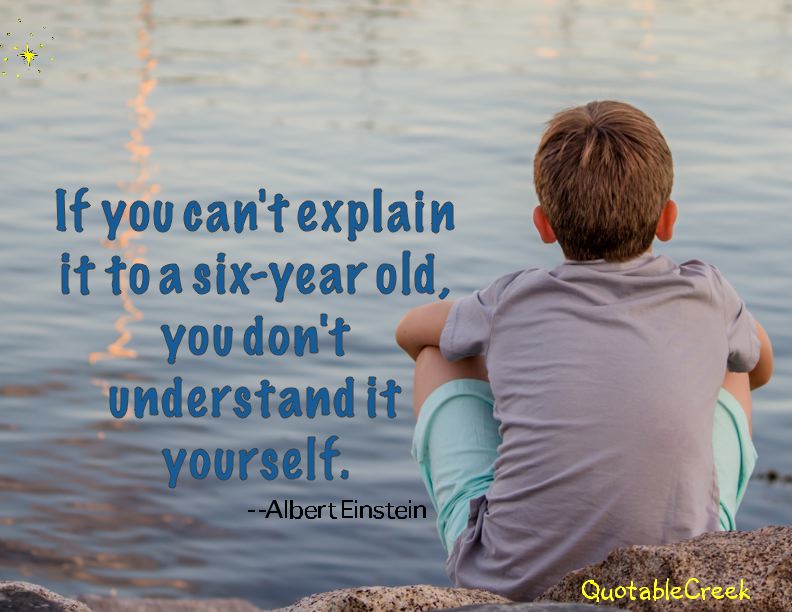
There are sure a lot of people who have all the answers and are only too happy to explain the world to you at length. Puffed up chests, throats clearing, outstretched fingers to point you to the truth as only they can best explain it to you.

But do they have all the answers, really? Isn’t there much about which we must proceed on faith rather than knowledge?

What if God himself were to frame the questions? Then how would these know-it alls fare?

Then the Lord spoke to Job out of the storm. (Job 38) He said:

“Who is this that obscures my plans
    with words without knowledge?
Brace yourself like a man;
    I will question you,
    and you shall answer me.

Where were you when I laid the earth’s foundation?
    Tell me, if you understand.
Who marked off its dimensions? Surely you know!
    Who stretched a measuring line across it?
On what were its footings set,
    or who laid its cornerstone—
while the morning stars sang together
    and all the angels shouted for joy?

“Who shut up the sea behind doors
    when it burst forth from the womb,
when I made the clouds its garment
    and wrapped it in thick darkness,
10 when I fixed limits for it
    and set its doors and bars in place,
11 when I said, ‘This far you may come and no farther;
    here is where your proud waves halt’?

12 Have you ever given orders to the morning,
    or shown the dawn its place,
13 that it might take the earth by the edges
    and shake the wicked out of it?
14 The earth takes shape like clay under a seal;
    its features stand out like those of a garment.
15 The wicked are denied their light,
    and their upraised arm is broken.

16 “Have you journeyed to the springs of the sea
    or walked in the recesses of the deep?
17 Have the gates of death been shown to you?
    Have you seen the gates of the deepest darkness?
18 Have you comprehended the vast expanses of the earth?
    Tell me, if you know all this.

19 “What is the way to the abode of light?
    And where does darkness reside?
20 Can you take them to their places?
    Do you know the paths to their dwellings?
21 Surely you know, for you were already born!
    You have lived so many years!


Ah, not so smug now, are they, those knowers-of-everything? What anyone knows is but a speck in the vastness of all there is to know.

Maybe a bit of humility is in order.


Step into the arena.

fearwrong

There’s always a critic. Someone to point out what you did wrong, how you should have done it, what you missed. That may be just a fact of life; they’re everywhere. Sadly.

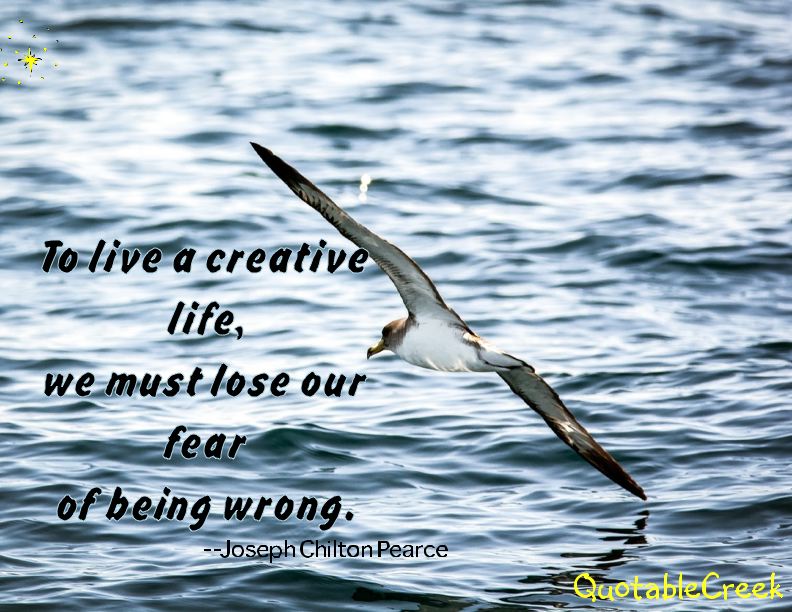
But if those critics stop us from creating, from expressing our opinions, from being unique, that’s unacceptable. We each have our own song to sing, our own art to create, our own way to play. And we must be unwilling to have that creative spirit smothered.

How empty it must be to spend all your time on the side line criticizing someone else instead of creating yourself. Why listen to those sad unfortunate souls? We need to step into the arena and let our creative spirit take shape instead.

As Teddy Roosevelt said:

It is not the critic who counts; not the man who points out how the strong man stumbles, or where the doer of deeds could have done them better. The credit belongs to the man who is actually in the arena, whose face is marred by dust and sweat and blood; who strives valiantly; who errs, who comes short again and again, because there is no effort without error and shortcoming; but who does actually strive to do the deeds; who knows great enthusiasms, the great devotions; who spends himself in a worthy cause; who at the best knows in the end the triumph of high achievement, and who at the worst, if he fails, at least fails while daring greatly, so that his place shall never be with those cold and timid souls who neither know victory nor defeat.

Yes, you will err. Yes, you are subject to criticism if you try. But just stepping into the arena is a success. Let your gifts see the light of day.

Shine.

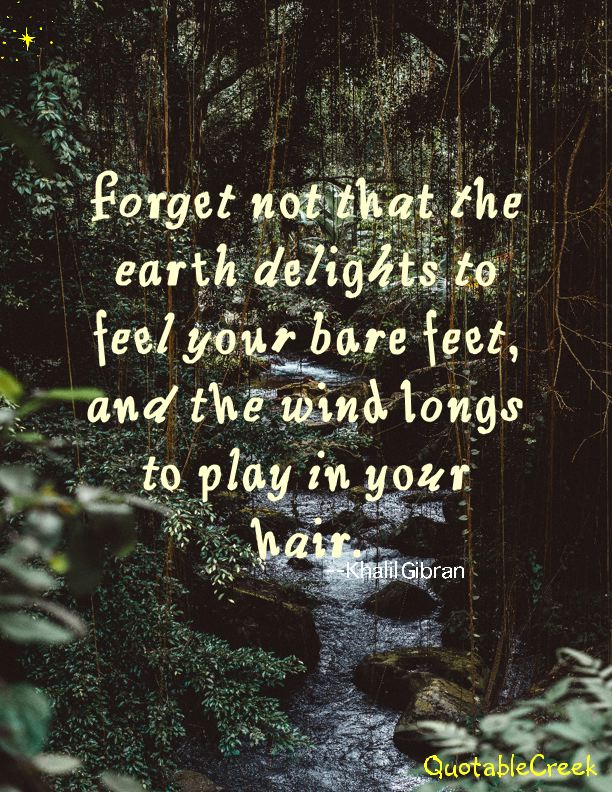
Welcome the wind.


windhair

It’s too easy to forget that we are of this earth. Our agendas and business suits disguise us. Our tasks distract us.

But we are sensuous beings, of the earth and for the earth. We, like the tree frog, are part of creation. How lovely it is to remember that, to appreciate our moment of life in the grand scheme of things, to feel the wind in our hair and the grass under our feet. To drink deep of this moment when we are here.

We are here.

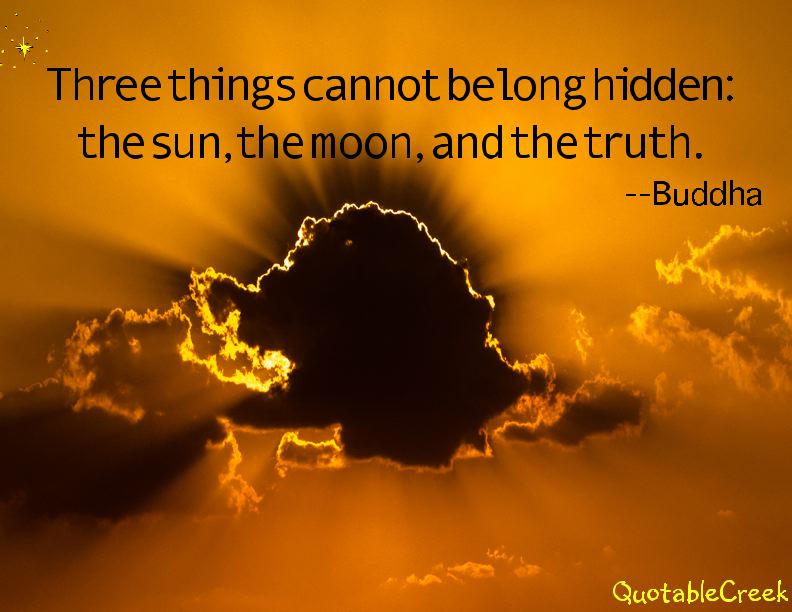
And yet it remains.


hiddenClouds, night, and eclipses can hide the sun, and yet it remains. Lies, denial, and ignorance can obscure the truth, and yet it remains. We are foolish to believe that things change because we lie about them.
The truth will out.

It always does.

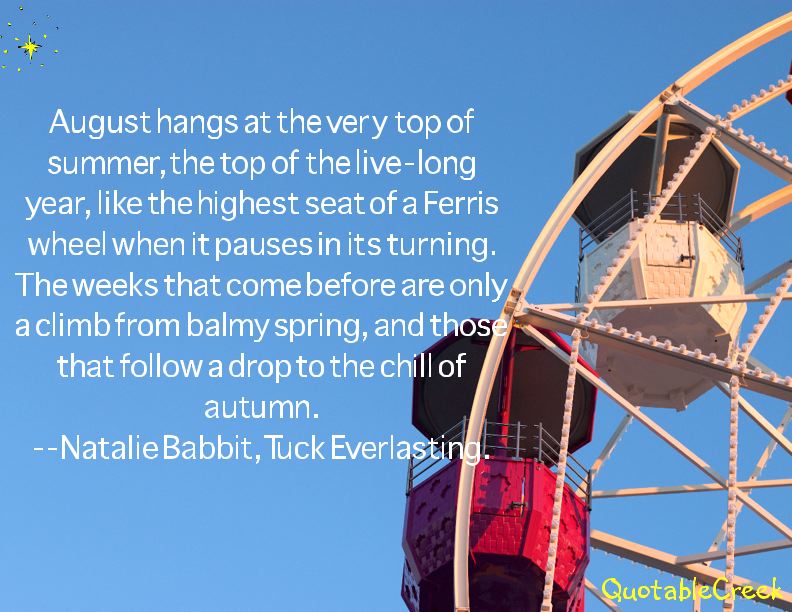
August high.

August

August marks the end of summer and the beginning of another school year. It is as good a time as any to ask yourself–

Where are you going?

Are you progressing?

What vision do you have for the months to come?

Months turn into years turn into decades turn into a lifetime. Pausing periodically to make sure you’re on the right path is always a good idea.

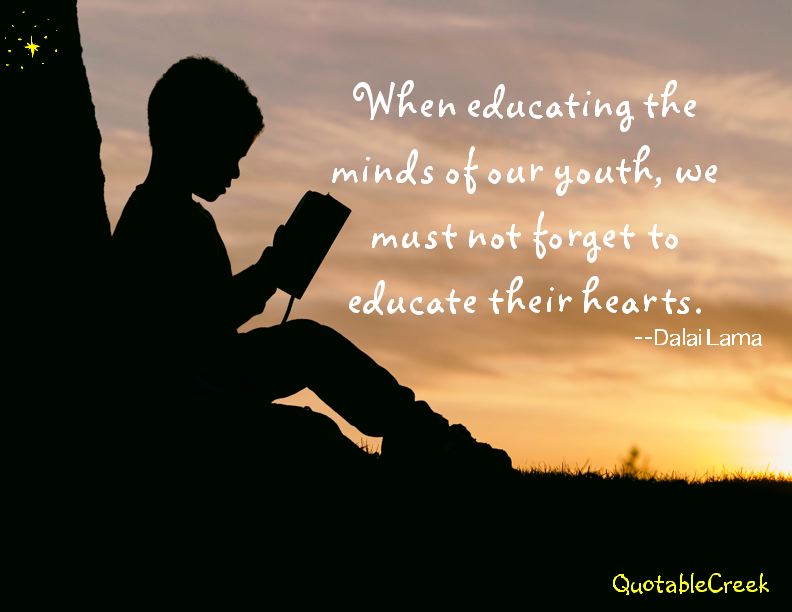
ABCs of the heart.

abcheart

Reading level, standardized test scores, college prep–more, better, faster. Repeat.

But what of the heart? There is so much to teach a child about the heart:

  • How it breaks when someone you love doesn’t love you back
  • How it thrills to find a kindred spirit
  • How it is comforted when someone simply sits with you and shares space
  • How it hurts when we don’t treat each other with compassion and kindness
  • How it longs to connect
  • How it knows what the brain often forgets–that we are all family

There is no standardized test for kindness, no flash cards for compassion, no prize for finding the lonely person and keeping them company. But these, too, are where a well-rounded education lies. On these lessons, too, depends our future.