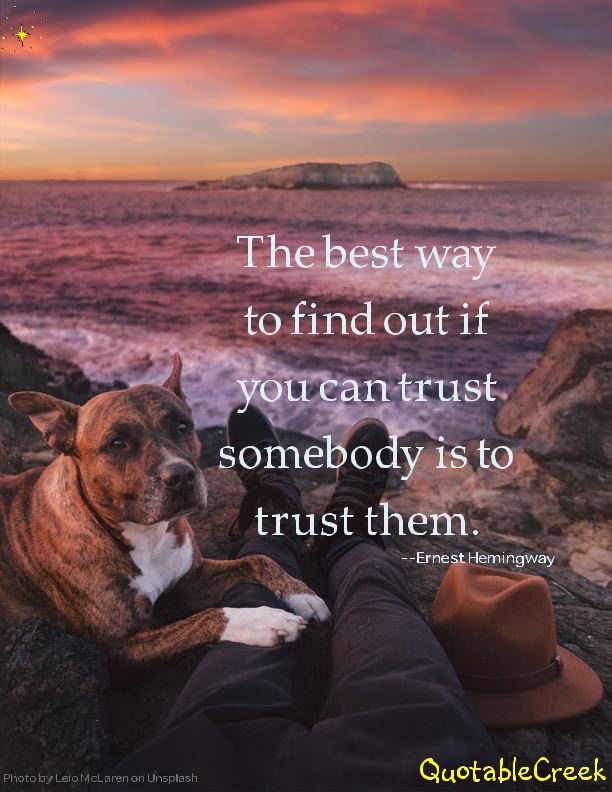
How often do we give others the benefit of the doubt? Do we assume the innocent explanation or conclude the worst? Are we patient, or do we pounce at the very first mistake someone makes in trying to get their thoughts out? Do we search for the best in others, or do we protect ourselves in advance about the damage we fear may be inevitable by opening our hearts to trusting someone again?
Wouldn’t it be lovely to live in a world where everyone gave everyone else the benefit of the doubt? Where perceived offenses weren’t allowed to fester and grow? Where there was trust?
Consider this beautiful poem on friendship by Dinah Maria Craik. Isn’t this how we would like to make each other feel?
Friendship
by Dinah Maria Craik
Oh, the comfort —
the inexpressible comfort of feeling safe with a person —
having neither to weigh thoughts nor measure words,
but pouring them all right out,
just as they are,
chaff and grain together;
certain that a faithful hand will take and sift them,
keep what is worth keeping,
and then with the breath of kindness blow the rest away.
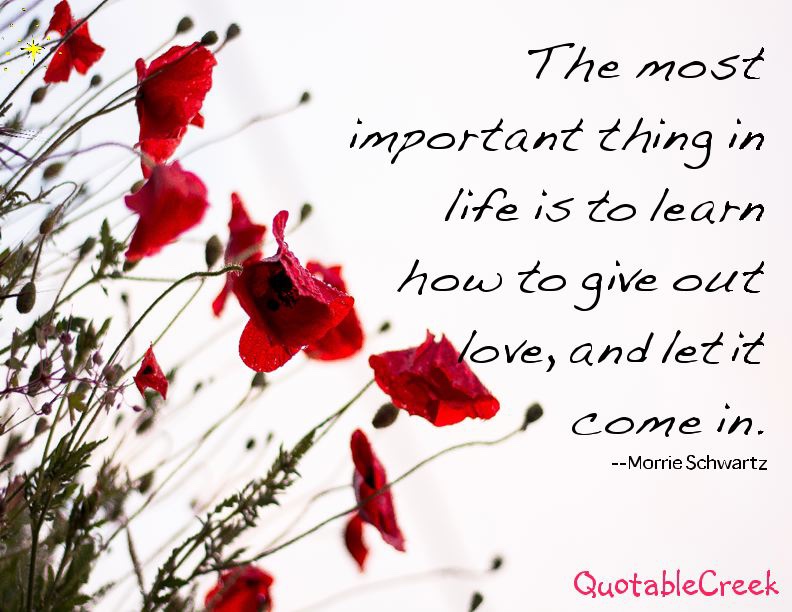
Sometimes we just need to get out of the way. What if we think of ourselves as vessels to collect love and then pour it out–not just on ourselves and those close to us, but on everyone and everything? What would our days look like if every encounter with someone else was an opportunity to be loving and thoughtful? What would our world look like if we used our time and energy to love it? What would our relationships look like if we laid down all our weapons–anger, resentment, hurt, selfishness–and just took the time to love each other, as if our very lives depended on it? They just may.
What do we regret most as we contemplate the end of our time here? Maybe the lesson from that regret can inform our present. In an outstanding commencement speech, George Saunders reflects on his own failures and encourages the graduating students to look for opportunities to be kind. He reflects on a memory haunting him from his childhood:
In seventh grade, this new kid joined our class. In the interest of confidentiality, her Convocation Speech name will be “ELLEN.” ELLEN was small, shy. She wore these blue cat’s-eye glasses that, at the time, only old ladies wore. When nervous, which was pretty much always, she had a habit of taking a strand of hair into her mouth and chewing on it.
So she came to our school and our neighborhood, and was mostly ignored, occasionally teased (“Your hair taste good?” — that sort of thing). I could see this hurt her. I still remember the way she’d look after such an insult: eyes cast down, a little gut-kicked, as if, having just been reminded of her place in things, she was trying, as much as possible, to disappear. After awhile she’d drift away, hair-strand still in her mouth. At home, I imagined, after school, her mother would say, you know: “How was your day, sweetie?” and she’d say, “Oh, fine.” And her mother would say, “Making any friends?” and she’d go, “Sure, lots.”
Sometimes I’d see her hanging around alone in her front yard, as if afraid to leave it.
And then — they moved. That was it. No tragedy, no big final hazing.
One day she was there, next day she wasn’t.
End of story.
Now, why do I regret that? Why, forty-two years later, am I still thinking about it? Relative to most of the other kids, I was actually pretty nice to her. I never said an unkind word to her. In fact, I sometimes even (mildly) defended her.
But still. It bothers me.
So here’s something I know to be true, although it’s a little corny, and I don’t quite know what to do with it:
What I regret most in my life are failures of kindness.
Those moments when another human being was there, in front of me, suffering, and I responded . . . sensibly. Reservedly. Mildly.
We all have so many opportunities to make a difference, just by simply being kind, offering a smile, reaching out in friendship. And, when we reflect on the kindnesses that have made the difference to each of us in our own lives, we realize those little shows of kindness are what matter.
Saunders continues to remind each of us that our inner selves, our souls, shine as brightly as ever, and, even as we strive for success, to keep checking in with that inner place, and to believe it exists and greet the world from there:
Do all the other things, the ambitious things — travel, get rich, get famous, innovate, lead, fall in love, make and lose fortunes, swim naked in wild jungle rivers (after first having it tested for monkey poop) – but as you do, to the extent that you can, err in the direction of kindness. Do those things that incline you toward the big questions, and avoid the things that would reduce you and make you trivial. That luminous part of you that exists beyond personality — your soul, if you will — is as bright and shining as any that has ever been. Bright as Shakespeare’s, bright as Gandhi’s, bright as Mother Teresa’s. Clear away everything that keeps you separate from this secret luminous place. Believe it exists, come to know it better, nurture it, share its fruits tirelessly.
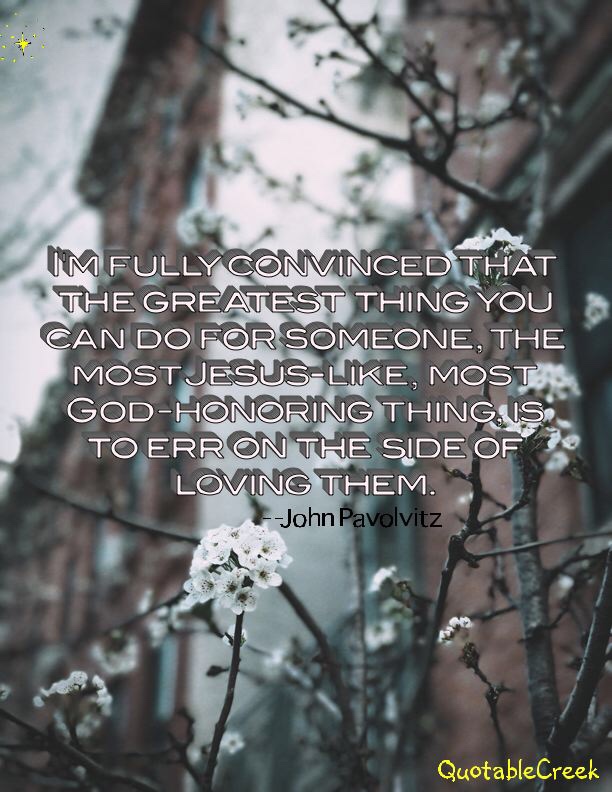
When you are confronted with a choice, err in the direction of kindness.
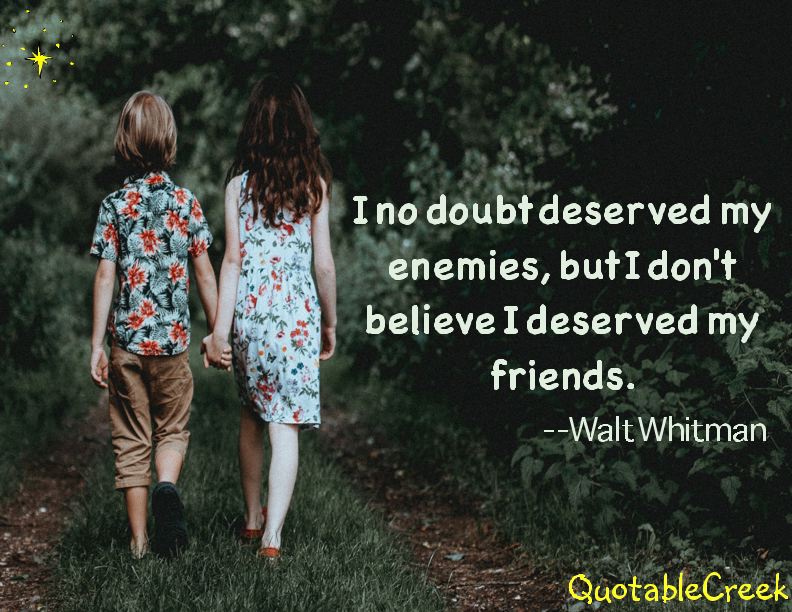
I’ve been blessed with good friends, some friendships going back decades. What a gift it is to travel this life in the company of people who know you, warts and all, and love you. And what a sacred thing it is to be someone’s friend, trusted with their stories, their heartaches, their joys. Friendship is the glue that holds this whole crazy thing called life together.
Writer Anaïs Nin opined that “Each friend represents a world in us, a world possibly not born until they arrive, and it is only by this meeting that a new world is born.” As Nin conveys, friendship can elicit joy, companionship, and growth—enriching our entire experience of the world.
And, as it turns out, friendship is good for what ails us:
Strong friendships are a critical aspect of most people’s emotional well-being. Research indicates that close friendships are associated with greater happiness, self-esteem, and sense of purpose. These bonds are even associated with physical outcomes, such as lower blood pressure and a longer lifespan.
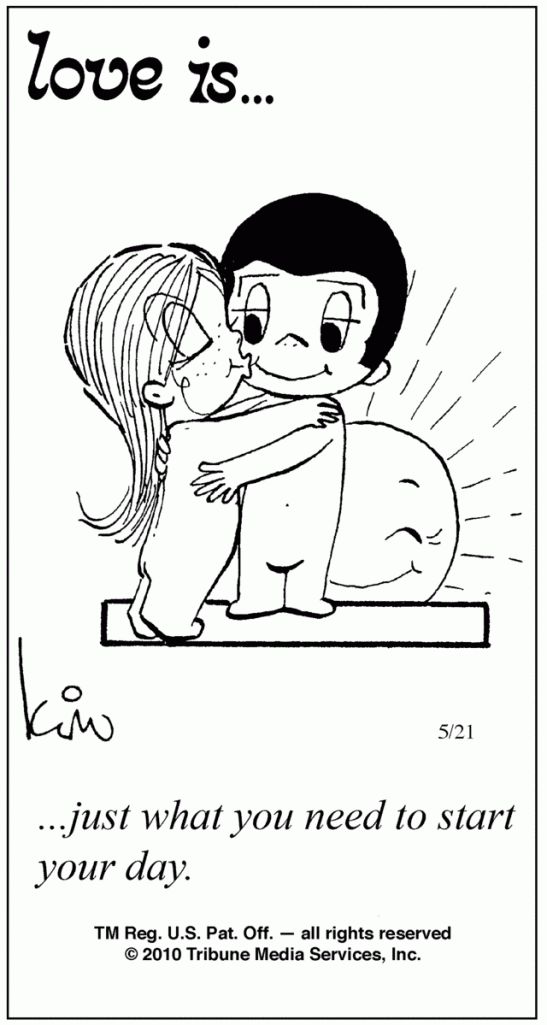
While I’m on my nostalgia streak, I’m remembering this comic strip from the 70’s by Kim Casali. I loved these although they perhaps don’t all stand the test of time, the ‘she’ of the partnership always doing the household chores, and picking up after the ‘he’.
Although, to be honest, I do do chores out of love for my family, picking recipes I think they will enjoy, trying to keep a peaceful organized home, cleaning up the little hand smudges on the walls knowing these moments will not last. These acts of service are one of the love languages identified by Gary Chapman in his book, The 5 Love Languages, the others being words of affirmation, gifts, physical touch, and quality time.
Chapman argues that sometimes people in relationship, any relationship not only romantic, get in trouble if they are speaking in a love language their loved one doesn’t hear. For me, my expressions of love are weighted heavily toward acts of service, but knowing that everyone is not on the same wave length in how they receive expressions of love reminds me to use them all, and to listen for them all from the people I love.
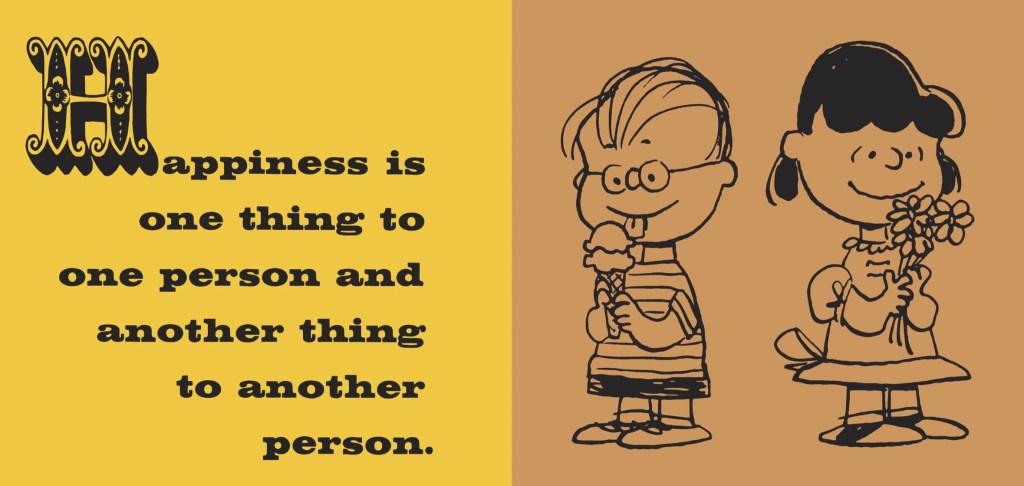
Perhaps, as with the ‘Happiness is… ‘ thought exercise from yesterday, today it would be wonderful to stop and consider how you are showing love to the people you care about, and how they are showing it to you, even if it’s not one of the love languages you are good at hearing.
For inspiration and a chuckle, consider this cat mom’s birthday gift for her kitty:
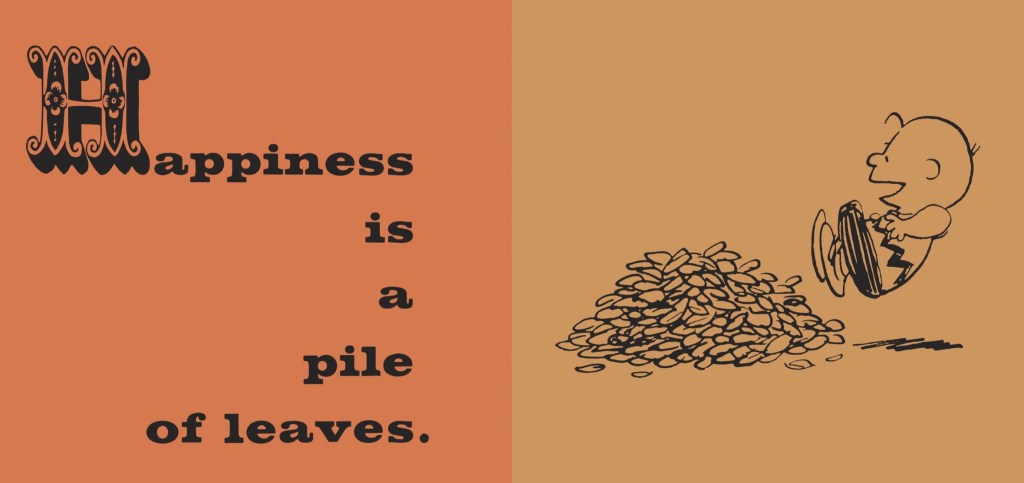
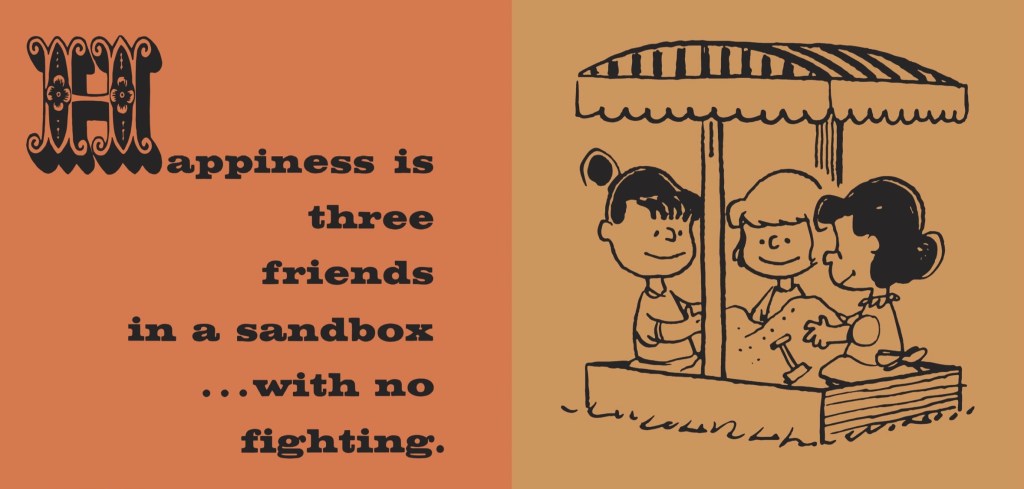
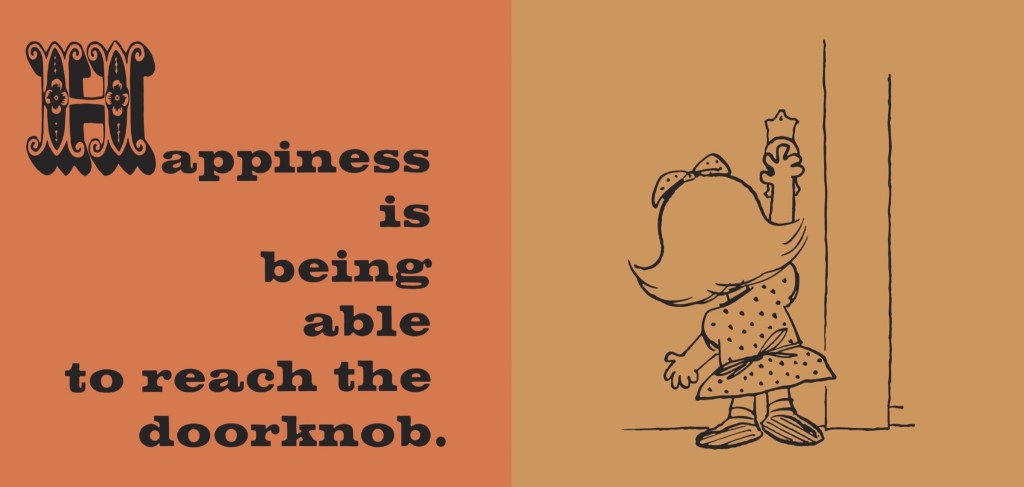
When I was young, I had the book Happiness is a Warm Puppy by Charles Schulz. I was remembering it lately with all the charming little moments it caught:
Each page captures a delightful, sweet, innocent, but meaningful, moment in the life of a child. Each attempting to capture that ineffable notion of happiness. I thought it would be fun to start collecting my own when I feel that surge of happiness, that feeling that all is right in the world, and I’m incredibly lucky and content.
Here are a couple of mine:
Happiness is…
The finches discovering their feeder.
Happiness is….
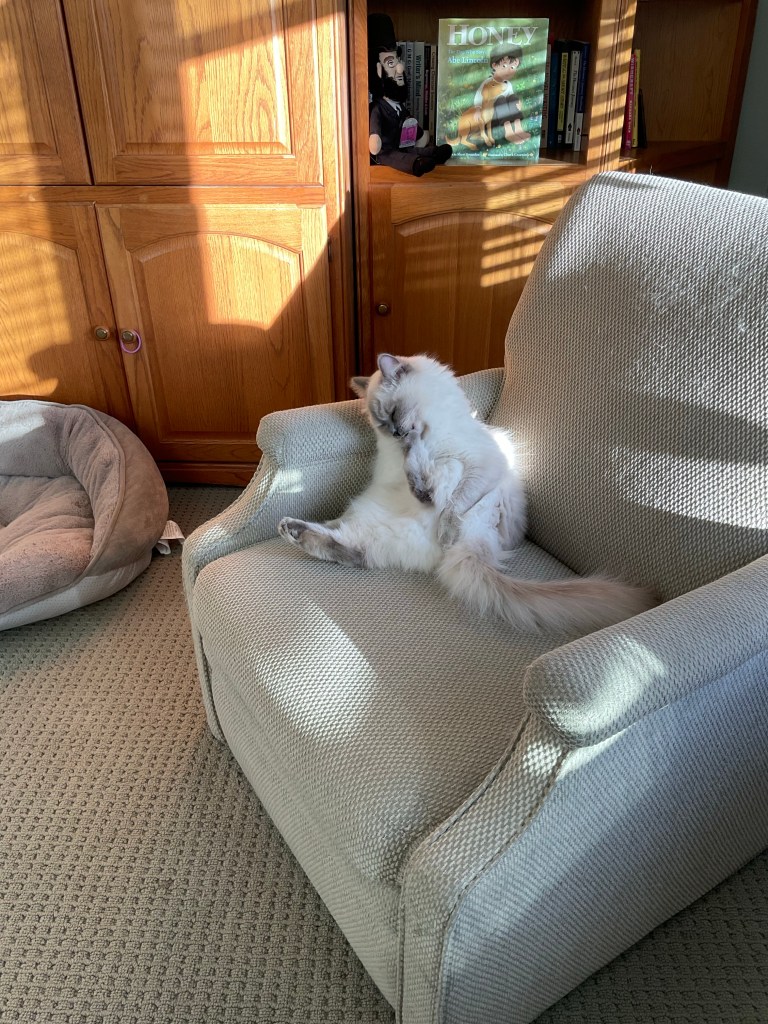
The cat keeping you company while you work.
Happiness is…
Being unable to move because the cat picked your lap.
And the list goes on. We each have moments that fill us with happiness and wonder. They slip away quickly because they’re ephemeral. But if we capture them somehow, in a gratitude journal, with a photo album, a list, we can turn to them later and smile. These are our ‘moments’
Schulz recognized that for each of of us, those moments will be unique and personal.
What are some of yours? If you feel comfortable doing so, I would love it if you shared them.
Isn’t that the bottom line of Christmas? Strip away all the decorations and gifts and songs and celebrations, and what remains is: love wins. It’s about love. God loves us, and we are to love each other. And even in a world divided by hate, blind to oneness, driven by greed, love will win. Because that’s the point of Christmas.
We tend to judge others by their actions and ourselves by our intentions. What that looks like in practice is forgiving ourselves for a lot of things–selfishness, neglect, mistakes–that we don’t forgive anyone else for when the same harm is done to us.
But what if we flipped that and gave other people the benefit of the doubt and show them the same understanding we give ourselves? What if their statements that seem hurtful are merely ill thought out? What if what feels like neglect is really just busyness with something else? What if everyone is intending to do their best, but falls short over and over?
Just like we do.
Instead of anger, hurt, and frustration, our relationships would be peppered with compassion and understanding and the ability to grow and blossom.
If you look for thorns, you’ll see thorns. If you look for love, you’ll see it all around you. And if you look for opportunities to make a difference, to shower people with love, and to take a stand for all that is good and right in the world, those opportunities will be there.
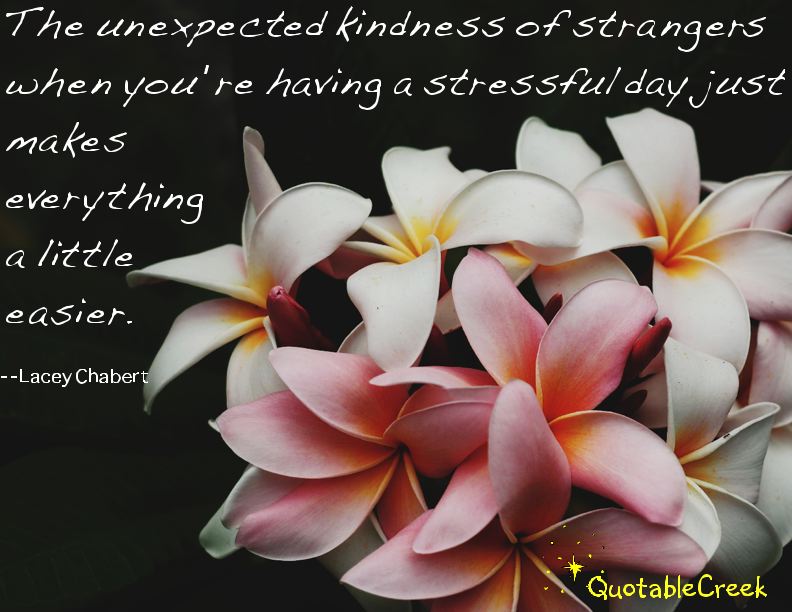
Have you ever been at a restaurant or grocery store with a crying or tantrumming child? It’s awful, that feeling of everyone staring at you and blaming you for somehow disrupting their lives. Not to mention, the criticism and judgment! Some people are only too eager to point out just what you are doing wrong and how you shouldn’t be out in public if you can’t control your children. But, sometimes, a stranger reaches out and helps– offers to amuse the baby, gives you a wink of encouragement, tells you they’ve been there, too, and that things will get better. That little act of kindness makes all the difference.
We can’t control whether we will run into the kind sort of stranger when we are most overwhelmed. But, we can remember what it was like when someone was kind when we were overwrought and BE that kind stranger to someone struggling. When we remember what a difference that type of kindness made in our lives, we realize that simple things–holding a door for someone carrying packages, smiling when someone is overwhelmed with their kids, offering to help pick up fallen papers– matter tremendously.
From Shari:
Have you ever been the beneficiary of a stranger’s kindness? Can you think of a time when you reached out in kindness to someone else? Please share your stories in the comments. I would love to hear them!