Watch for the stars.

In every darkness, a bit of light will shine to light your way. It may be in the acts of kindness and generosity you see, in words of wisdom you remember and hold close to your heart, or memories of past struggles that you have gotten through to the other side. We draw strength and courage from each other, working together. That community will sustain us.

In his book, Healing the Divide, editor James Crews collects poem of kindness and compassion. Here is one by Danusha Laméris for you to carry with you today:

“I’ve been thinking about the way, when you walk down a crowded aisle, people pull in their legs to let you by. Or how strangers still say ‘bless you’ when someone sneezes, a leftover from the Bubonic plague. ‘Don’t die,’ we are saying. And sometimes, when you spill lemons from your grocery bag, someone else will help you pick them up. Mostly, we don’t want to harm each other. We want to be handed our cup of coffee hot, and to say thank you to the person handing it. To smile at them and for them to smile back. For the waitress to call us honey when she sets down the bowl of clam chowder, and for the driver in the red pick-up truck to let us pass. We have so little of each other, now. So far from tribe and fire. Only these brief moments of exchange. What if they are the true dwelling of the holy, these fleeting temples we make together when we say, ‘Here have my seat,’ ‘Go ahead—you first,’ ‘I like your hat.’”

We will get through this present darkness. Hold tight to the little kindnesses, savor them, and spread them where you can to light the way for those behind you.

For more, a reminder that we were made for times like these.

Saving love

Sometimes it’s easy to respond in love. People are kind; you’re kind in return. Someone is generous to you; you pay it forward to someone else.

But sometimes it isn’t easy at all. Sometimes it feels like the world is on fire, and everyone is rushing around thinking only of saving themselves. You feel vulnerable, exposed, in danger. You are on emotional high alert, alarms clanging. What then?

It is in these times, that any shows of love shine like light in darkness. Focusing on expressing your love gives the people you care about safe harbor. Focusing on being gentle with the people around you can calm the tide.

Awe inspires.

When we lose our way or feel overwhelmed, we can return to nature and be renewed. Hear the birds singing their spring song. Watch them collect twigs and bits for their nests. See the long grass ripple in a gentle wind like ocean waves. Breathe in the sweet earthy fragrance of the morning. Feel small and surrounded by an amazing, complicated system that has been pulsating with life for millions of years. That awe is good for us:

“It has long been established that a healthy diet and lots of sleep and exercise bolster the body’s defenses against physical and mental illnesses. But the new study, whose findings were just published in the journal Emotion, is one of the first to look at the role of positive emotions in that arsenal.

“That awe, wonder, and beauty promote healthier levels of cytokines suggests that the things we do to experience these emotions—a walk in nature, losing oneself in music, beholding art—has a direct influence upon health and life expectancy,” says UC Berkeley psychologist Dacher Keltner, a coauthor of the study.”

Breathe in the day, full of life and possibility. Breathe out the stress, the worry, the defeat. In. Out. In. Out. In.

Cultivating gratitude

In this beautiful film set to the words of Brother David Steindhl-Rast, you can’t help but see much of what makes life good and affirming. What if we learn to appreciate each day as if it is our first day…and our last? What if we appreciate each miracle as it presents itself to us throughout the day…the miracle of sight, of running water, of food, of laughter? What then?

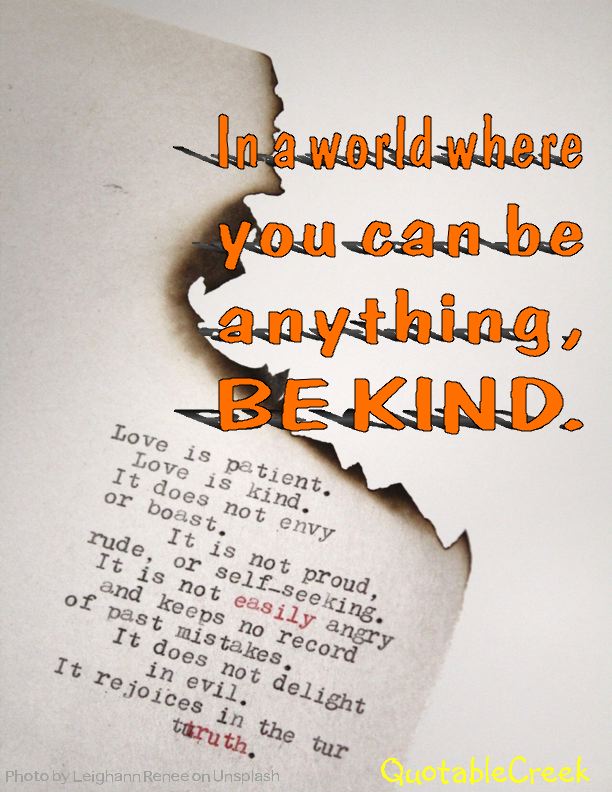
Be kind.

kind

As we bump and bustle our way through life, we often don’t notice other people much, maybe never pause to wonder what they may be going through in life. Usually they are just the person in the way, or the one in front of us in line, or the one who is doing a dismally poor job of getting our order right. But if we could step back and see their interior lives, we may get a whole lot of patience in a hurry. Everybody is carrying a load of some kind. Everybody hurts.

Or, as Jon Pavlovitz says in this insightful article, everybody grieves:

If we could keep this reality in the forefront of our mind as we make our way through the hustle and bustle, we would be gentler, kinder, more patient. And that would do a world of good for our weary world.

Don’t miss the joy.

penguinjoy

We generally find what we look for. We are good at it, and that skill helps us to recognize that one face in a sea of faces, to ferret out clues at a crime scene, to heed the landmarks that lead us home. But when we are trying to process a barrage of information coming at us all at once and trying to make sense of it without being overcome, we need to look for the unexpected things, the startling things, the beautiful things. We need to seek joy.

In his Book of Delights, Ross Gay goes on a mission to write about something delightful, everyday. And, while he initially thought he would have to scrounge for delights, after a bit of practice, he learned to find them everywhere. The delightful things were abundant and overflowing. More important, those delights made him realize how interconnected we are and that we are caretakers, each for the other. In a world that can seem cold and callous, we are generally good to each other:

I suppose I could spend time theorizing how it is that people are not bad to each other. But that’s really not the point. The point is that in almost every instance of our social lives, we are, if we pay attention, in the midst of an almost constant, if subtle, caretaking – holding doors open, offering elbows at crosswalks, letting someone else go first, helping with the heavy bags, reaching what’s too high or what’s been dropped, pulling someone back to their feet, stopping at the car wreck – at the struck dog, the alternating merge, also known as the zipper. This caretaking is our default mode, and it’s always a lie that convinces us to act or believe otherwise – always.

As we scrounge for our delights, we begin to see them all around us–the groceries grown and harvested for us to enjoy, the clothes crafted and sewn, the traffic signs to keep us safe, the laughter of children, birdsong, smiles from neighbors, our dog eager for her morning walk. As we notice those delights, we metaphorically feel the embrace of a larger community and feel the joy from being lucky enough to be right here, right now, plop in the middle of the mystery of it all.

The anonymous gift.

angeldoor

There is something about an anonymous gift that brings special joy to both the giver and the receiver. For the person getting the gift, it makes you feel like the whole world cares, that around any corner is the person who cared enough to make your life special. And to the giver, it strips off all the status and pride and self-satisfaction you may get from a public gift and, with the lusciousness of a secret, fills you with love and gratitude that you are in a position to make a difference.

Consider this delightful story about a somewhat anonymous giver, call him George Walker, and his gift to a young boy in the Philippines.

“Dear Timothy, 
I want to be your new pen pal. 
I am an old man, 77 years old, but I love kids; and though we have not met I love you already.
I live in Texas – I will write you from time to time – Good Luck. G. Walker”

Now, after President Bush’s death, we have learned that he was George Walker, but look at how much joy is in his writing when it is semi-anonymous. He is embracing the true spirit of giving.

For more on anonymous giving, take a look at this feature I wrote on anonymous giving filled with inspiring stories.

What are some things you might do anonymously to spread your love?


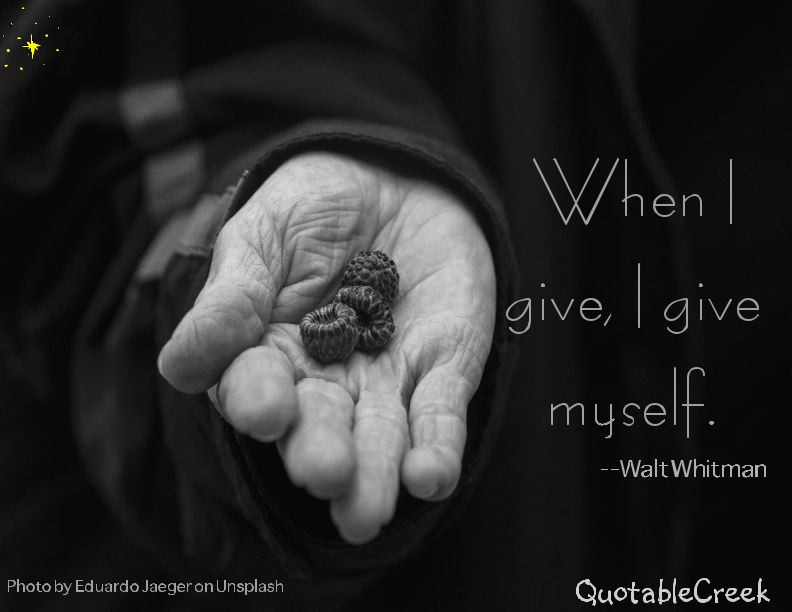
Give yourself.

give

How deeply can we say Yes to life, to each other, to our common good? It’s easy to hold back, to give our money but not our hearts, to temper our enthusiasm, to stay aloof, to protect ourselves from being hurt. But is that why we’re here? To stay safe? When we give of ourselves, we listen with our whole hearts, we reach out to others, we spread joy. And our ability to do those things does not run out. Love expands when it is shared.

Moving past the past.

past

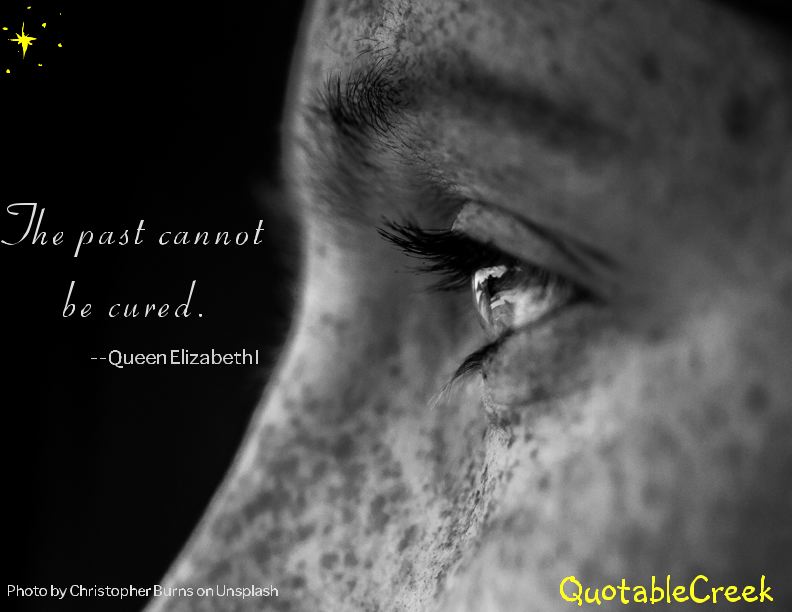
We cannot fix our pasts. That’s a hard truth to accept, so we spend a lot of time railing against what happened, wishing it had been different, ruminating over the details. But the past cannot be cured– We made that mistake, we had those parents, we encountered that trial, we suffered that loss. Whatever it is. It happened. It’s true. And now it’s part of our past, a part of us.

We cannot make changes to the past. Pretending it never happened may only serve to bury the hurt just to have it pop up unexpectedly later when something triggers a memory. Glossing it over or telling ourselves we’re fine, may cause wounds to fester.

There are many things, though, that we can do with our unpleasant past that can help. We can grieve the relationships we wish had been better. We can offer ourselves the nurturing we may have craved. We can learn from the mistakes we made. We can look for ways to reach out to and support others going through similar hardships. We can look for the positives that came from the bad situation. We can give ourselves permission to heal. We can forgive.

And we can focus on the present, where we have the ability to act.

Do not lose heart.

heroism

It feels like we have fought this battle before. Why won’t it go away? Why are we here again?

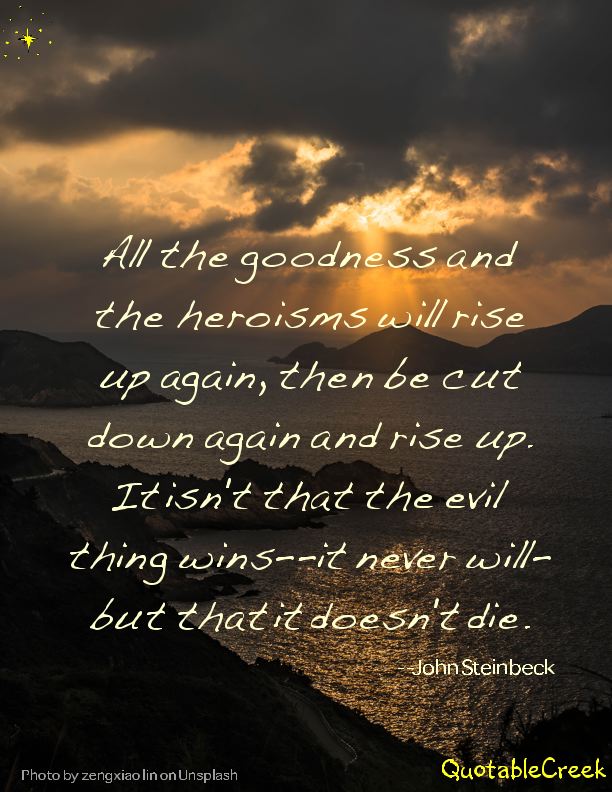
Perhaps it is as simple and complex as that there are epic forces of good and evil alive in the world. Evil, whether in the form or racism, misogyny, selfishness, and so on, keeps coming back, even when we think progress has been made. That is the nature of the world we live in.

The answer: to keep flooding the world with good, keep fighting the good fight.

Do not lose hope.