As we age, there is loss. That loss is like a presence that follows us relentlessly like a shadow. No avoiding it. No pretending. We are mortal. The people we love are mortal, perhaps imminently so. This is part of the rules of engagement. And while most of us avoid thinking too much about it, poets like Mary Oliver offer life instructions:
To live in this world, you must be able to do three things:
To love what is mortal
To hold it against your bones knowing your own life depends on it;
And, when the time comes, to let it go, to let it go.
I honestly don’t know which of these three rules is the hardest. Right now, they each seem nearly impossible. But having the courage to follow these instructions feels like the answer.
Her full poem is below.
Look, the trees are turning their own bodies into pillars
of light, are giving off the rich fragrance of cinnamon and fulfillment,
the long tapers of cattails are bursting and floating away over the blue shoulders
of the ponds, and every pond, no matter what its name is, is
nameless now. Every year everything I have ever learned
in my lifetime leads back to this: the fires and the black river of loss whose other side
is salvation, whose meaning none of us will ever know. To live in this world
you must be able to do three things: to love what is mortal; to hold it
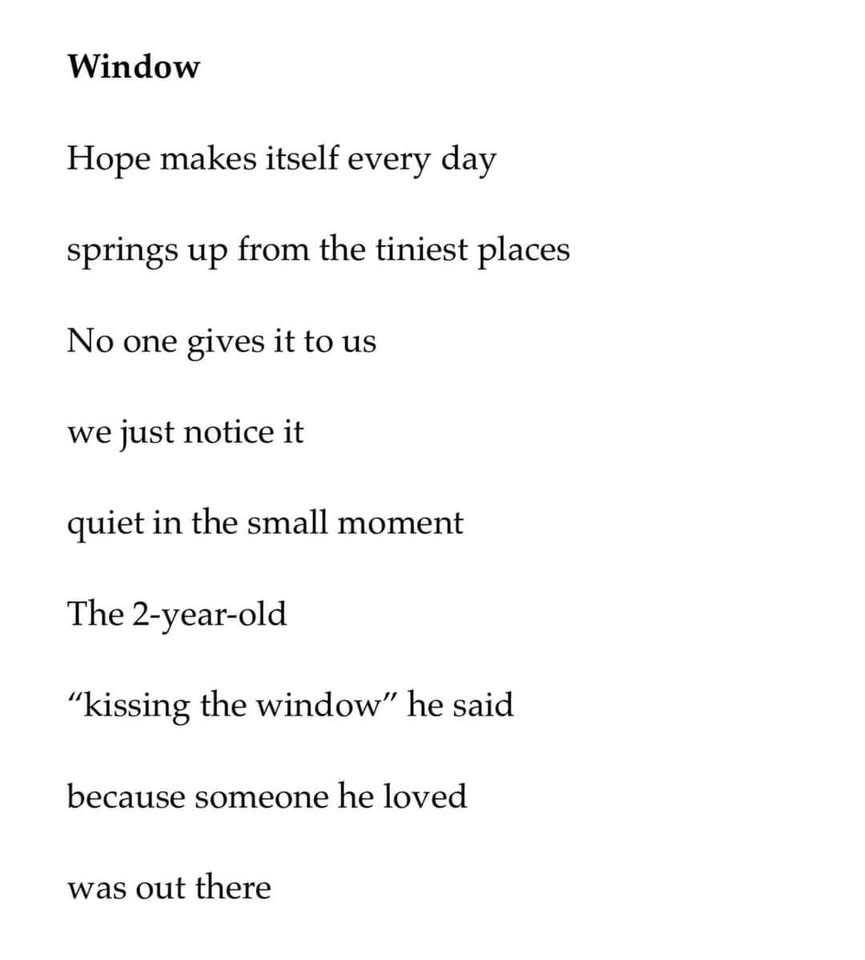
Today, notice signs of hope in unlikely places. In the smile of a baby, the fledgling arguments for peace by a child, the chink in the armor of an opponent.
In 2006 a high school English teacher asked students to write to a famous author and ask for advice. Kurt Vonnegut was the only one to respond – and his response is magnificent:
“Dear Xavier High School, and Ms. Lockwood, and Messrs Perin, McFeely, Batten, Maurer and Congiusta:
I thank you for your friendly letters. You sure know how to cheer up a really old geezer (84) in his sunset years. I don’t make public appearances any more because I now resemble nothing so much as an iguana.
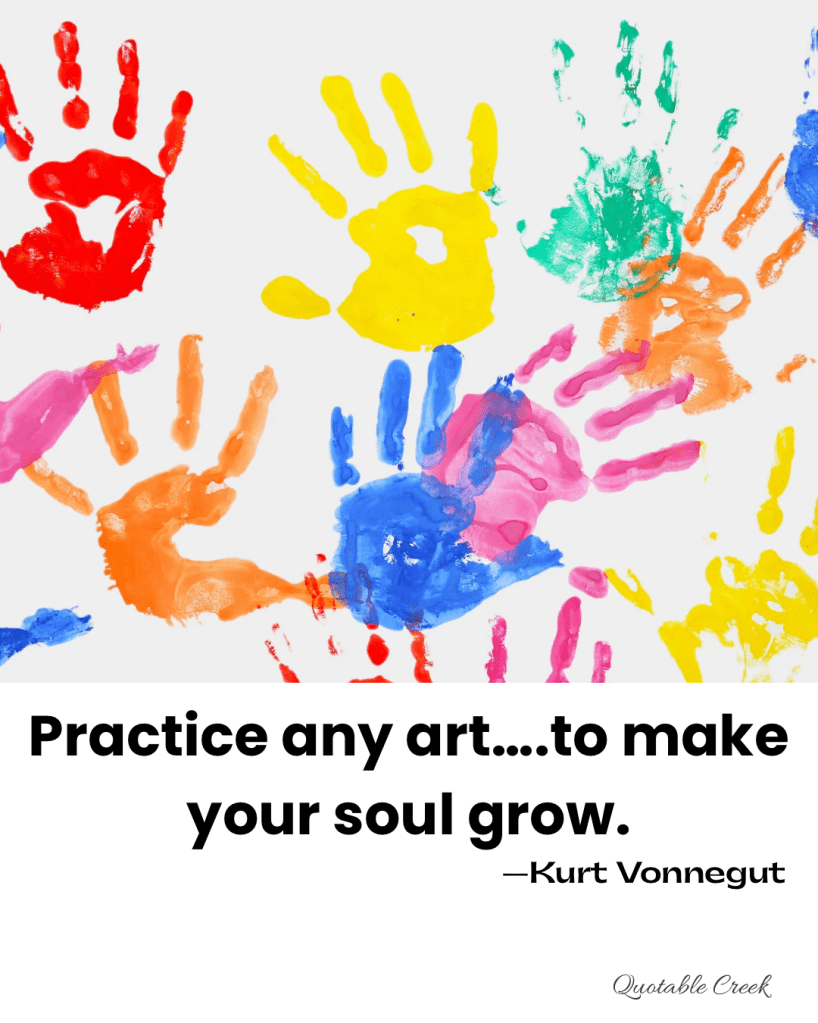
What I had to say to you, moreover, would not take long, to wit: Practice any art, music, singing, dancing, acting, drawing, painting, sculpting, poetry, fiction, essays, reportage, no matter how well or badly, not to get money and fame, but to experience becoming, to find out what’s inside you, to make your soul grow.
Seriously! I mean starting right now, do art and do it for the rest of your lives. Draw a funny or nice picture of Ms. Lockwood, and give it to her. Dance home after school, and sing in the shower and on and on. Make a face in your mashed potatoes. Pretend you’re Count Dracula.
Here’s an assignment for tonight, and I hope Ms. Lockwood will flunk you if you don’t do it: Write a six line poem, about anything, but rhymed. No fair tennis without a net. Make it as good as you possibly can. But don’t tell anybody what you’re doing. Don’t show it or recite it to anybody, not even your girlfriend or parents or whatever, or Ms. Lockwood. OK?
Tear it up into teeny-weeny pieces, and discard them into widely separated trash receptacals. You will find that you have already been gloriously rewarded for your poem. You have experienced becoming, learned a lot more about what’s inside you, and you have made your soul grow. God bless you all!” ~Kurt Vonnegut
There is something soul-stretching about entering the zone, that timelessness we find in creating art. Writing, drawing, dancing, singing. All of it. Lose yourself in creating and find yourself a bit different on the other end.
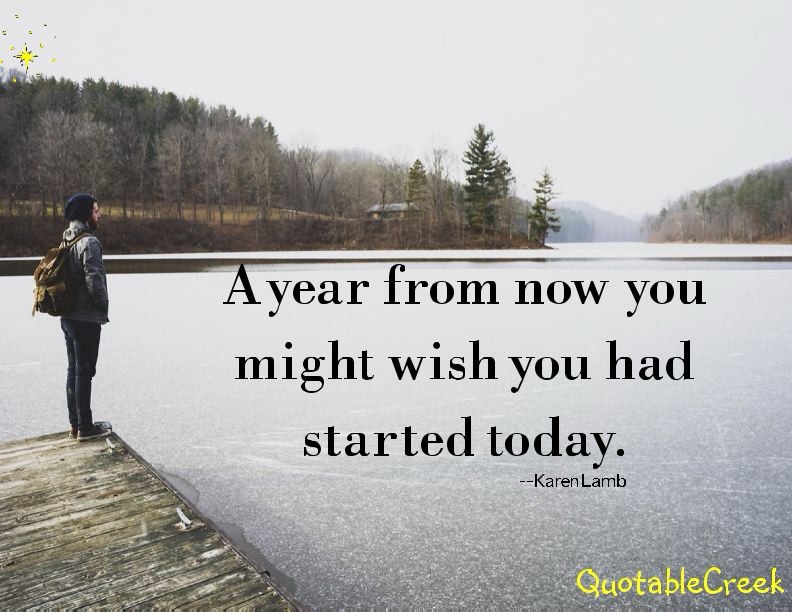
Tomorrow is such a complex word. On one hand, it is reassuring that there is always a tomorrow, a fresh start, a day to begin anew. But, on the other hand, the concept of tomorrow can be beguiling and seductive and keep us from starting what can be done right now today.
What is it you would like to start or do that may, frankly, take a while? What have you been putting off, perhaps for an endless cascade of tomorrows? Those tomorrows are now yesterdays.
Today is as good a day as any to plunge in and begin.
In 1777, 16 year-old Sybil rode 40 miles (twice the distance of Revere’s ride) through the raining night to warn the Colonial militia of the advancing British army. She was thanked personally by George Washington for her service and bravery and yet few now know her name.
What’s most important in a war, of course, is who wins, and battlefields are littered with fallen soldiers, some remembered, most forgotten. Behind the scenes are countless more. Some heroic, some cowardly. Some remembered, most forgotten.
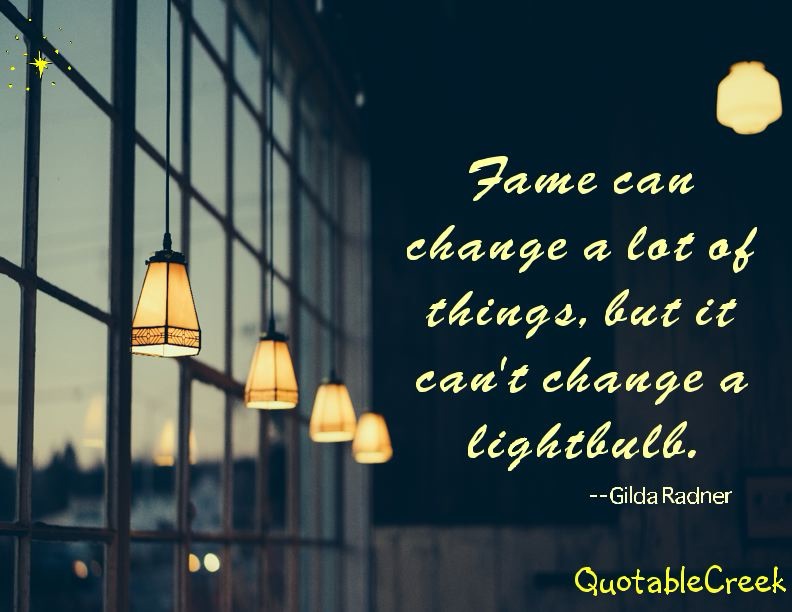
Fame is ephemeral. It doesn’t attach itself only to heroes or the deserving. If you chase it, you may well find yourself doing the wrong things for the wrong reasons. And, even then, if you do the things that you think will make you famous, fame could well elude you.
Character, on the other hand, is everything. Doing the right thing regardless of whether you will be remembered for it or get credit always wins. Again, your actions may go unnoticed or unappreciated, but that doesn’t change the inquiry. Doing the right thing is its own reward.
What is the right thing in these morally ambiguous and complicated times? Faith, hope, and love remain. And the greatest is love.
Do the loving thing. Spread light, not darkness. Work for peace, not division. Let your words and actions be gentle and true.
Everything falls apart. Cars, buildings, peace, relationships, houses. That’s not pessimism; it’s entropy. In our quest for more, better, and brighter stuff, sometimes we forget about the energy that goes into maintaining the things we already have. In our dogged courtship and pursuit of a loved one, sometimes we forget the importance of maintaining the close relationship after we’ve sealed the deal. After reading all the books on childbirth, we sometimes forget the time and attention that goes into building a healthy relationship with a child, then teen, then adult.
If we neglect our things or relationships, they will suffer. But we don’t have to be content with this. With attention and care, anything will shine–even our most important relationships.
Take a self-exam. Consider where you put your time and energy. Does anything in your life need a tune-up?
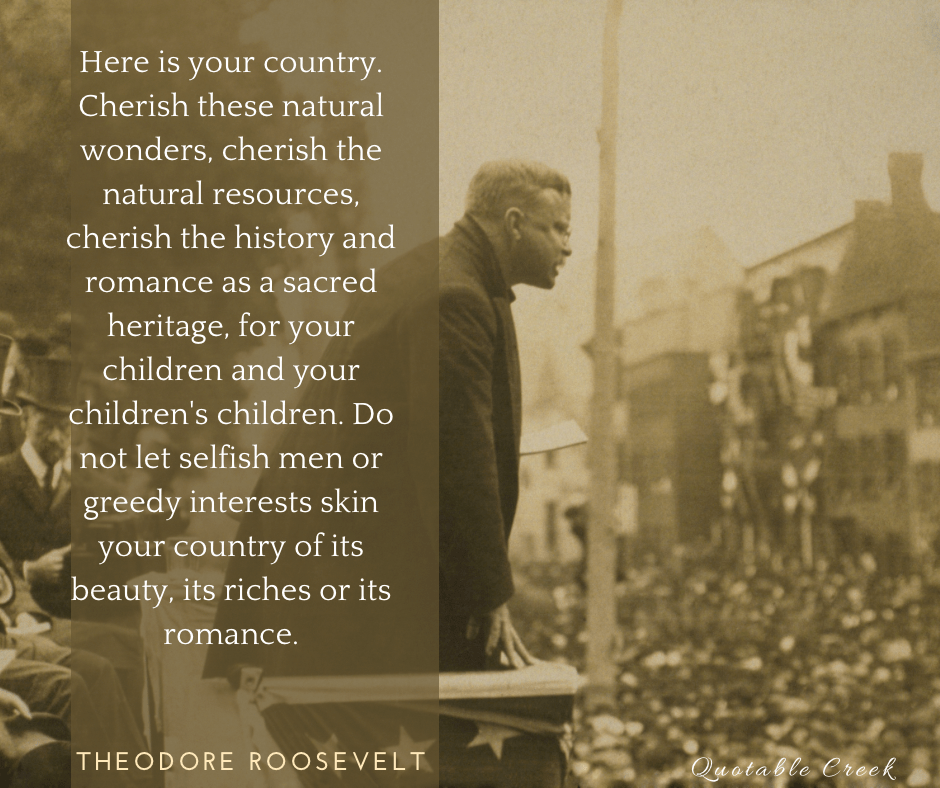
When we think of America, what do we picture? Surely the abundance of natural beauty, much of it, 230 million acres worth, protected by President Roosevelt. National Parks, wildlife refuges, forests, oceans, Great Lakes.
Perhaps we also think of American ideals like freedom in religion and speech, the right to petition the government for redress of grievances, the concept of equal justice under the law, the notion of the American dream that no matter where you come from, you can rise above your circumstances with integrity and hard work. American values.
Perhaps we picture our strength in diversity, of backgrounds, countries of origin, viewpoints, and culture. A heterogeneous mix of people coming together e plutibus unum, out of many, one.
President Roosevelt urged us to cherish our country, its natural wonders and resources, its history and romance, its sacred heritage for our children and children’s children. Let us heed his words. America is a special place and must be protected, valued, and nurtured.
In 2016, Pope Francis sainted Mother Teresa. She was a beloved paragon of a selfless life, ministering to the poor and dying, shining a light on the importance of the little things and the love of family. After her death, her diaries showed her struggles with doubt. Once feeling clearly called to her mission, in the last several decades of her life she felt God’s absence. She said,
Lord, my God, who am I that You should forsake me? The Child of your Love–and now become as the most hated one–the one–You have thrown away as unwanted–unloved. I call, I cling, I want–and there is no One to answer–no One on Whom I can cling–no, No One.–Alone … Where is my Faith–even deep down right in there is nothing, but emptiness & darkness–My God–how painful is this unknown pain–I have no Faith–I dare not utter the words & thoughts that crowd in my heart–& make me suffer untold agony.
So many unanswered questions live within me afraid to uncover them–because of the blasphemy–If there be God –please forgive me–When I try to raise my thoughts to Heaven–there is such convicting emptiness that those very thoughts return like sharp knives & hurt my very soul.–I am told God loves me–and yet the reality of darkness & coldness & emptiness is so great that nothing touches my soul. Did I make a mistake in surrendering blindly to the Call of the Sacred Heart?
And on until her death, she felt God’s absence, rather than his presence. And yet she persisted doing the work to which she had been called, living a life of faith.
Some may call her a hypocrite to have an outward smile of peace and an inner crisis of faith, but isn’t her struggle every one’s struggle? Who among us doesn’t struggle with doubt? Don’t we all rely on faith when our paths grow dark and twisting?
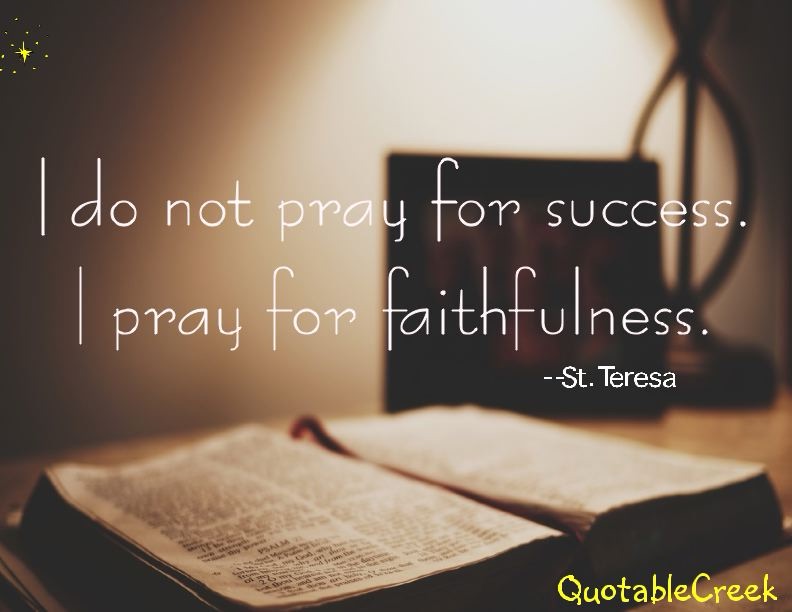
St. Teresa of Calcutta inspires us to hang on during the dark nights of the soul, to continue to walk the walk, to be faithful and steadfast, and to shine light in the dark places. She can aptly be considered the Patron Saint of Doubters.
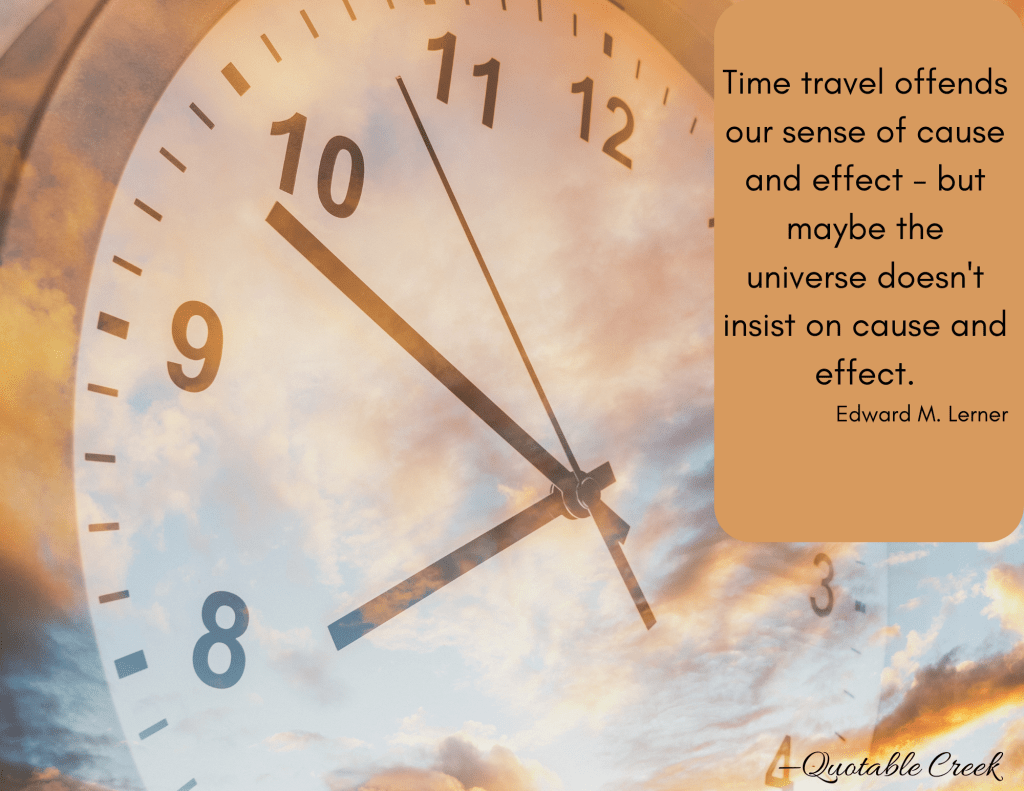
I’m always a bit confounded by stories of time travel, easily lost in the logical fallacies and conundrums. But when you strip the mechanics away and just enter into a state of suspended disbelief that it might be possible, time travel stories are remarkably profound. To have a character with full knowledge of the present time be able to walk around and marvel at a prior time uncovers interesting juxtapositions, exposes similarities and differences, and allows you to evaluate your own time period afresh.
I just finished Time and Again by Jack Finney, which offers a time travel vehicle that allows his character to step back into a time before many of our modern problems—world wars, pollution, climate change—and enjoy a less jaundiced perspective. More important, though, the time travel opens his eyes to the humanity and complexity of the people, long dead now, walking around living and breathing in that present:
“In some ways, the sight of that ordinary man whom I never saw again is the most intensely felt experience of my life. There he sat, staring absently out the window, in an odd high-crowned black derby hat, a worn black short-length overcoat, his green-and-white striped shirt collarless and fastened at the neck with a brass stud; a man of about sixty, clean-shaven.
I know it sounds absurd, but the color of the man’s face, just across the tiny aisle, was fascinating: this was no motionless brown-and-white face in an ancient photograph. As I watched, the pink tongue touched the chapped lips, the eyes blinked, and just beyond him the background of brick and stone house slid past. I can see it yet, the face against the slow-moving background, and hear the unending hard rattle of the iron-tires wheels on packed snow and bare cobbles. It was the kind of face I’d studied in the old sepia photographs, but his hair, under the curling hat brim, was black streaked with gray; his eyes were sharp blue; his ears, nose, and freshly shaved chin were red from the winter chill; his lined forehead pale white. There was nothing remarkable about him; he looked tired, looked sad, looked bored. But he was alive and seemed healthy enough, still full-strength and vigorous, perhaps with years yet to live-and I turned to Kate, my mouth nearly touching her ear, to murmur, ‘When he was a boy, Andrew Jackson was president. He can remember a United States that was -Jesus- still mostly unexplored wilderness.’ There he sat, a living breathing man with those memories in his head, and I sat staring at the slight rising and falling of his chest in wonder.”
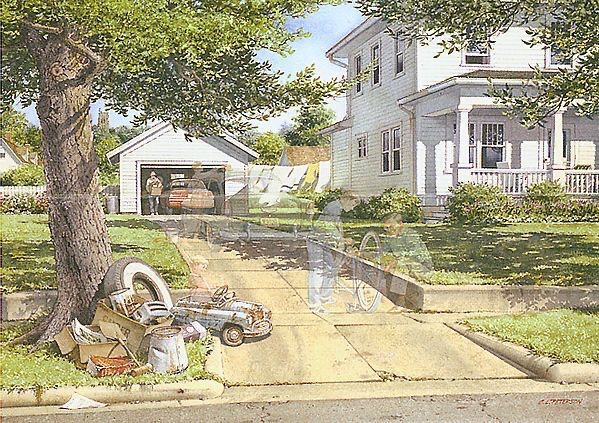
The premise for time travel in this book, for what it’s worth, is that the times are all existing at once, in the way a river exists even though, when you’re in it, you can’t see up past the bends ahead, or back to the parts you’ve already traveled. You merely step into a prior time period once you strip from your mind all the things tethering you to the present. Or, using a different metaphor, time is like transparencies in a book, each laid over the same foundational picture, but each distinct as well. You simply turn to the right page and step in.
The transparency metaphor reminds me of the art of Charles Peterson, the opaque areas reflect action of the present, but the wisps reflect prior generation that lived their lives fully in that spot in the past.
In many ways, we are time travel machines in our own right. We can look at history and reflect how we might have behaved in the same time and place had we those choices and circumstance. We can step out of our own present day group think now and consider how things may hold up with a longer view from the future looking back.
What is happening right now in front of us, that future generations might look back on fondly, or with horror? How can we bring those insights to bear to inform how we act right now?


 QuotableCreek.com