Happy Easter!


When we think of America, what do we picture? Surely the abundance of natural beauty, much of it, 230 million acres worth, protected by President Roosevelt. National Parks, wildlife refuges, forests, oceans, Great Lakes.
Perhaps we also think of American ideals like freedom in religion and speech, the right to petition the government for redress of grievances, the concept of equal justice under the law, the notion of the American dream that no matter where you come from, you can rise above your circumstances with integrity and hard work. American values.
Perhaps we picture our strength in diversity, of backgrounds, countries of origin, viewpoints, and culture. A heterogeneous mix of people coming together e plutibus unum, out of many, one.
President Roosevelt urged us to cherish our country, its natural wonders and resources, its history and romance, its sacred heritage for our children and children’s children. Let us heed his words. America is a special place and must be protected, valued, and nurtured.
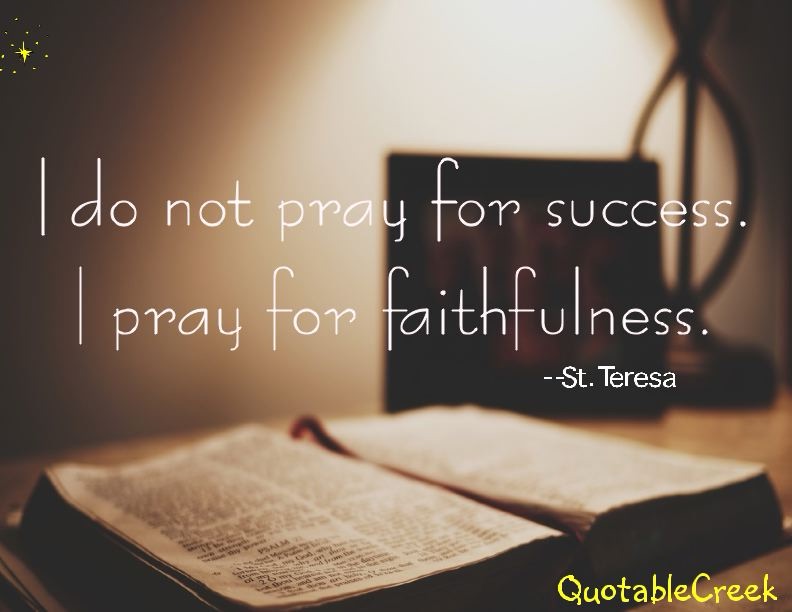
In 2016, Pope Francis sainted Mother Teresa. She was a beloved paragon of a selfless life, ministering to the poor and dying, shining a light on the importance of the little things and the love of family. After her death, her diaries showed her struggles with doubt. Once feeling clearly called to her mission, in the last several decades of her life she felt God’s absence. She said,
Lord, my God, who am I that You should forsake me? The Child of your Love–and now become as the most hated one–the one–You have thrown away as unwanted–unloved. I call, I cling, I want–and there is no One to answer–no One on Whom I can cling–no, No One.–Alone … Where is my Faith–even deep down right in there is nothing, but emptiness & darkness–My God–how painful is this unknown pain–I have no Faith–I dare not utter the words & thoughts that crowd in my heart–& make me suffer untold agony.
So many unanswered questions live within me afraid to uncover them–because of the blasphemy–If there be God –please forgive me–When I try to raise my thoughts to Heaven–there is such convicting emptiness that those very thoughts return like sharp knives & hurt my very soul.–I am told God loves me–and yet the reality of darkness & coldness & emptiness is so great that nothing touches my soul. Did I make a mistake in surrendering blindly to the Call of the Sacred Heart?
And on until her death, she felt God’s absence, rather than his presence. And yet she persisted doing the work to which she had been called, living a life of faith.
Some may call her a hypocrite to have an outward smile of peace and an inner crisis of faith, but isn’t her struggle every one’s struggle? Who among us doesn’t struggle with doubt? Don’t we all rely on faith when our paths grow dark and twisting?
St. Teresa of Calcutta inspires us to hang on during the dark nights of the soul, to continue to walk the walk, to be faithful and steadfast, and to shine light in the dark places. She can aptly be considered the Patron Saint of Doubters.
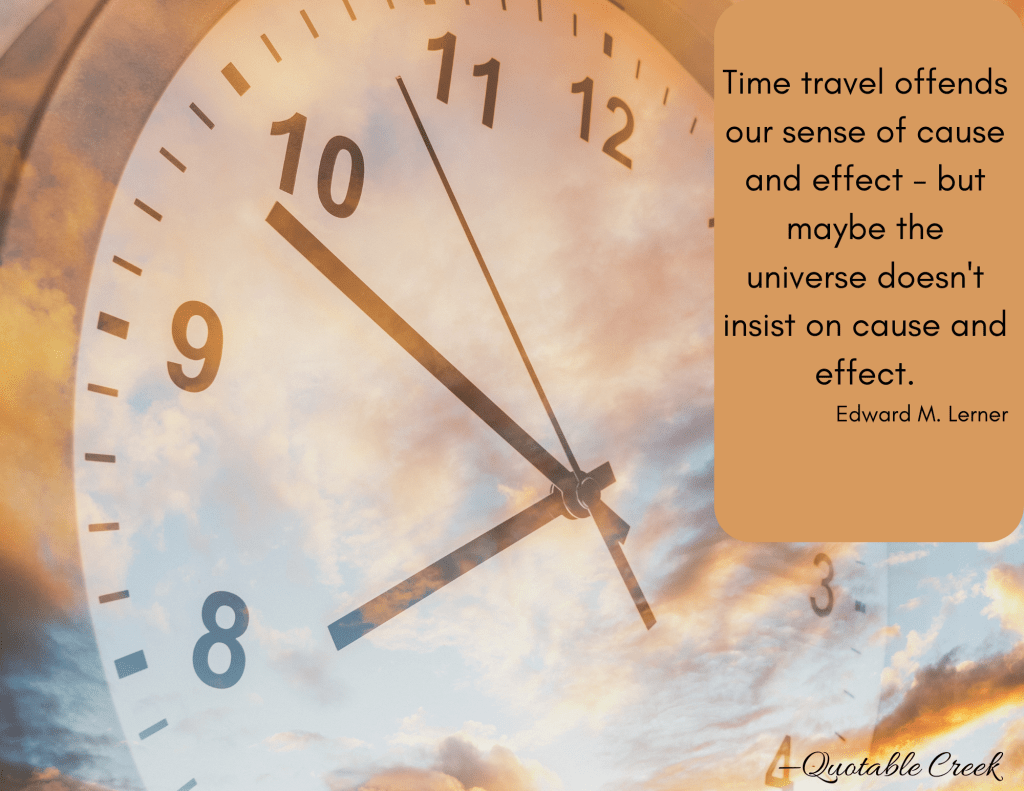
I’m always a bit confounded by stories of time travel, easily lost in the logical fallacies and conundrums. But when you strip the mechanics away and just enter into a state of suspended disbelief that it might be possible, time travel stories are remarkably profound. To have a character with full knowledge of the present time be able to walk around and marvel at a prior time uncovers interesting juxtapositions, exposes similarities and differences, and allows you to evaluate your own time period afresh.
I just finished Time and Again by Jack Finney, which offers a time travel vehicle that allows his character to step back into a time before many of our modern problems—world wars, pollution, climate change—and enjoy a less jaundiced perspective. More important, though, the time travel opens his eyes to the humanity and complexity of the people, long dead now, walking around living and breathing in that present:
“In some ways, the sight of that ordinary man whom I never saw again is the most intensely felt experience of my life. There he sat, staring absently out the window, in an odd high-crowned black derby hat, a worn black short-length overcoat, his green-and-white striped shirt collarless and fastened at the neck with a brass stud; a man of about sixty, clean-shaven.
I know it sounds absurd, but the color of the man’s face, just across the tiny aisle, was fascinating: this was no motionless brown-and-white face in an ancient photograph. As I watched, the pink tongue touched the chapped lips, the eyes blinked, and just beyond him the background of brick and stone house slid past. I can see it yet, the face against the slow-moving background, and hear the unending hard rattle of the iron-tires wheels on packed snow and bare cobbles. It was the kind of face I’d studied in the old sepia photographs, but his hair, under the curling hat brim, was black streaked with gray; his eyes were sharp blue; his ears, nose, and freshly shaved chin were red from the winter chill; his lined forehead pale white. There was nothing remarkable about him; he looked tired, looked sad, looked bored. But he was alive and seemed healthy enough, still full-strength and vigorous, perhaps with years yet to live-and I turned to Kate, my mouth nearly touching her ear, to murmur, ‘When he was a boy, Andrew Jackson was president. He can remember a United States that was -Jesus- still mostly unexplored wilderness.’ There he sat, a living breathing man with those memories in his head, and I sat staring at the slight rising and falling of his chest in wonder.”
The premise for time travel in this book, for what it’s worth, is that the times are all existing at once, in the way a river exists even though, when you’re in it, you can’t see up past the bends ahead, or back to the parts you’ve already traveled. You merely step into a prior time period once you strip from your mind all the things tethering you to the present. Or, using a different metaphor, time is like transparencies in a book, each laid over the same foundational picture, but each distinct as well. You simply turn to the right page and step in.
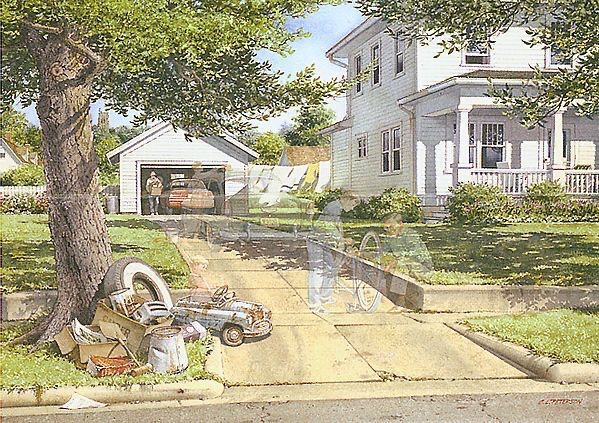
The transparency metaphor reminds me of the art of Charles Peterson, the opaque areas reflect action of the present, but the wisps reflect prior generation that lived their lives fully in that spot in the past.
In many ways, we are time travel machines in our own right. We can look at history and reflect how we might have behaved in the same time and place had we those choices and circumstance. We can step out of our own present day group think now and consider how things may hold up with a longer view from the future looking back.
What is happening right now in front of us, that future generations might look back on fondly, or with horror? How can we bring those insights to bear to inform how we act right now?
I love to hear stories of how little repetitive acts make huge differences.
Johnny Appleseed planting seeds, a bit at a time, and creating thousands of trees and orchards.

Drips of water causing canyons,

stalagmites, and stalactites.

Never underestimate the power of small things. Things in your control like a kind word or gentle touch. Responding in patience rather than anger. Remembering someone who might be lonely. There are no limits to the reach of kindness. The ripples are endless.

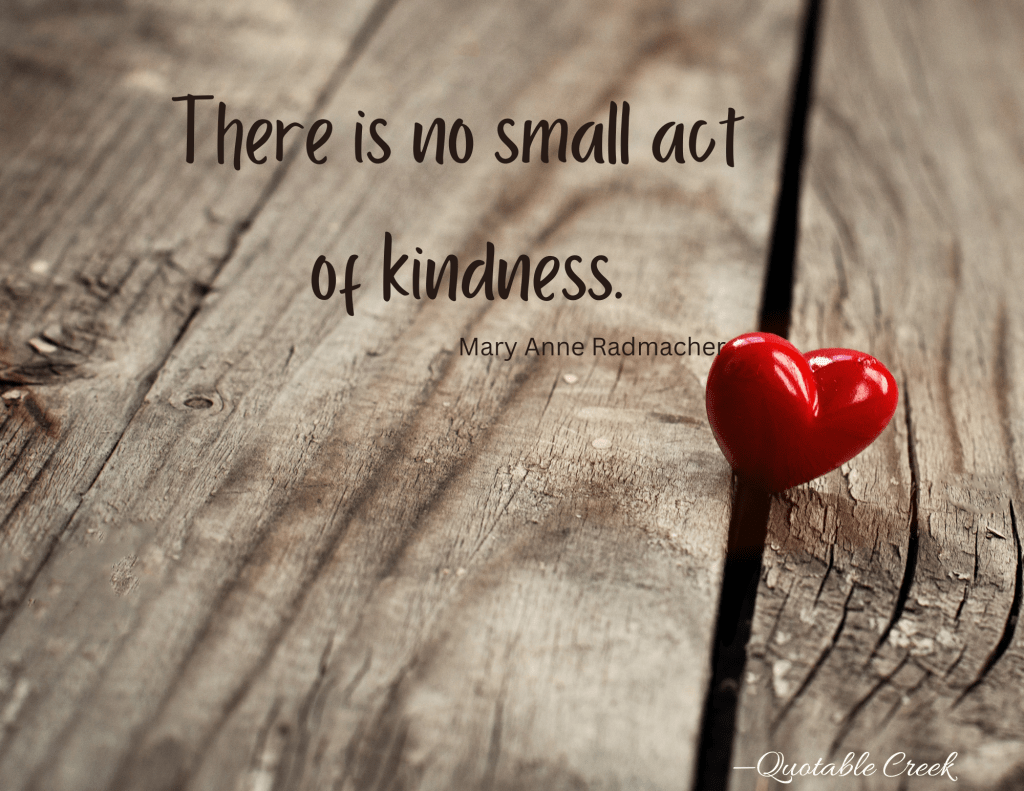
There is no small act of kindness. Every compassionate act makes large the world.
– Mary Anne Radmacher –
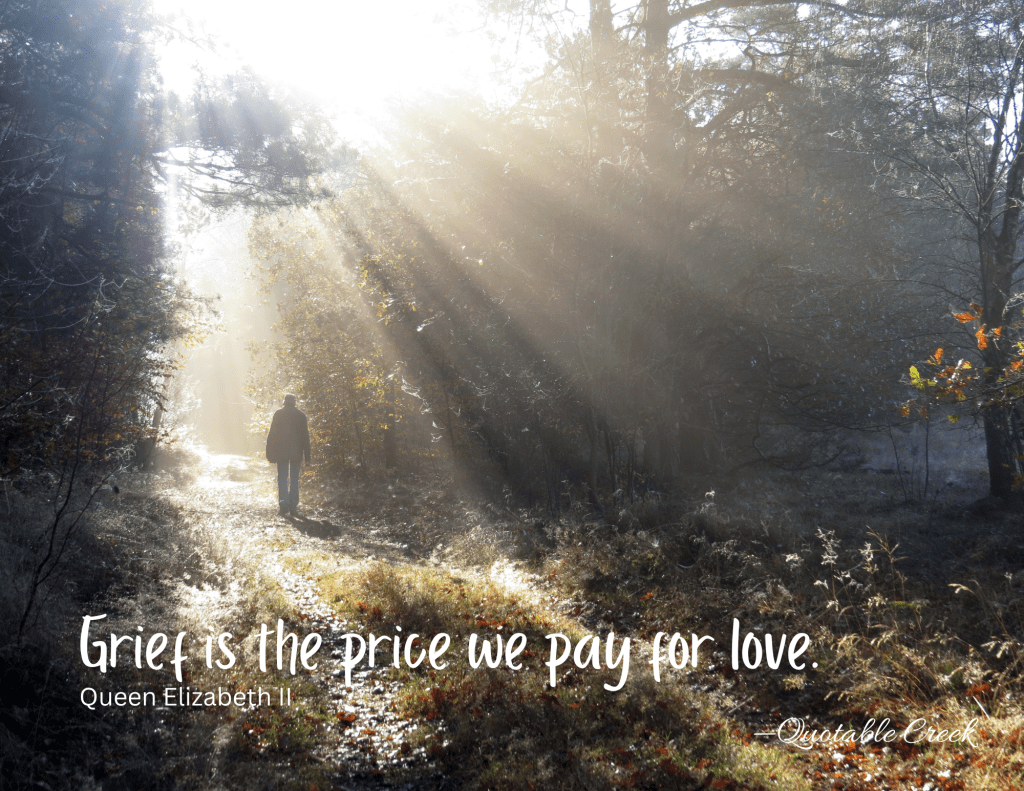
Christmas is a joyful time, but joyful times often bring complex emotions, particularly of loss for the people and loved ones who aren’t with you at the table. We remember times past when we were all together, when things seemed less complicated, when relationships seemed more solid, and we mourn that loss even as we celebrate.
Love makes us vulnerable as there is the possibility of loss. And loss hurts. That’s the human condition. And to try to avoid the pain of loss by never loving would be a far greater loss really. For to miss loving is to miss the whole joy of living.
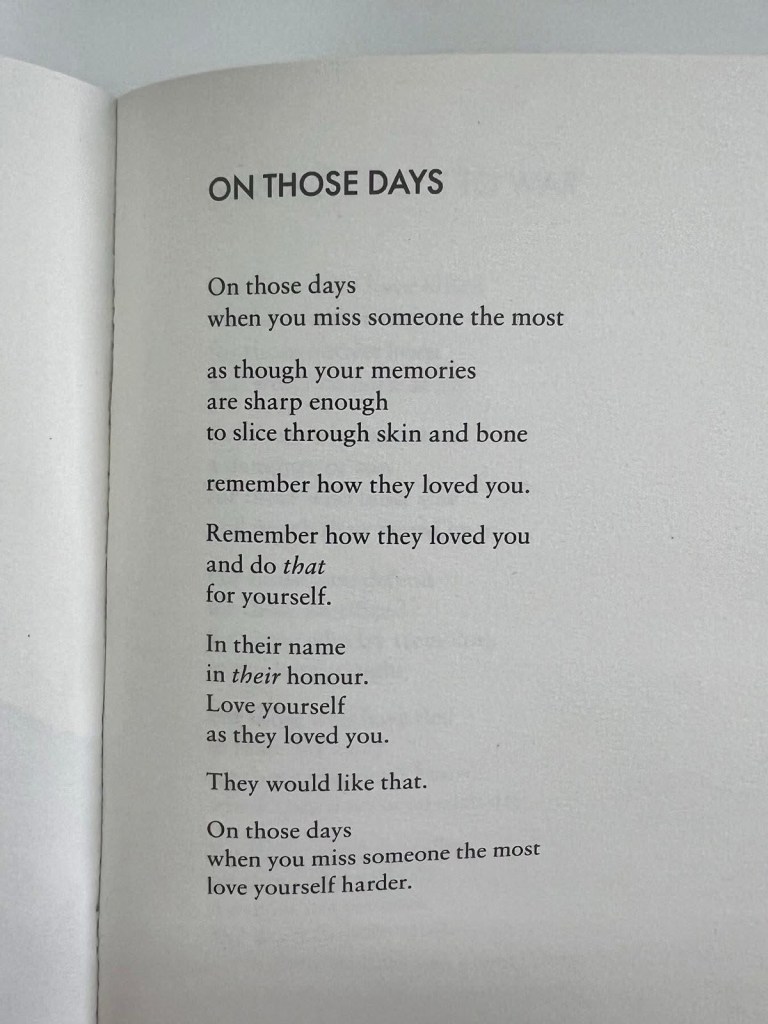
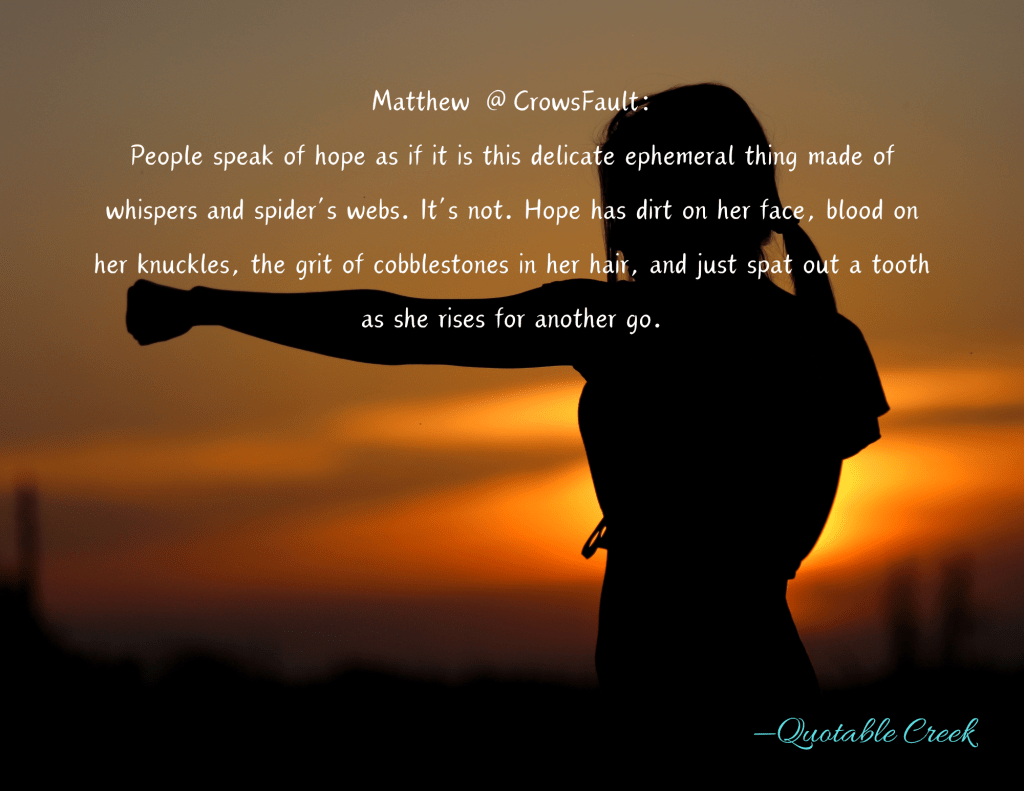
Grief happens. When we think of grief as the flip side of love, though, we can offer ourselves some solace.
Consider these words by Donna Ashcroft today, and every day. You are loved.
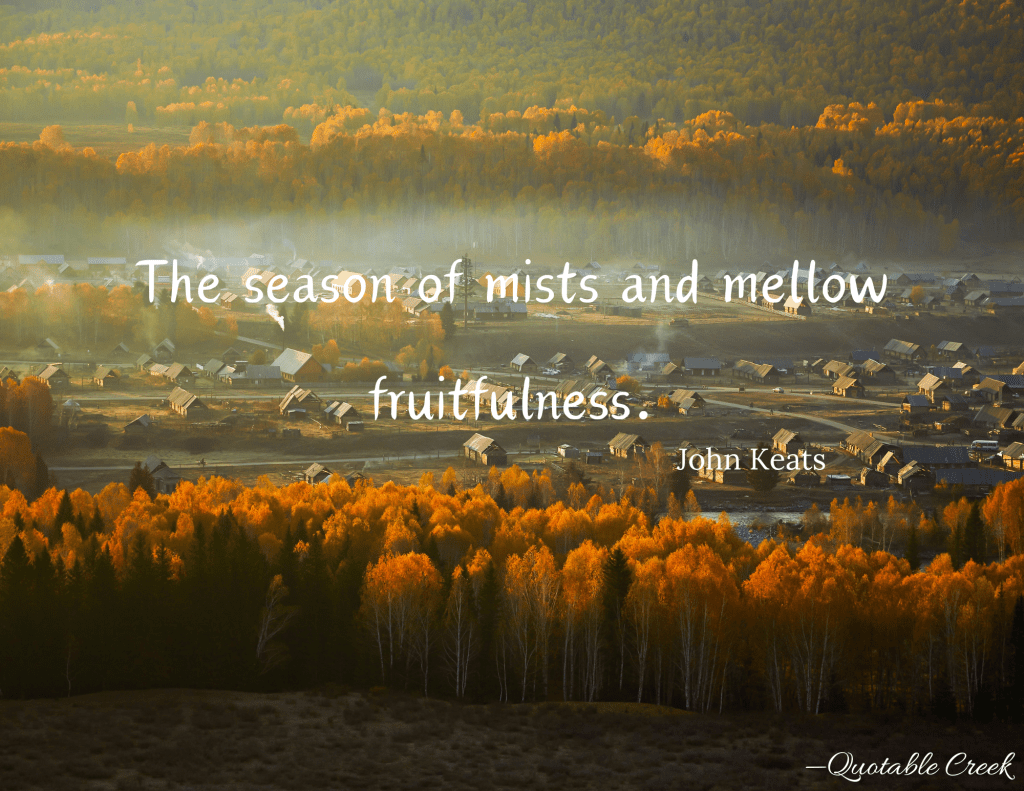
According to Keats, autumn is the season of mists and mellow fruitfulness. Isn’t that a lovely turn of phrase? So evocative. Can’t you feel the cool mist sifting its way through the treetops to settle on the dewy grass?
Here that phrase is in fictional conversation in a book by P.G. Wodehouse:
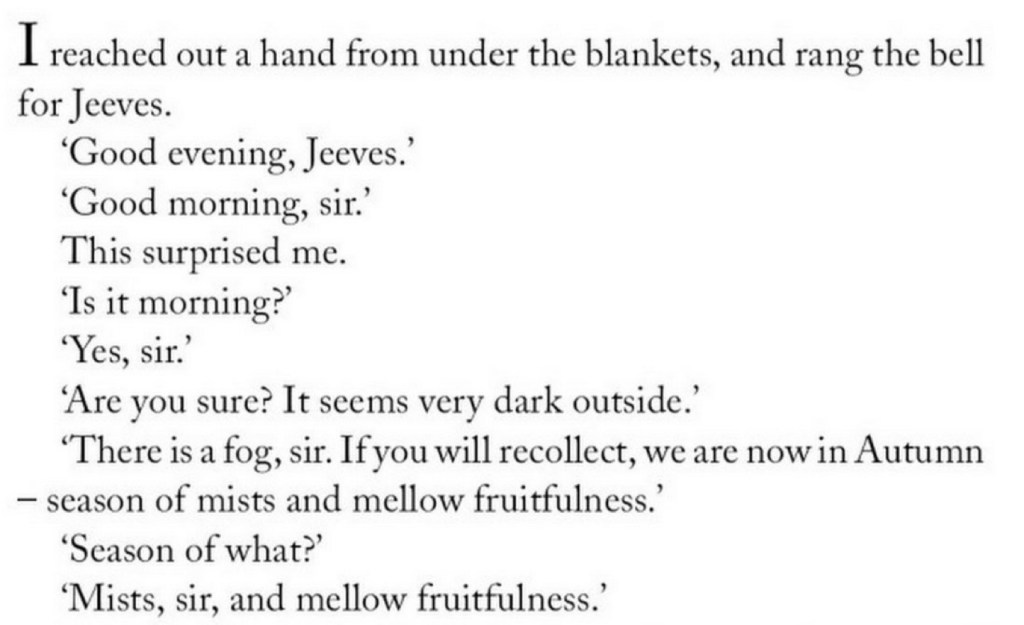
Isn’t that delightful?
Welcome to the season of mists and mellow fruitfulness. Enjoy the poem To Autumn by John Keats:
Season of mists and mellow fruitfulness,
Close bosom-friend of the maturing sun;
Conspiring with him how to load and bless
With fruit the vines that round the thatch-evesrun;
To bend with apples the moss’d cottage-trees,
And fill all fruit with ripeness to the core;
To swell the gourd, and plump the hazel shells
With a sweet kernel; to set budding more,
And still more, later flowers for the bees,
Until they think warm days will never cease,
For summer has o’er-brimm’d their clammy cells.
Who hath not seen thee oft amid thy store?
Sometimes whoever seeks abroad may find
Thee sitting careless on a granary floor,
Thy hair soft-lifted by the winnowing wind;
Or on a half-reap’d furrow sound asleep,
Drows’d with the fume of poppies, while thy hook
Spares the next swath and all its twined flowers:
And sometimes like a gleaner thou dost keep
Or by a cyder-press, with patient look,
Steady thy laden head across a brook;
Thou watchest the last oozings hours by hours.
Where are the songs of spring? Ay, Where are they?
Think not of them, thou hast thy music too,—
While barred clouds bloom the soft-dying day,
And touch the stubble-plains with rosy hue;
Then in a wailful choir the small gnats mourn
Among the river sallows, borne aloft
Or sinking as the light wind lives or dies;
And full-grown lambs loud bleat from hilly bourn;
Hedge-crickets sing; and now with treble soft
The red-breast whistles from a garden-croft;
And gathering swallows twitter in the skies.

Sometimes I think saints must have been extraordinary people, somehow different from the rest of us lugs, vested, perhaps, with some superior spiritual gifts or insights.
But then I realize, as did Vonnegut below, nope, just people like us, doing their best.
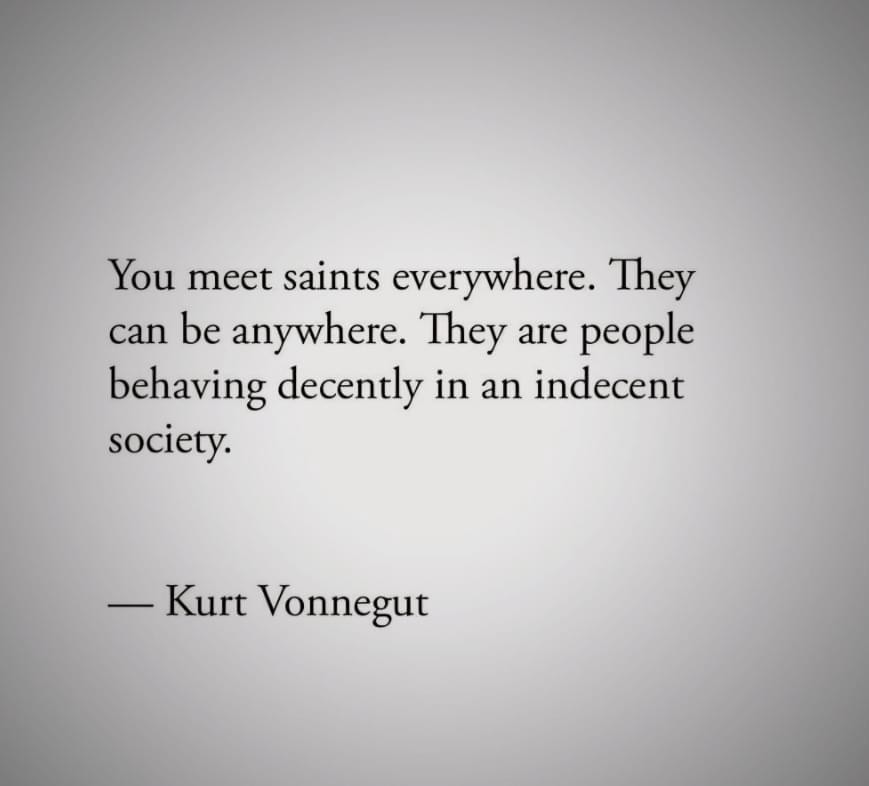
Whether we are ever canonized or not, this is our ‘job,’ isn’t it? To ‘behave decently in an indecent society’.
And then comes the hard part, to trust that your behaving decently will make a difference, whether you ever know about it or not.
Just keep making those ripples.

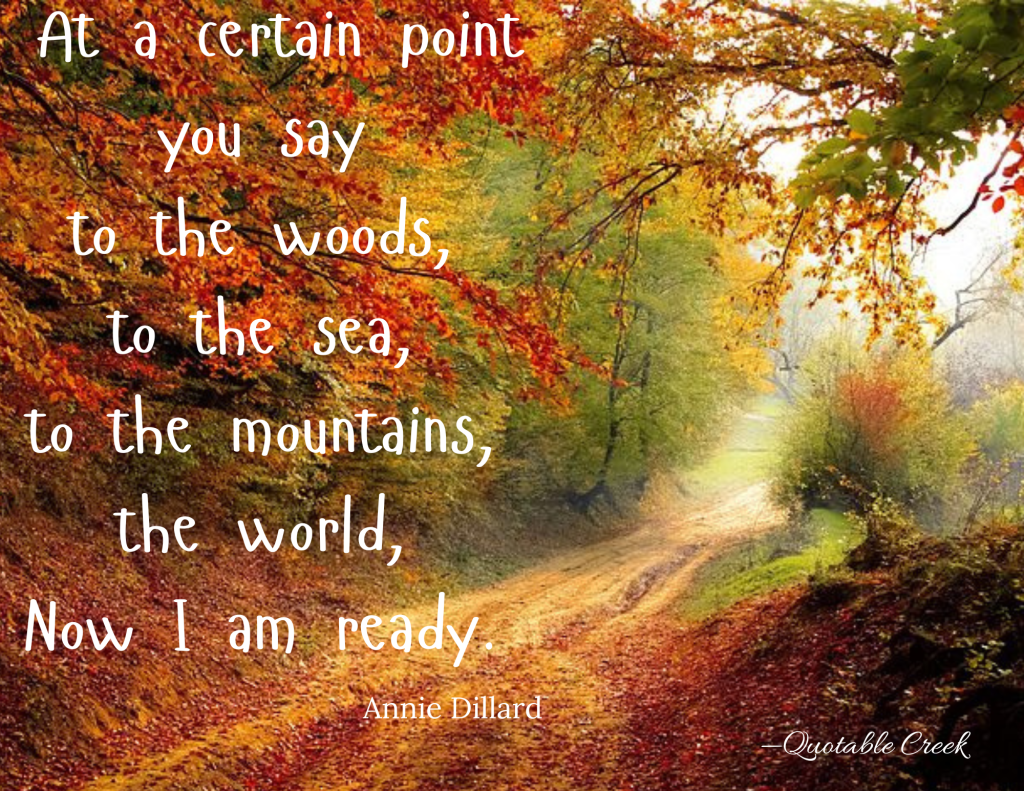
I’m listening, world. What do you have to teach me? Where should my attention be, to understand and, finally, get it, the great purpose and plan of it all?
Annie Dillard, in Teaching a Stone to Talk writes:
At a certain point, you say to the woods, to the sea, to the mountains, the world, Now I am ready. Now I will stop and be wholly attentive. You empty yourself and wait, listening. After a time you hear it: there is nothing there. There is nothing but those things only, those created objects, discrete, growing or holding, or swaying, being rained on or raining, held, flooding or ebbing, standing, or spread. You feel the world’s word as a tension, a hum, a single chorused note everywhere the same. This is it: this hum is the silence. Nature does utter a peep – just this one. The birds and insects, the meadows and swamps and rivers and stones and mountains and clouds: they all do it; they all don’t do it. There is a vibrancy to the silence, a suppression, as if someone were gagging the world. But you wait, you give your life’s length to listening, and nothing happens. The ice rolls up, the ice rolls back, and still that single note obtains. The tension, or lack of it, is intolerable. The silence is not actually suppression: instead, it is all there is.
And later:
The silence is all there is. It is the alpha and the omega. It is God’s brooding over the face of the waters; it is the blended note of ten thousand things, the whine of wings. You take a step in the right direction to pray into this silence, and even to address the prayer to ‘World.’ Distinctions blur. Quit your tents. Pray without ceasing.
Perhaps the aha moment isn’t in understanding as much as in being, a part within a vast whole, caught up in the mystery and the magnitude.

