Be kind.

kindness

Kindness isn’t something you ponder in your heart. It is something you do–with your hands, with your words, with your gifts. Person to person, face to face. Lift those who have fallen; feed those who are hungry; speak up for those without a voice; reach out to those who feel alone.

In her song, Hands, Jewel reminds us that even when our hands are small, they are the tools we have to help others and we must use them. That is the way we will use our lives to make a difference for the better in the lives of those around us.

When she was 18, pop singer Jewel lived in a van. One day, she walked into a store to shoplift a dress; but looking at her hands, she realized she controlled them. “I realized I was cheating myself.” Here’s a song titled ‘Hands’ with a beautiful refrain: ‘In the end, only kindness matters.”

Listen to Jewell’s beautiful song here. And, today, contemplate her words:

We will fight, not out of spite
For someone must stand up for what’s right
Cause where there’s a man who has no voice
There ours shall go singing

My hands are small, I know,
But they’re not yours they are my own
And I am never broken

Today, be kind. Look for any and every opportunity to make a difference.


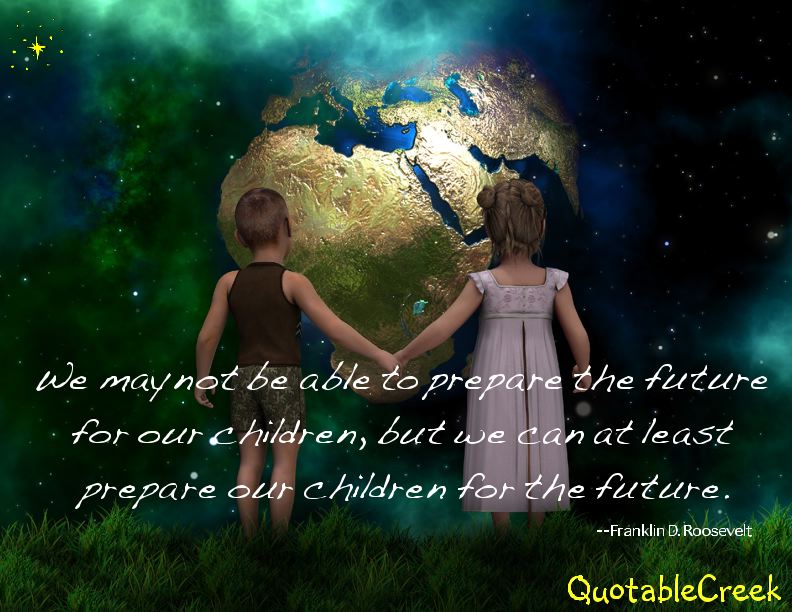
Lead your children well.

children

None of us knows what the future holds. But we do know the values we hold dear–honesty, integrity, love, compassion, empathy, respect, tolerance. As we raise our children, we instill these values. As adults, we model these values whether we win or lose, succeed or fail, sink or swim.  Watching us, they learn, and, as they go forward into their futures, they will bring these values to their own decisions. If each of us does this, we will leave the world a better brighter place for our having been here.

Rise up.

serenity

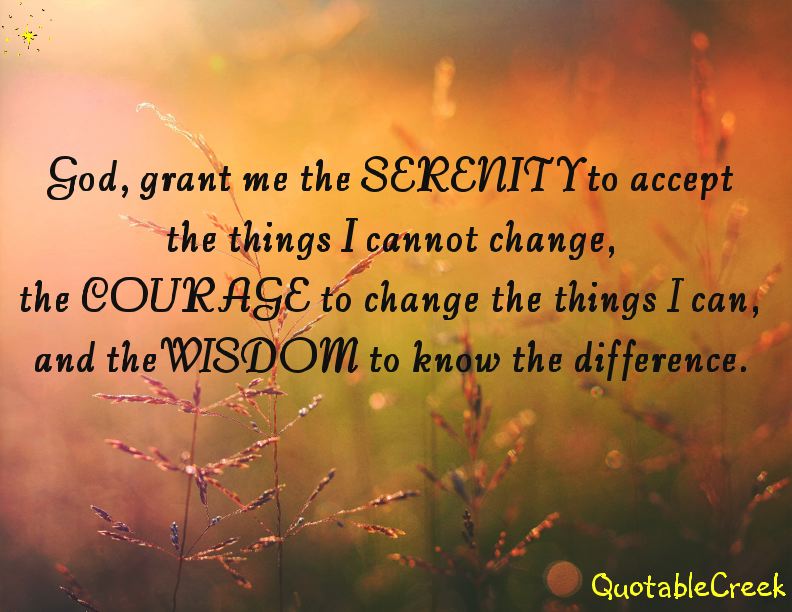
Life knocks us down. What helps us get back up?

It’s not about how smart we are, or who we know, or what school we went to. It’s about resilience. Our emotional IQs may be just as important, if not more important, than our actual IQs.

Our emotional intelligence is subtle:

Emotional intelligence is the “something” in each of us that is a bit intangible. It affects how we manage behavior, navigate social complexities, and make personal decisions that achieve positive results. Emotional intelligence is made up of four core skills that pair up under two primary competencies: personal competence and social competence.

And, as luck would have it, our emotional intelligence is something we can work to improve:

Unlike your IQ, your EQ is highly malleable. As you train your brain by repeatedly practicing new emotionally intelligent behaviors, your brain builds the pathways needed to make them into habits. Before long, you will begin responding to your surroundings with emotional intelligence without even having to think about it. And as your brain reinforces the use of new behaviors, the connections supporting old, destructive behaviors will die off.

Consider these nine habits of emotionally intelligent people:

1. They’re relentlessly positive. 
2. They have a robust emotional vocabulary.

3. They’re assertive.

4. They’re curious about other people.

5. They forgive, but they don’t forget. 
6. They won’t let anyone limit their joy.

7. They make things fun.

8. They are difficult to offend. 
9. They quash negative self-talk.

Focus on the things you can control. Don’t get lost in the negativity of things beyond your sphere of influence. Remember to stay positive and joyful.

And then get yourself back up!


Color your world!

color

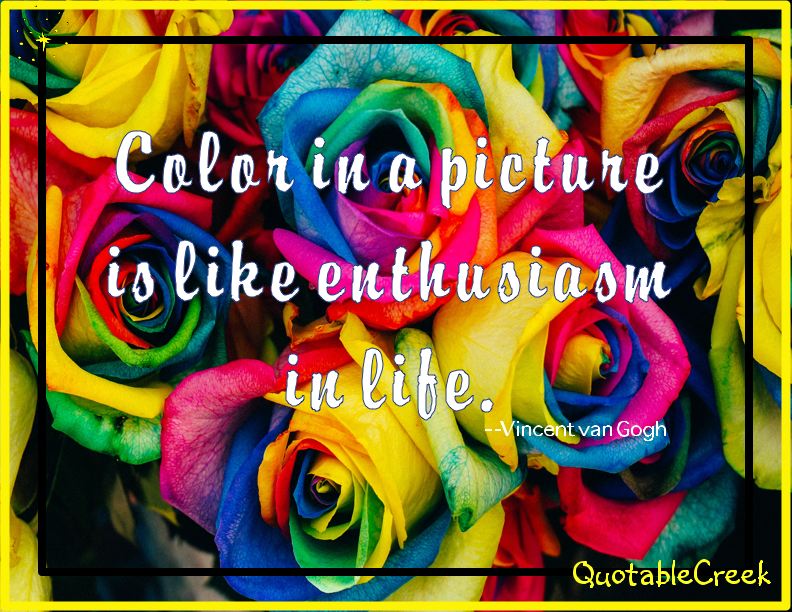
Are you having a basic beige day? A blue day? A red explosion day? Color is surprisingly important behind the scenes to our mood and can affect how you feel.

Some studies have shown that color can have dramatic consequences on behavior:

  • One study found that warm-colored placebo pills were reported as more effective than cool-colored placebo pills.

  • Anecdotal evidence has suggested that installing blue-colored streetlights can lead to reduced crime in those areas.

  • The temperature of the environment might play a role in color preference. People who are warm tend to list cool colors as their favorites, while people who are cold prefer warmer colors.

  • More recently, researchers discovered that the color red causes people to react with greater speed and force, something that might prove useful during athletic activities.

  • One study that looked at historical data found that sports teams dressed in mostly black uniforms are more likely to receive penalties and that students were more likely to associate negative qualities with a player wearing a black uniform.

One study suggests that placing misbehaving children in a pink room can calm them down better than anything else! And that calming effect has been employed in visiting team’s locker room to mellow them out and make them less likely to win a game.  Many things have been written about the use of color in decorating in creating a home that reflects the mood you are after.

So what to make of these interesting tidbits? First, there is so much more going on in our brains with respect to our moods and behaviors than we realize. But, second, why not try a bit of a color experiment on yourself? If you are feeling blue, dress in yellow. If you want some comfort, how about a nurturing tan? If nothing else, it will feel a lot like playing dress up, and we all know how good play is for even the most serious among us.

Laugh!!

chaplin

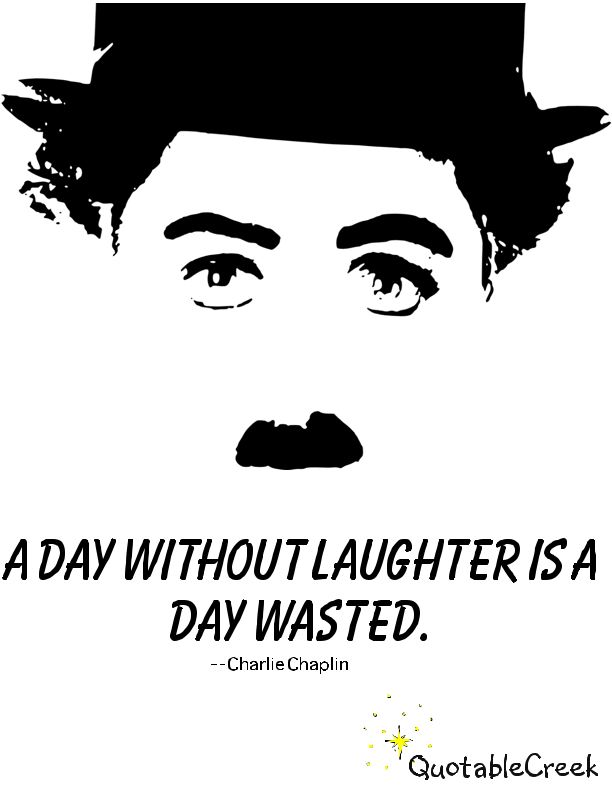
Laughter is good for what ails you. Studies show it improves your immune system, relieves pain, helps you connect with others, and improves your mood. In stressful times, laughter can cut the tension and increase cooperation.

But, make sure what you’re laughing at is good, clean fun. If someone is the butt of the joke, you might just be adding to the stress rather than getting a much-needed break. There is a line where funny videos inspire more concern for a victim than laughter. Racist or sexist jokes may well feel more like a weapon wielded than a funny bone tickled.

So, start with a smile and then, let her rip. Laughing at jokes, a situation, yourself… may just well be what the doctor ordered

Shine your light.

light

You were born to be a blessing to others. To shine your light where there is dark. To sing songs of praise. To give of yourself without holding back.

That’s kind of out there, isn’t it? Scary. Who are you to be shining a light in the dark places of the world, after all?

Marianne Williamson answers this question brilliantly:

Our deepest fear is not that we are inadequate. Our deepest fear is that we are powerful beyond measure. It is our light, not our darkness that most frightens us. We ask ourselves, Who am I to be brilliant, gorgeous, talented, fabulous? Actually, who are you not to be? You are a child of God. Your playing small does not serve the world. There is nothing enlightened about shrinking so that other people won’t feel insecure around you. We are all meant to shine, as children do. We were born to make manifest the glory of God that is within us. It’s not just in some of us; it’s in everyone. And as we let our own light shine, we unconsciously give other people permission to do the same. As we are liberated from our own fear, our presence automatically liberates others.

Shine, Baby, Shine!

What do you know for sure? Are you sure?

unsettled

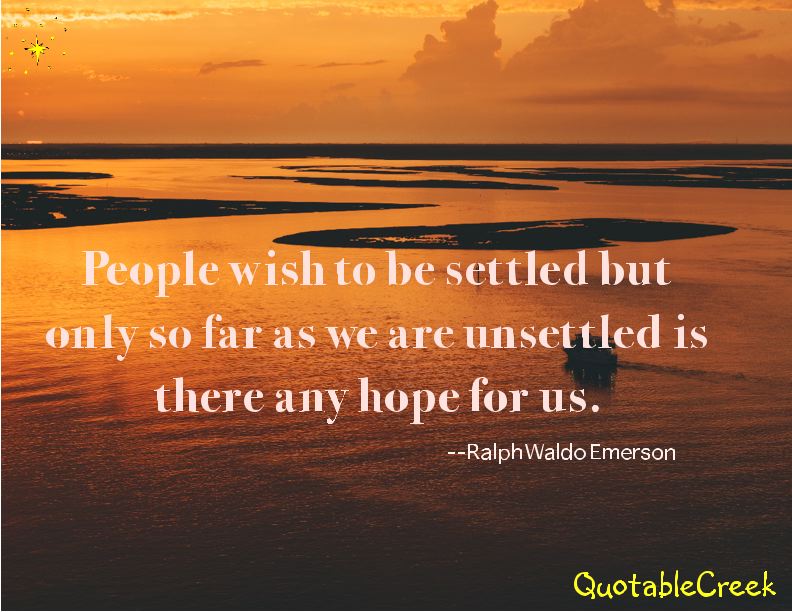
As you get older, do you think you know a lot or do you believe there is a lot that you don’t yet know? As young men and women, we think we have all the answers. But as we age, our experience shows us that there are many valid perspectives to something we thought was established. We learn that there is value in the multiple points of view in arriving at a more nuanced version of the truth. We realize that people can look at the same thing, but, because they are coming at the issue with different life experiences, they may see it differently and that both of those opinions may be true. In fact, it may well be that we have no hope of getting close to the concept of truth without the benefit of many points of view. We may be limited by the fetters of our own perceptions and filters.
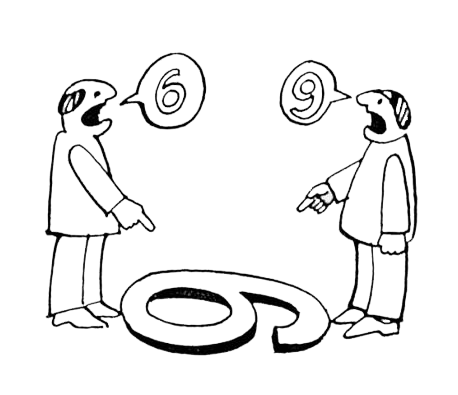
6

In this very insightful TED talk, Pico Iyer shares his creeping realization that the more we know, the more we see we don’t know:

I don’t believe that ignorance is bliss. Science has unquestionably made our lives brighter and longer and healthier. And I am forever grateful to the teachers who showed me the laws of physics and pointed out that three times three makes nine. I can count that out on my fingers any time of night or day. But when a mathematician tells me that minus three times minus three makes nine, that’s a kind of logic that almost feels like trust.

The opposite of knowledge, in other words, isn’t always ignorance. It can be wonder. Or mystery. Possibility. And in my life, I’ve found it’s the things I don’t know that have lifted me up and pushed me forwards much more than the things I do know. It’s also the things I don’t know that have often brought me closer to everybody around me.

For eight straight Novembers, recently, I traveled every year across Japan with the Dalai Lama. And the one thing he said every day that most seemed to give people reassurance and confidence was, “I don’t know.”

“What’s going to happen to Tibet?” “When are we ever going to get world peace?” “What’s the best way to raise children?”

“Frankly,” says this very wise man, “I don’t know.”

It’s scary to admit we don’t know. We want to know. We want to believe that we are safe and that our futures are secure. We want to believe that if we behave in a certain way, it will result in predictable results.

The truth is harder. Honest people can be accused of deceit. Innocent people can die. Tragedy can strike. Relationships can fracture. But embracing uncertainty as the only truly certain thing in life can, in fact, be surprisingly grounding. Iyer continues:

Knowledge is a priceless gift. But the illusion of knowledge can be more dangerous than ignorance.

Thinking that you know your lover or your enemy can be more treacherous than acknowledging you’ll never know them. Every morning in Japan, as the sun is flooding into our little apartment, I take great pains not to consult the weather forecast, because if I do, my mind will be overclouded, distracted, even when the day is bright.

I’ve been a full-time writer now for 34 years. And the one thing that I have learned is that transformation comes when I’m not in charge, when I don’t know what’s coming next, when I can’t assume I am bigger than everything around me. And the same is true in love or in moments of crisis. Suddenly, we’re back in that trishaw again and we’re bumping off the broad, well-lit streets; and we’re reminded, really, of the first law of travel and, therefore, of life: you’re only as strong as your readiness to surrender.

In the end, perhaps, being human is much more important than being fully in the know.

Today embrace the uncertainty of life and enjoy the present moment right here in front of you. Around the corner, there may well be a surprise insight waiting to stretch you and challenge the very things you think you know. Embrace that, too.
Making sense of the dark.

kingdomofnight

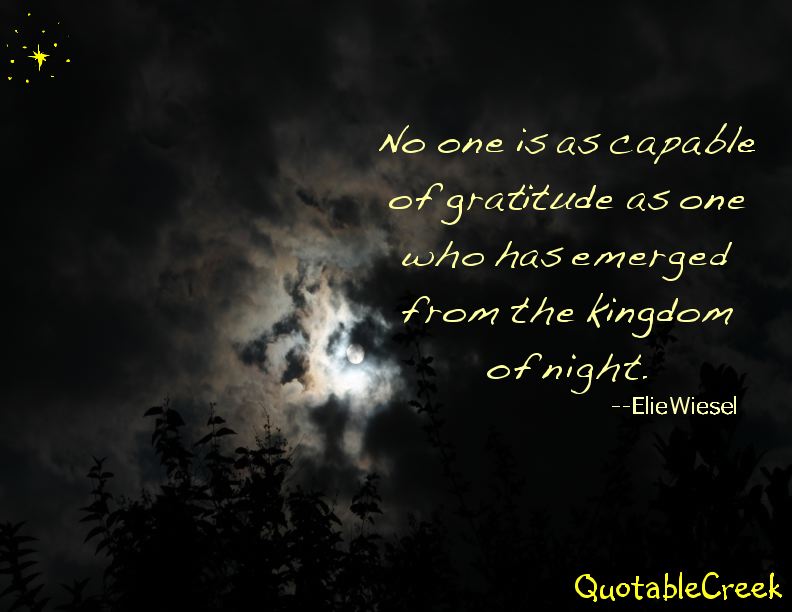
If anyone could speak to emerging from the kingdom of night, it would be Elie Wiesel. Taken with his parents and sisters to Auschwitz, Wiesel writes of horrors beyond comprehension endured in WWII concentration camps, including the shame he felt in overhearing his father being beaten but being unable to intervene. Orphaned there, he survived and went on to write of his experience and to advocate for the minority or mistreated. He spoke with the authority of the oppressed and illuminated the need for those who witness abuse to not stand silent, but to engage on behalf of that which is right and good:

“The opposite of love is not hate, it’s indifference. The opposite of art is not ugliness, it’s indifference. The opposite of faith is not heresy, it’s indifference. And the opposite of life is not death, it’s indifference.”

For those reading about something as horrific as the Nazi treatment of Jews, we have trouble understanding. What makes people hate? How can a nation stand by and tolerate the mistreatment and extermination of its own people?

But as we search the darkness for answer, light emerges. While, yes, there are plenty of villains; there, too, are heroes. People like Wiesel rise up and urge us toward our better natures and give us courage to stand down evil.

As we go through our lives today, we can look for ways to rise up, to speak out against injustice and indifference, to value love over hate, and to hold ourselves accountable to those parts of our souls that are light and good.


Take heart.

encouragement

Where do you find encouragement?

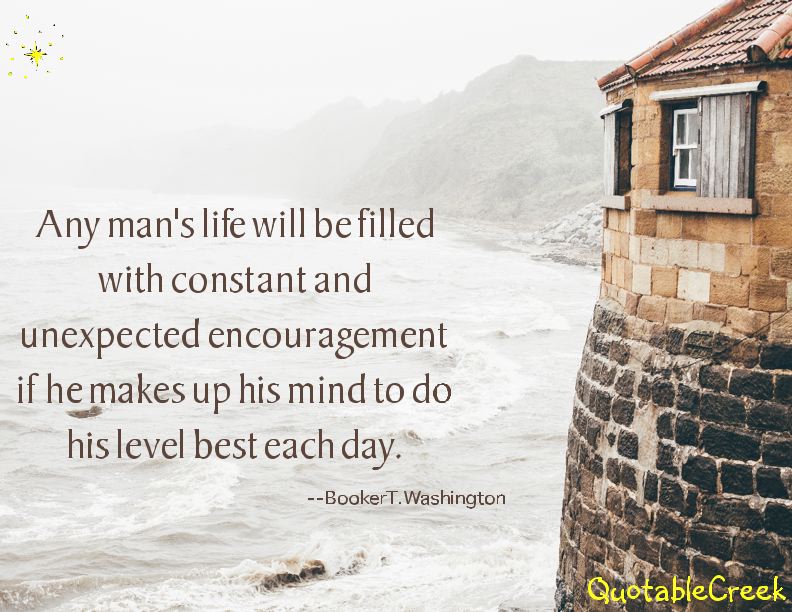
Literally, ‘encouragement’ means to  ‘make strong, hearten’ or ‘put in courage or heart’. Sometimes encouragement is easy to spot–a kind word, praise, a thumbs up, an acknowledgment that your work matters. But sometimes we have to seek encouragement by taking a long view.  Are relationships we are working on getting stronger? Are we making progress toward a goal? Do we feel a sense of peace in knowing we did our best?

To help give you a sense of encouragement today, take a moment to listen to this audio clip of 600 kids singing to God:

Spirit of God

Spirit of God
Fill up my life,
fill up my soul
With your power

And fill me, fill me, fill me

With your great presence
fill me, fill me
With your power
fill me, fill me
With all your truth

Take heart, friend.

Lighten up

groucho

Heard a good joke lately? Watched a funny cat video perhaps? Maybe a picture of a spaniel in a Groucho mask?

Humor is always good for the heart and soul. It can even, maybe, cure what ails you. Dr Cynthia Thaik, a cardiologist, says:

An old Yiddish proverb says, “What soap is to the body, laughter is to the soul.” Everyone knows that laughter makes you feel good and puts you in high spirits, but did you also know that laughter actually causes physiological responses that protect the body from disease and help your vital organs repair themselves? A good laugh can be compared to a mild workout, as it exercises the muscles, gets the blood flowing, decreases blood pressure and stress hormones, improves sleep patterns and boosts the immune system. Furthermore, a study by the John Hopkins University Medical School showed that humor and laughter can also improve memory and mental performance. Yet despite the fact that laughter has so many benefits, far too many of us forget to even crack a smile every once in a while, let alone laugh.

She suggests some ways to lighten up with humor. Finding the humor in a bad situation can make it better. Mirth releases endorphins and is contagious, a twofer! Surrounding yourself with funny people or remembering funny incidents can lift your mood.

Take time to laugh today. If you need help finding your funny, consider this. Or you can always get a dog and put him in a Groucho mask.