Stand in awe.

awe

When was the last time you stood in awe of the universe and felt your own smallness within the world’s immensity? It turns out experiencing that smallness, that awe and wonder, is good for what ails you. It could also be part of the glue that holds society together. Scientists believe awe has an important impact on well-being:

One important distinction between awe and other emotions (like inspiration or surprise) is that awe makes us feel small — or feel a sense of “self-diminishment” in science-speak. And that’s good for us, Stellar explains.

We spend a lot of our time thinking about what’s going on in our world and what’s affecting us directly. “Awe changes that, making us see ourselves as a small piece of something larger.”

Feeling small makes us feel humbled (thereby lessening selfish tendencies like entitlement, arrogance, and narcissism). And feeling small and humbled makes us want to engage with others and feel more connected to others, Gordon adds.

“All of that is important for wellbeing,” she says.

Data from a 2018 study that both Stellar and Gordon worked on found that individuals who reported experiencing awe more often in their daily lives were rated more humble by their friends. And after participants experienced awe as part of the study (by watching awe-inspiring videos), they acknowledged strengths and weaknesses in a more balanced way and they were more likely to recognize the role of outside forces (such as luck, a greater being, or others) in their personal accomplishments (such as getting accepted into a university), compared with individuals who had not watched awe-inspiring videos.

These effects of feeling small, feeling humbled, and the desire to connect with others, according to evolutionary scientists, is thought to be part of the reason over the course of human history mankind has formed groups, societies, and lived collectively.

As identified in the article, to experience more awe in your life try these four things: Go out more in nature, get out of your comfort zone, look up, and have an open mind. Or, as Dr. Beau Lotto puts it, “engage with the world with a more open mind, see possibilities, ask questions, and look for the impossible.” It can only be good for us to move our own selves out of the center of the universe in our sensibilities.

Be kind.

kind

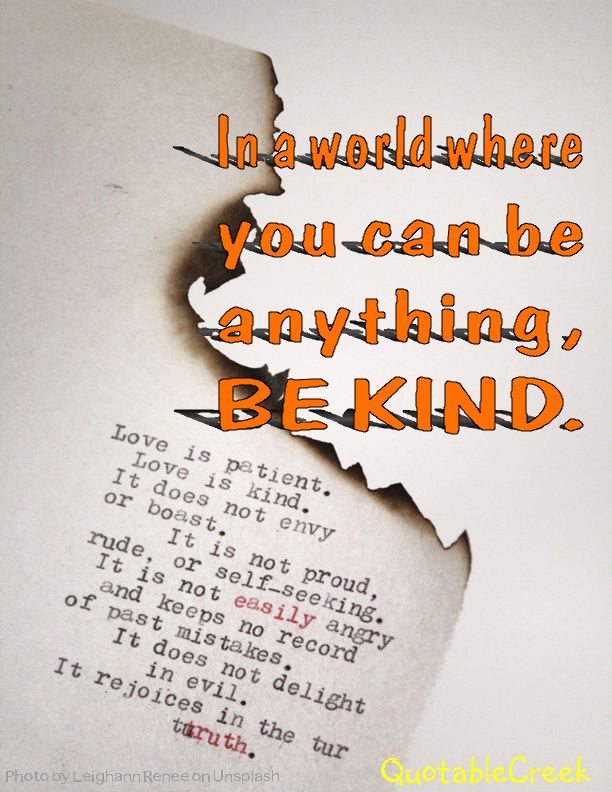
As we bump and bustle our way through life, we often don’t notice other people much, maybe never pause to wonder what they may be going through in life. Usually they are just the person in the way, or the one in front of us in line, or the one who is doing a dismally poor job of getting our order right. But if we could step back and see their interior lives, we may get a whole lot of patience in a hurry. Everybody is carrying a load of some kind. Everybody hurts.

Or, as Jon Pavlovitz says in this insightful article, everybody grieves:

If we could keep this reality in the forefront of our mind as we make our way through the hustle and bustle, we would be gentler, kinder, more patient. And that would do a world of good for our weary world.

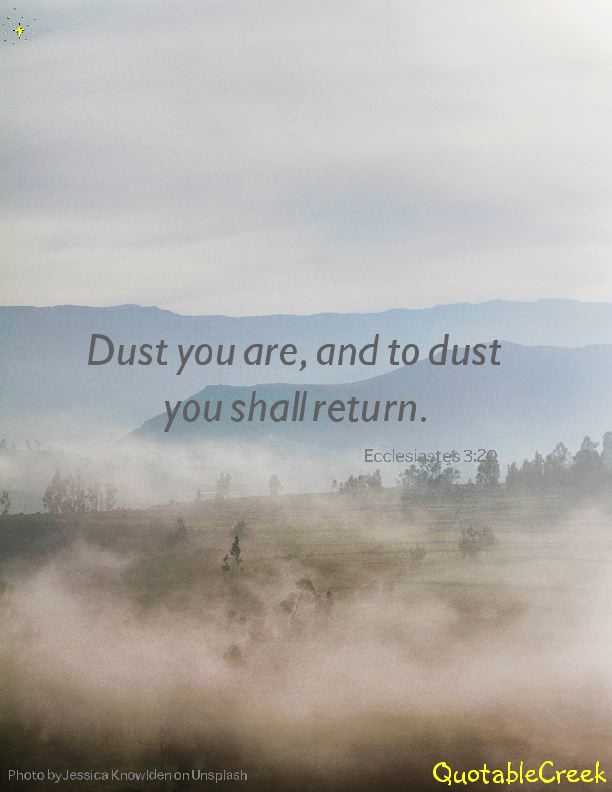
Dust you are

dust

The world existed before us and will go on after us. That’s a hard thing to wrap our minds around because we see things from our point of view. It’s hard to picture a scenario without ourselves in it. And yet, that day will come. Our chance to make our mark will end. While it seems at first like a very sobering thought, it can be uplifting because it reminds us that we are here now; this is our time to dance, to love, to give, to celebrate, to reach out to the other dust particles like ourselves and do our bit. This is our moment. Let’s make the most of it.

Consider the birds.

silence

Consider the birds. They have so much to teach us. They sing; they fly; they soar. When the storm is over, they come out and sing, fly, and soar again. They vary dramatically from the tiny hummingbird to the great bald eagle, but they have so much in common. And, when we are quiet, they remind us to look up, to look to the future and the possibility that lies there. It turns out considering the birds is good for our well-being, keeping depression at bay.

Be still and notice the birds. Do you see the vulture with its huge wings soaring above you? Do you hear the hawk shriek?  Do you see the crows tuck in their wings and dive to open them again and rise only after you gasp, worried?

Watch them bathe in a puddle, delighting in the way the water splashes around them. Listen to them sing.

They sing for you.

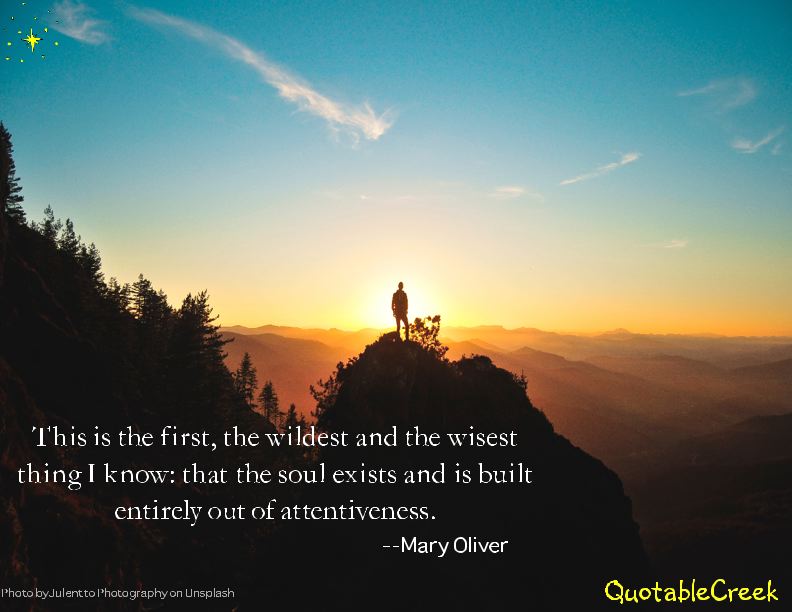
What lies between you and me?

attentiveness

Loneliness is an epidemic. That heart to heart connection with others, our world, our communities is lost as we race from one To Do to the next. Superficial greetings take the place of deep conversation, and we substitute more for better.

When was the last time you felt truly heard by another person–not heard so they could diagnose you or give you instructions for how to do better–but heard as though someone paused to notice the real you, the deep down you?

When was the last time you paused to consider another person, not as a means to an end on your own journey, but as a person with their own dreams and heart desires, their own wants and needs, their own untold story hoping to be heard?

When was the last time you paused to consider the world around you, from the beauty of nature to the miracle of your own next breath?

Perhaps our loneliness epidemic would be eased if we all were to slow down and notice each other, pause to realize we are here for each other,  and be vulnerable enough to allow ourselves to see and be seen.

Mary Oliver’s poems open us in so many ways– to nature, to each other, to our own hidden places. Perhaps this one on loneliness will speak to you today:

Loneliness

When loneliness comes stalking, go into the fields, consider
the orderliness of the world. Notice
something you have never noticed before,

like the tambourine sound of the snow-cricket
whose pale green body is no longer than your thumb.

Stare hard at the hummingbird, in the summer rain,
shaking the water-sparks from its wings.

Let grief be your sister, she will whether or not.
Rise up from the stump of sorrow, and be green also,
like the diligent leaves.

A lifetime isn’t long enough for the beauty of this world
and the responsibilities of your life.

Scatter your flowers over the graves, and walk away.
Be good-natured and untidy in your exuberance.

In the glare of your mind, be modest.
And beholden to what is tactile, and thrilling.

Live with the beetle, and the wind.

~ Mary Oliver ~


A heartfelt apology can lead to reconciliation.

goodapology


Some apologies make things worse. They don’t feel like apologies at all. They feel, instead, like just more hurt. Other apologies acknowledge the wound and help it heal. What makes the difference?

In When Sorry Isn’t Enough: Making Things Right with Those You Love, Gary Chapman (of Five Love Languages fame) and Jennifer Thomas suggest that a true apology must have six characteristics:

Expressing regret–It’s important for an apology to be for something you did or said.  The more specific, the more it acknowledges the harm caused, the better. “I’m sorry you’re so sensitive,” doesn’t really feel like an apology because it is just restating some perceived flaw in the victim and isn’t focussing on anything you did wrong. Even if the harm was wholly unintended, when your actions cause another person pain, an apology is warranted. It goes to the very essence of the apology: I did not mean to hurt you.

Accepting responsibility— Yes, the pressures of the world can sometimes lead us to get wound up and stressed and to hurt other people, but that does not make it the world’s fault. We control ourselves. We are responsible if we act badly. Blaming the boss, the dog, the economy, the other drivers is deflecting. Apologies for the state of the world or all its ills will not feel like a real apology to the person you lashed out at. Apologizing for losing your temper or not considering the effects of your actions will.

Making restitution–“How can I make it right?” are powerful words. It shows an acknowledgement that what you did caused someone else harm. Maybe you can’t make it right. Maybe you can never make it right. But listening to the victim explain the damage is a powerful step forward in the process. Listening here is key–no justifying your actions, no quarreling with the facts, no defenses, just listening to the other person share their perspective. If there is something you can do to make things better, do that thing.

Genuinely repenting–If you are truly sorry, and have listened deeply to the pain you’ve caused, you will not want to cause that person pain again. You will stop causing the damage. You will want to change. Maybe you will need to write down the steps you want to take to prevent causing further harm. Maybe you will slip up and need to start again. But the most important thing is that you will try to not do this again. Otherwise, are you really sorry?

Requesting Forgiveness–“Can you forgive me?” are powerful words. They show you care about the relationship. They show you understand you did things wrong. They show you are not in control of the relationship.

Everyone messes up. Not everyone takes responsibility for messing up. When we do take responsibility for the harm we’ve caused, it may strengthen our relationships and help them grow stronger. Trust can reenter, fostering healing.

Randy Pausch, the author of the quote above, gave a powerful Last Lecture before he died young of pancreatic cancer. His timeless words can teach us all a lesson about life and living.


Hope.

hope

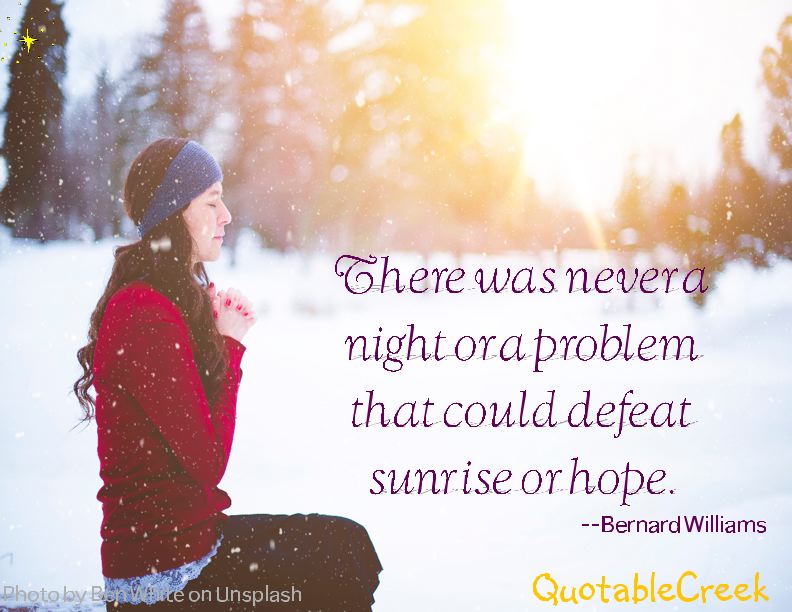
Sunrise defeats night. The darkness will be driven away. When in the midst of the darkness, it may feel unending, but as day follows night, this, too, shall pass. The beauty of a sunrise is a lovely image to keep in mind when going through a problem. As sunrise defeats night, so hope conquers a problem. In times of great difficulty, we must hold on to hope that things will improve and that we can help.

Jane Goodall speaks to her hope for our future and, specifically, her hope in our youth in this moving speech.

She is right: if we don’t have hope, we give up, we do nothing. She says, “In this world of violence and fear, we must have hope for a better future.” That hope will sustain us and give us strength to solve the problems we face, as surely as day will follow night if we hold on.

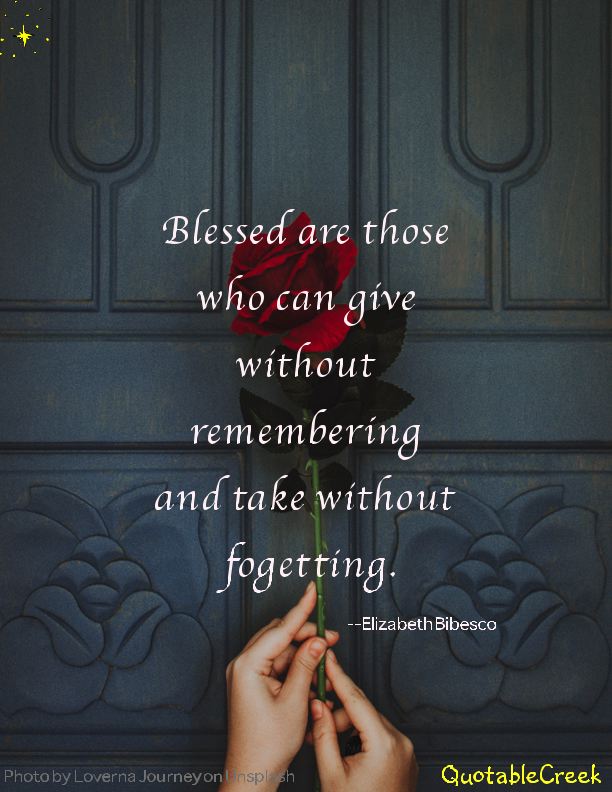
To give without remembering.

give

How many gifts come with strings? The anonymous giver is a rarity. People want attention for doing good things, sometimes more than just attention. Sometimes they want people to feel indebted….forever.

The humble taker is as rare a unicorn as the anonymous giver. The myth of the self-made man is much more palatable than the humility of a man who realizes that all he has, is, and will ever be is founded on the generosity of others, many others, who have helped.

And yet generosity without self-interest and abundant gratitude are two qualities that lead to happiness, to community, to joy. We would do well to remember these things.

For more on Anonymous Giving by this author, go here.


Mind the gap.

certainty

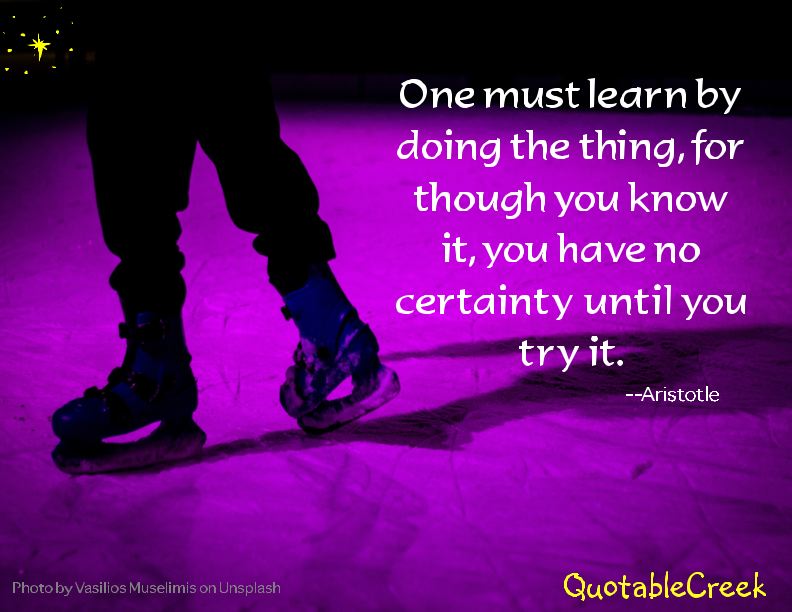
How lovely things would be if the way we picture ourselves doing something in our heads is the way it plays out in real life. The beautiful prose, perfect plotting, and subtle characterization all laying themselves down on the page when pen is lifted rather than being cruelly translated into the awkward phrasing, cliched plots, and stilted characters plaguing a first draft. If perfect leaps, spins, and arabesques just happen rather than the more likely falls on the bum. If we were already perfect rather than striving. If there were no gap between where we are and where we would like to be.

With all the armchair quarterbacks and critics out there on virtually every issue, you’d almost think effort and expertise don’t count for anything. And yet, mastery is always the result of effort. Full stop. Every master painter, skater, dancer, author, was once a novice. In fact, that journey from novice to master is the important thing, and those hacks on the sidelines are missing the point. As Theodore Roosevelt said:

It is not the critic who counts; not the man who points out how the strong man stumbles, or where the doer of deeds could have done them better. The credit belongs to the man who is actually in the arena, whose face is marred by dust and sweat and blood; who strives valiantly; who errs, who comes short again and again, because there is no effort without error and shortcoming; but who does actually strive to do the deeds; who knows great enthusiasms, the great devotions; who spends himself in a worthy cause; who at the best knows in the end the triumph of high achievement, and who at the worst, if he fails, at least fails while daring greatly, so that his place shall never be with those cold and timid souls who neither know victory nor defeat.

So this gap, between where we want to be and where we are, is where we focus our efforts and attention. Not on the critic, because everyone stumbles. But we press on. For to be great at anything takes practice and effort, and our attempt is awkward and halting, ungainly and bumbling at first. But it gets better. And those sitting on the sidelines, afraid or busy criticizing others, aren’t moving forward unless they, too, mind the gap and try.


What are the things you know for sure?

change

What is it that we can hold fast and know for sure? So much changes. Earth isn’t flat and isn’t the center of the universe although generations came and went believing that to be true. Gravity kept the planets in orbit and people from floating off long before anyone noticed and named it. Atoms existed before anyone discovered they could be split.

What is it that may be discovered in the future that can make sense of the way we act and feel now? Is there a key to explaining human behavior? A force, perhaps, that pulls people apart despite a deep desire to connect? What if there is another sense more important than the five we rely on now?

One thing good about change is it keeps you humble. Or should. Knowing that what we know is a minuscule speck in the ocean of all that can be known helps us stay open and curious. Where would the adventure be if we ever knew it all anyway?