Opening to gratitude.

What can take us out of our gloom and melancholy? Sometimes the veil is pulled back and we can glimpse a larger picture, a connection between all things, an appreciation for the here and now, and we are grateful.
Brother David Steindl-Rast explains how these jolts into a different reality can change a day, and, perhaps, even a world:
My vision of the world? My hope for the future? This topic sounds a bit big. Allow me to start small—say, with crows. They are my special friends. Just as I am writing these lines, one of them, the shy one among my three regular guests, is gobbling up the Kitty Fritters I put out for them. This brings to mind a short poem by Robert Frost that might provide a stepping-stone for our deliberations about world-vision and hope for the future—if any.
The way a crow
Shook down on me
The dust of snow
From a hemlock tree
Has given my heart
A change of mood
And saved some part
Of a day I had rued.Surely you will remember a similar experience of your own: some quirky little incident made you smile, changed your mood, and suddenly the world looked brighter. If this ever happened to you, the key for understanding a causal chain of great consequence is in your hand: any change in attitude changes the way one sees the world, and this in turn changes the way one acts. When Robert Frost claims that the crow’s little trick “saved” part of a day he had rued, or of which he repented, he means this in the full sense of a redeeming change of heart. When he got home, I’m sure he greeted Mrs. Frost in a better mood than he would have been able to do without the crow’s nudge. And there is no telling what this did to her—and to the way she treated the dog afterwards, or talked more kindly to her neighbor.
He continues to suggest five small, easily adopted ways to bring this gratitude into your life and, consequently, into the world:
1. Say one word today that will give a fearful person courage.
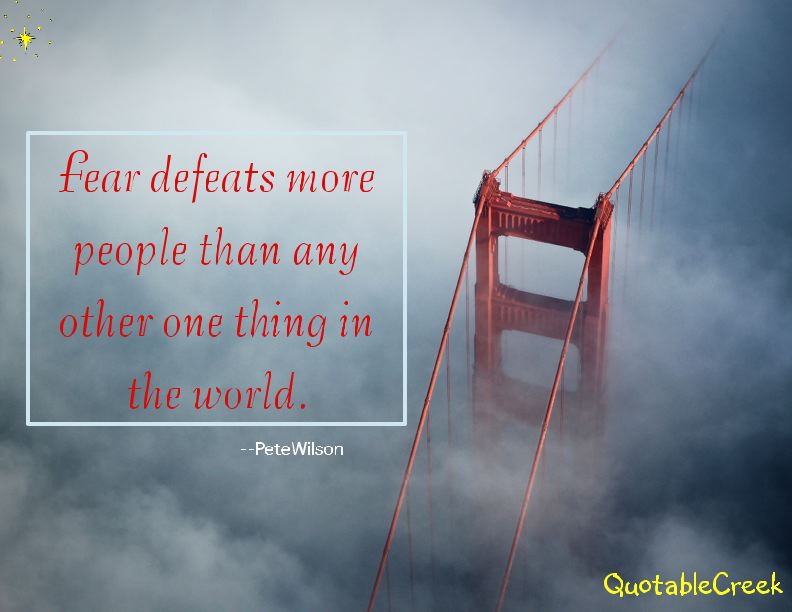
All gratitude expresses trust. Suspicion will not even recognize a gift as gift: who can prove that it isn’t a lure, a bribe, a trap? Gratefulness has the courage to trust and so overcomes fear. The very air has been electrified by fearfulness these days, a fearfulness fostered and manipulated by politicians and the media. There lies our greatest danger: fear perpetuates violence. Mobilize the courage of your heart. Say one word today that will give a fearful person courage.
2. Make a firm resolution never to repeat stories and rumors that spread fear.
Because gratitude expresses courage, it spreads calm. Calm of this kind is quite compatible with deep emotions. In fact, mass hysteria fostered by the media betrays a morbid curiosity rather than deep feeling—superficial agitation rather than a deep current of compassion. The truly compassionate ones are calm and strong. Make a firm resolution never to repeat stories and rumors that spread fear. From the stillness of your heart’s core reach out. Be calm and spread calm.
3. Make contact with people whom you normally ignore
When you are grateful, your heart is open—open towards others, open for surprise. When disasters hit we often see remarkable examples of this openness: strangers helping strangers sometimes in heroic ways. Others turn away, isolate themselves, dare even less than at other times to look at each other. Violence begins with isolation. Break this pattern. Make contact with people whom you normally ignore—eye-contact at least—with the cashier at the supermarket, someone on the elevator, a beggar. Look a stranger in the eyes today and realize that there are no strangers.
4. Give someone an unexpected smile today
You can feel either grateful or alienated, but never both at the same time. Gratefulness drives out alienation; there is not room for both in the same heart. When you are grateful you know that you belong to a network of give-and-take and you say “yes” to that belonging. This “yes” is the essence of love. You need no words to express it; a smile will do to put your “yes” into action. Don’t let it matter to you whether or not the other one smiles back. Give someone an unexpected smile today and so contribute your share to peace on earth.
5. Listen to the news today and put at least one item to the test of Common Sense.
What your gratefulness does for yourself is as important as what it does for others. Gratefulness boosts your sense of belonging; your sense of belonging in turn boosts your Common Sense—not the conventional mind set which we often confuse with it. The common sense that springs from gratefulness is incompatible with a set mind. It is just another name for thinking wedded to cosmic intelligence. Your “yes” to belonging attunes you to the common concerns shared by all human beings—all beings for that matter. In a world we hold in common, nothing else makes sense but Common Sense. We have only one enemy: Our common enemy is violence. Common Sense tells us: we can stop violence only by stopping to act violently; war is no way to peace. Listen to the news today and put at least one item to the test of Common Sense.
The five steps I am suggesting here are small, but they work. It helps that they are small: anyone can take them. Imagine a country whose citizens—maybe even its leaders—are brave, calm, and open towards each other; a country whose people realize that all human beings belong together as one family and must act accordingly; a country guided by Common Sense. To the extent to which we show ourselves not hateful but grateful this becomes reality.
Who would have thought that a prankish crow shaking down snow from a hemlock tree could inspire this vision of a sane world? Well, if we leave it to the crows, there is still hope.
Small steps; big pay-off. And, to remember, keep your eyes open for the birds. They are there, singing songs of hope.


 QuotableCreek.com