Who are your heroes?

couragemccain

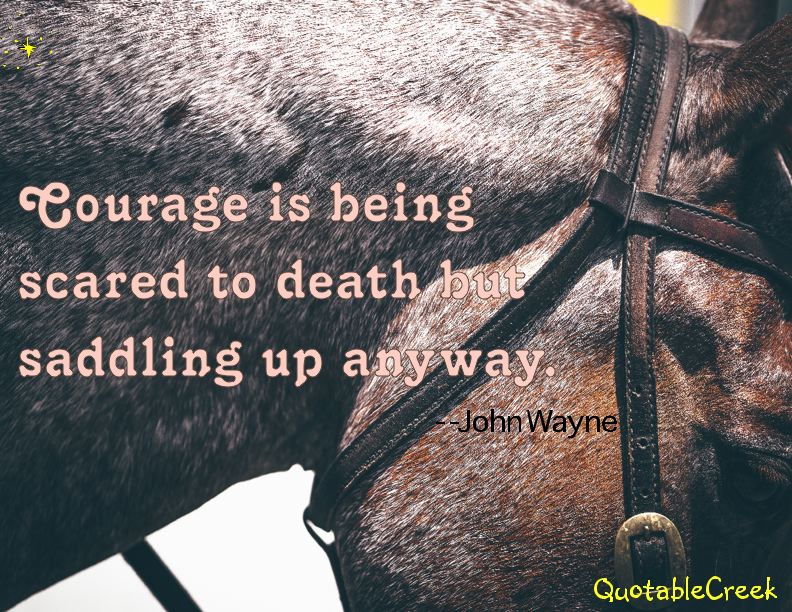
Who are your heroes? It is really an enlightening exercise to sit for a minute and ponder this question. Are your heroes, perhaps, people who fought against injustice, spoke out when they could have remained silent, ran into danger to save others, had a vision for the world that transcended the accepted theories?

It tells us something of ourselves to consider our heroes and perhaps points a way to where we might use our voices or actions to better the world.

No matter who our heroes are, though, it is unlikely they acted fearlessly. It is far more likely that they understood the dangers, were afraid, but did it anyway because it was important.

We can, too.

Have courage.

couragemuscle

What frightens you? Is it holding you back from trying new things, meeting new people, going new places? Fear is a crippler. Your mind is extremely good at playing worst case scenarios for you in the wee hours. Habit seems safe, so we stick to the same things, day in and day out.

But at what cost?

What is out there waiting to be discovered? Who is a friend you have yet to meet?

Sometimes we have to push against our fear, take the first step, even if it is just a baby step. And then keep walking. Keep exploring. Keep learning. Keep opening up to new people and new possibilities. The world is full of opportunities waiting to be experienced. You are capable of growing and blossoming and stretching.

Take that step.

Be patient.

roar

What is worth fighting for? Sometimes a battle is won in a courageous show of strength and derring do. A fireman runs into a burning building to save a child. A passerby stops to help victims of an accident. A pilot steers a damaged plane to safety.

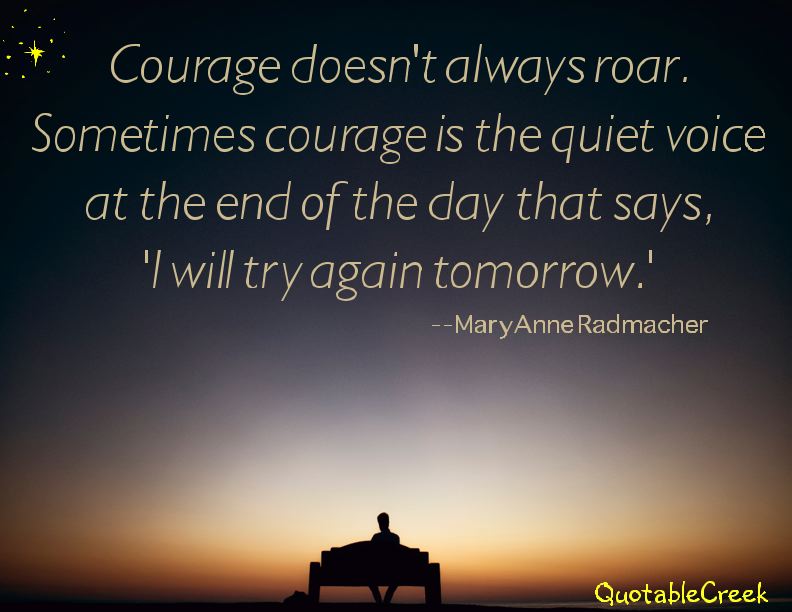
But sometimes the battle requires showing up time after time with love, kindness, and patience. Not giving up on someone. Having faith that love will win. Believing that relationships can be salvaged.

That takes courage, too.

Rise up.

serenity

Life knocks us down. What helps us get back up?

It’s not about how smart we are, or who we know, or what school we went to. It’s about resilience. Our emotional IQs may be just as important, if not more important, than our actual IQs.

Our emotional intelligence is subtle:

Emotional intelligence is the “something” in each of us that is a bit intangible. It affects how we manage behavior, navigate social complexities, and make personal decisions that achieve positive results. Emotional intelligence is made up of four core skills that pair up under two primary competencies: personal competence and social competence.

And, as luck would have it, our emotional intelligence is something we can work to improve:

Unlike your IQ, your EQ is highly malleable. As you train your brain by repeatedly practicing new emotionally intelligent behaviors, your brain builds the pathways needed to make them into habits. Before long, you will begin responding to your surroundings with emotional intelligence without even having to think about it. And as your brain reinforces the use of new behaviors, the connections supporting old, destructive behaviors will die off.

Consider these nine habits of emotionally intelligent people:

1. They’re relentlessly positive. 
2. They have a robust emotional vocabulary.

3. They’re assertive.

4. They’re curious about other people.

5. They forgive, but they don’t forget. 
6. They won’t let anyone limit their joy.

7. They make things fun.

8. They are difficult to offend. 
9. They quash negative self-talk.

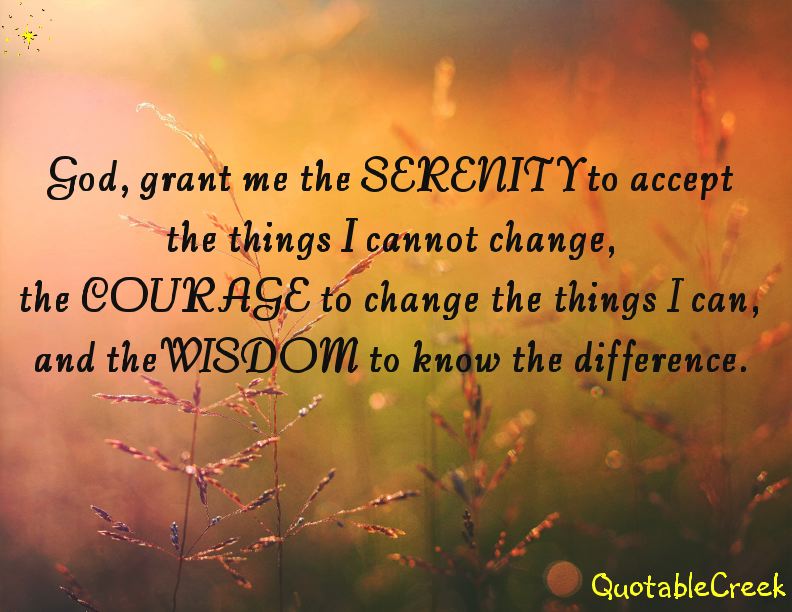
Focus on the things you can control. Don’t get lost in the negativity of things beyond your sphere of influence. Remember to stay positive and joyful.

And then get yourself back up!