We’ve always done it this way. Have you heard this? Said it? Maybe it’s time to look at ‘it’ with fresh eyes.
The same is true for the way we act, think, believe. Take a look. Is there anything there that is worth a reconsideration?
As we age, it’s easy to fall into ruts, easy to believe our way is the right way, easy to assume any problems are the other person’s fault.
Self-reflection, hard, soul-deep reflection, the kind of reflection that might be filled with regret and tears and epiphanies and apologies, is a good tune-up for our inner selves. Without it, there will be no progress.
Do you have any difficult people in your life? Chances are you can’t force them to be less toxic, but there are steps you can take to be less bothered by the encounter. In this article by Christine Carter, she suggests, among other things, that showing mercy to this difficult person will rebound to you:
Anne Lamott defines mercy as radical kindness bolstered by forgiveness, and it allows us to alter a communication dynamic, even when we are interacting with someone mired in anger or fear or jealousy. We do this by offering them a gift from our heart. You probably won’t be able to get rid of your negative thoughts about them, and you won’t be able to change them, but you can make an effort to be a loving person. Can you buy them a cup of coffee? Can you hold space for their suffering? Can you send a loving-kindness meditation their way?
Forgiveness takes this kindness to a whole new level. I used to think I couldn’t really forgive someone who’d hurt me until they’d asked for forgiveness, preferably in the form of a moving and remorseful apology letter.
But I’ve learned that to heal ourselves we must forgive whether or not we’re asked for forgiveness, and whether or not the person is still hurting us. When we do, we feel happier and more peaceful. This means that you might need to forgive the other person at the end of every day—or, on bad days, every hour. Forgiveness is an ongoing practice, not a one-time deal.
When we find ways to show mercy to even the person who has cost us sleep and love and even our well-being, something miraculous happens. “When we manage a flash of mercy for someone we don’t like, especially a truly awful person, including ourselves,” Anne Lamott writes, “we experience a great spiritual moment, a new point of view that can make us gasp.”
Here’s the real miracle: Our mercy boomerangs back to us. When we show radical kindness, forgiveness, and acceptance—and when we tell the truth in even the most difficult relationship—we start to show ourselves those things. We realize that we can love and forgive and accept even the most terrible aspects of our own being, even if it is only for a moment. We start to show ourselvesthe truth, and this makes us feel free.
Perhaps you can show that difficult person mercy today.
Faith is not a contest. It’s not praying louder or more eloquently for all to see. It’s not giving or fasting for show.
It’s an internal, deeply personal thing between you and God. It’s a dark of the night hope, and a bright green day joy. It the bulb pushing its way stubbornly through the soil with the promise of spring. It’s holding on to the values you know to be right even in the face of temptation, or expedience, or doubt.
Lent is a time for us to dig deep into our souls, to reconnect with God and each other, to remind ourselves of who and whose we are, and then live out that truth.
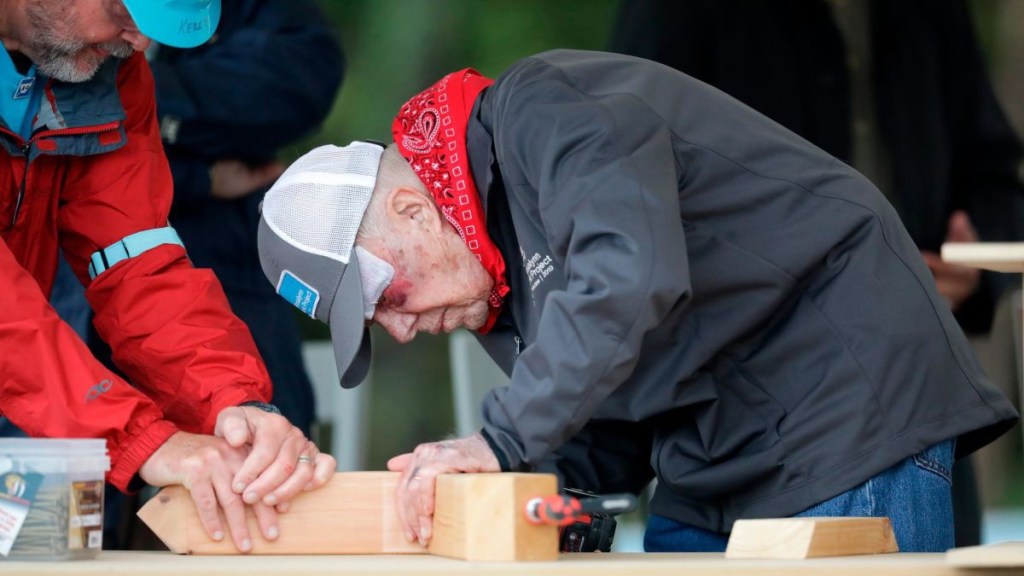
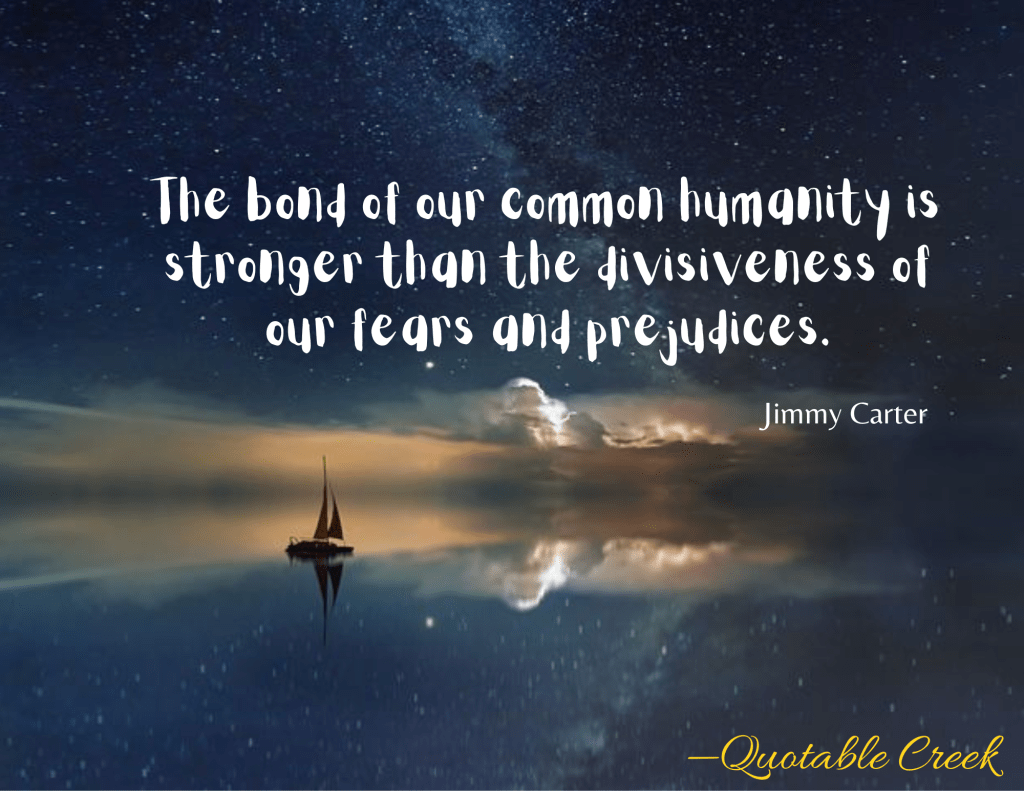
With the news this week that former President Jimmy Carter has entered home hospice care, many people have been sharing stories about his accomplishments in office—his efforts for peace, his push for environmental stewardship, and his efforts toward energy independence, among others.
But his most striking accomplishments perhaps are what he has done since he lost his re-election bid. Rather than retreat to Georgia and exit the public arena, he began building houses for the poor, and working for democracy—a principle he firmly believed in—around the world, and standing up for women’s rights, even when that stand conflicted with his religion, and working to eradicate disease and so on. He has never stopped showing up to make a difference.
In a world that has grown more cynical and jaded since his entry into the public spotlight, he continues to show us what it means to walk the walk, quietly, humbly, and without fanfare. Here, surely, is a good and faithful servant of God.
Have you ever stopped to consider how many of your decisions are controlled by fear? Or how others may attempt to control you by exploiting those fears?
Fear is a useful emotion. It can help us avoid danger and give us a boost of adrenaline to combat foes. But bathing in it, day in and day out, as some news sources would have us do, is a recipe for disease. Our bodies simply aren’t equipped to be in a constant state of fight or flight.
One of the answers must be to consider the reality of what makes you afraid. Is someone telling you stories to whip up your emotions? Is it true? If someone is manipulating you, you must find a way to step back and give yourself some perspective. Consider other sources. Evaluate the data. Analyze what will happen if the dreaded event comes true. Find physical ways to give your body comfort.
Ask yourself, what is this person trying to make me fear, and what are they trying to get me to do. What’s in it for them? That analysis will help give us the tools to determine if the fear is real or if someone is manipulating us.
We can buck up and deal with real threats. But imagined threats, particularly when someone is trying to keep you afraid to manipulate your actions, requires your own intervention.
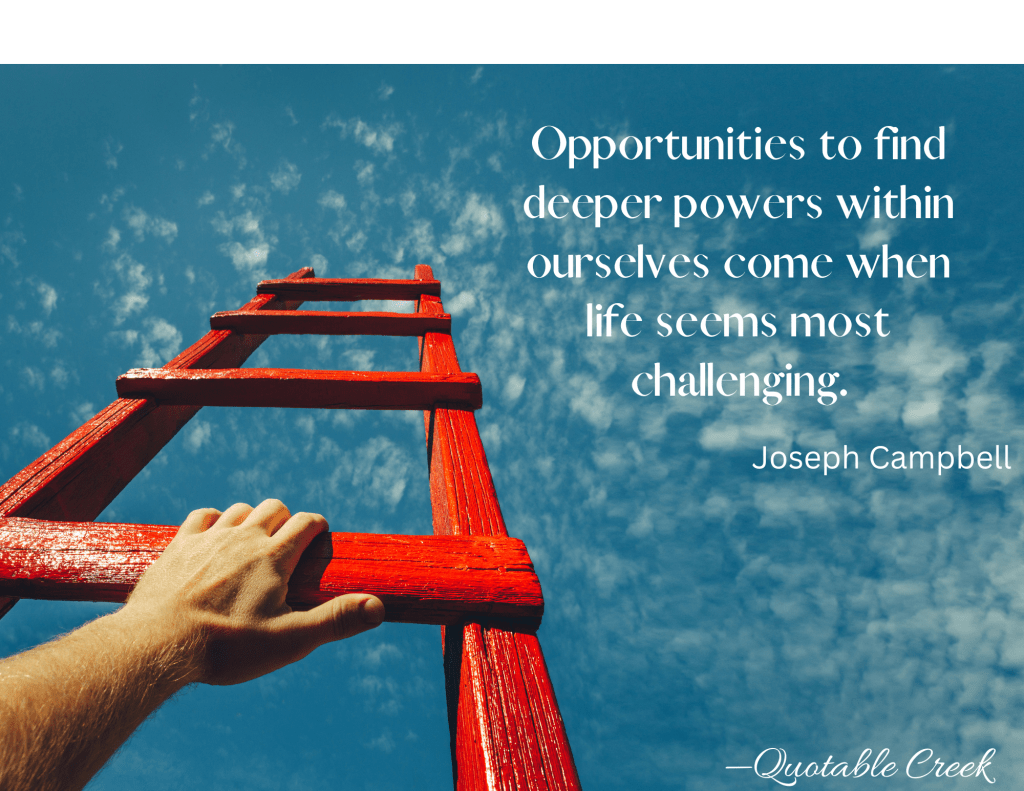
We each decide if we are to be the hero of the story our lives are writing. We each will hear calls to adventure and must decide whether we will rise to the occasion. We each struggle with challenges and learn, or not, from the experience. What will your story be? How will you meet the challenges you encounter?
In this short film, Matthew Winkler outlines Joseph Campbell’s Hero Journey, a path we all must take.
We are bombarded daily with stories of fraud, cheating, self-interest, and dishonesty. People talking over each other, shoving, hostile. Everything is so charged and hot. Sometimes it feels like the people who stoop to these tactics might win the race and that we should do it, too. Otherwise, the ‘bad’ side will triumph. And yet.
Honesty matters. Integrity matters. Truth matters. Fairness and justice matter. On the foundations of these qualities, trust is built.
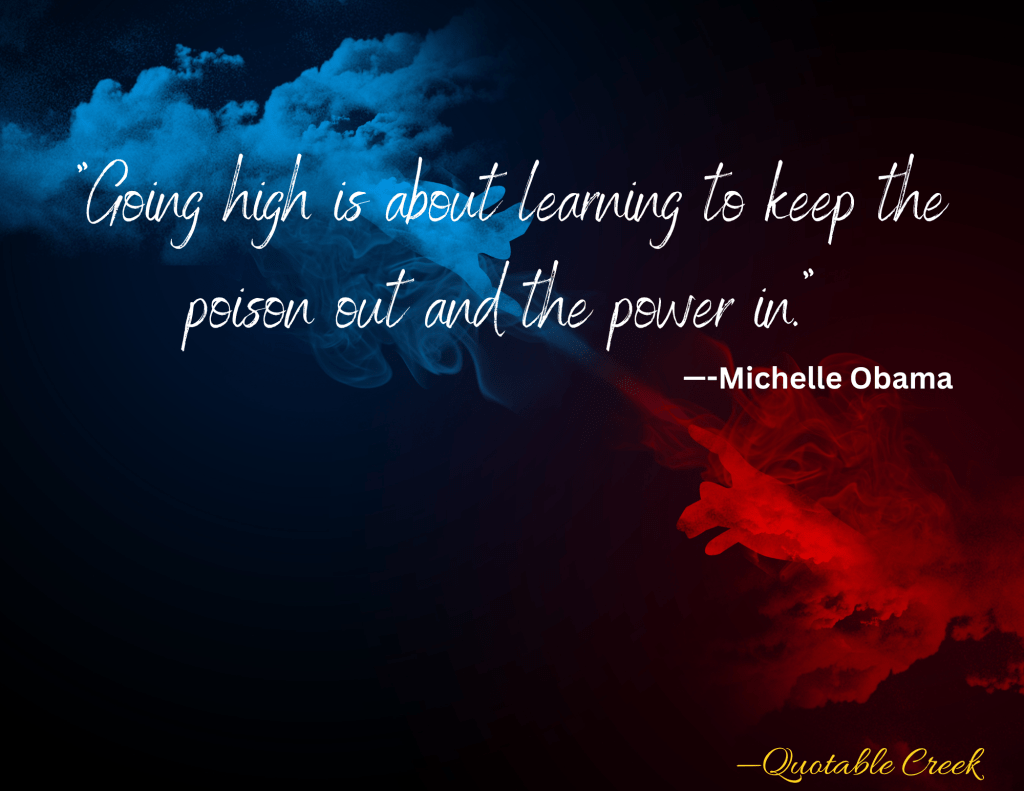
Explaining her ‘go high’ comment, Michelle Obama says,
My answer is yes. We need to keep trying to go high. Operating with integrity matters. It will matter forever. It is a tool.
At the same time, though, I want to be clear: Going high is something you do rather than merely feel. It’s not some call to be complacent and wait around for change, or to sit on the sidelines as others struggle. It is not about accepting the conditions of oppression or letting cruelty and power go unchallenged. The notion of going high shouldn’t raise any questions about whether we are obligated to fight for more fairness, decency, and justice in this world; rather, it’s about how we fight, how we go about trying to solve the problems we encounter, and how we sustain ourselves long enough to be effective rather than burn out. There are some who see this as an unfair and ineffective compromise, an extension of respectability politics, in which we conform to rather than challenge the rules in order to get by. Why, people rightly wonder, do we need to try to be so reasonable all the time?
I can see how some think that reason leaves no room for rage. I understand the perception that going high means that you somehow remove yourself and remain unbothered by all that might otherwise gall and provoke you.
But it’s not that at all.
When I first said those words…, I was neither removed nor unbothered. In fact, I was pretty agitated….
But where was my actual power? I knew it didn’t reside in my hurt and rage, at least as they existed in raw forms. My power lay in whatever I could manage to do with that hurt and rage, where I could take it. It hinged on whether or not I could elevate those feelings into something that would become harder for others to write off, which was a clear message, a call to action, and a result I was willing to work for.
That’s what going high is for me. It’s about taking an abstract and usually upsetting feeling and working to convert it into some sort of actionable plan, to move through the raw stuff and in the direction of a larger solution.
I want to be clear that this is a process, and not always a quick one. It can take time and patience. It’s okay to sit and stew for a while, to live inside the agitation caused by injustice or fear or grief, or to express your pain. It’s okay to grant yourself the space you need to recover or heal. For me, going high usually involves taking a pause before I react. It is a form of self-control, a line laid between our best and worst impulses. Going high is about resisting the temptation to participate in shallow fury and corrosive contempt and instead figuring out how to respond with a clear voice to whatever is shallow and corrosive around you. It’s what happens when you take a reaction and mature it into a response.
Because here’s the thing: Emotions are not plans. They don’t solve problems or right any wrongs. You can feel them—you will feel them, inevitably—but be careful about letting them guide you. Rage can be a dirty windshield. Hurt is like a broken steering wheel. Disappointment will only ride, sulking and unhelpful, in the back seat. If you don’t do something constructive with them, they’ll take you straight into a ditch.
My power has always hinged on my ability to keep myself out of the ditch.
It has been 54 years since Martin Luther King, Jr. was killed. As long as between the date of his death and 1914. A long, long time. Yet here we are still fighting for the world he envisioned, a world where people would be judged by the content of their character rather than the color of their skin.
We must press on.
“We’ve got some difficult days ahead,” Martin Luther King, Jr., told an overflowing crowd in Memphis, Tennessee, on 3 April 1968, where the city’s sanitation workers were striking. “But it really doesn’t matter with me now, because I’ve been to the mountaintop … I’ve seen the Promised Land. I may not get there with you. But I want you to know tonight, that we, as a people, will get to the Promised Land.” Less than 24 hours after these prophetic words, King was assassinated by James Earl Ray.
Today, take a moment with his favorite hymn, the hymn he requested shortly before his death, “Take Me Home, Precious Lord’ and gather strength to continue his fight, all of our fight, toward the promised land:
As you continue to adjust to the realities and promises of the new year, enjoy this poem by W. S. Merwin:
To the New Year
BY W. S. MERWIN
With what stillness at last
you appear in the valley
your first sunlight reaching down
to touch the tips of a few
high leaves that do not stir
as though they had not noticed
and did not know you at all
then the voice of a dove calls
from far away in itself
to the hush of the morning
so this is the sound of you
here and now whether or not
anyone hears it this is
where we have come with our age
our knowledge such as it is
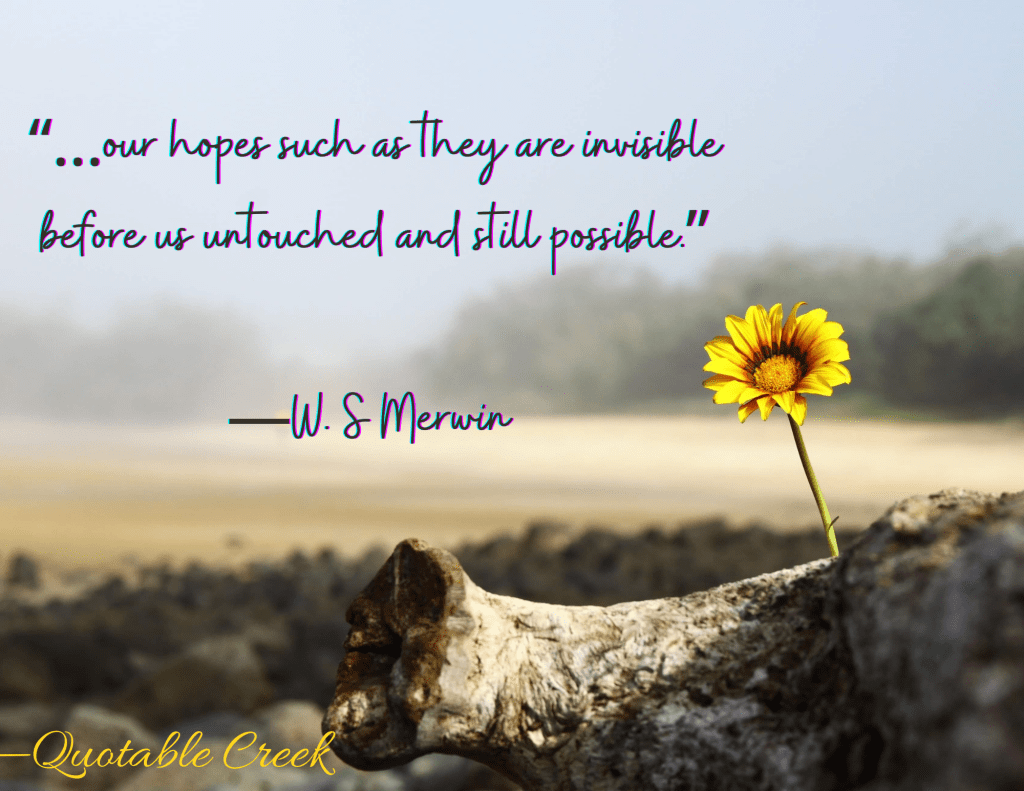
and our hopes such as they are
invisible before us
untouched and still possible
Here we are in 2023, with our age and knowledge, such as they are, and our hopes, such as they are, with everything again before us untouched and still possible.
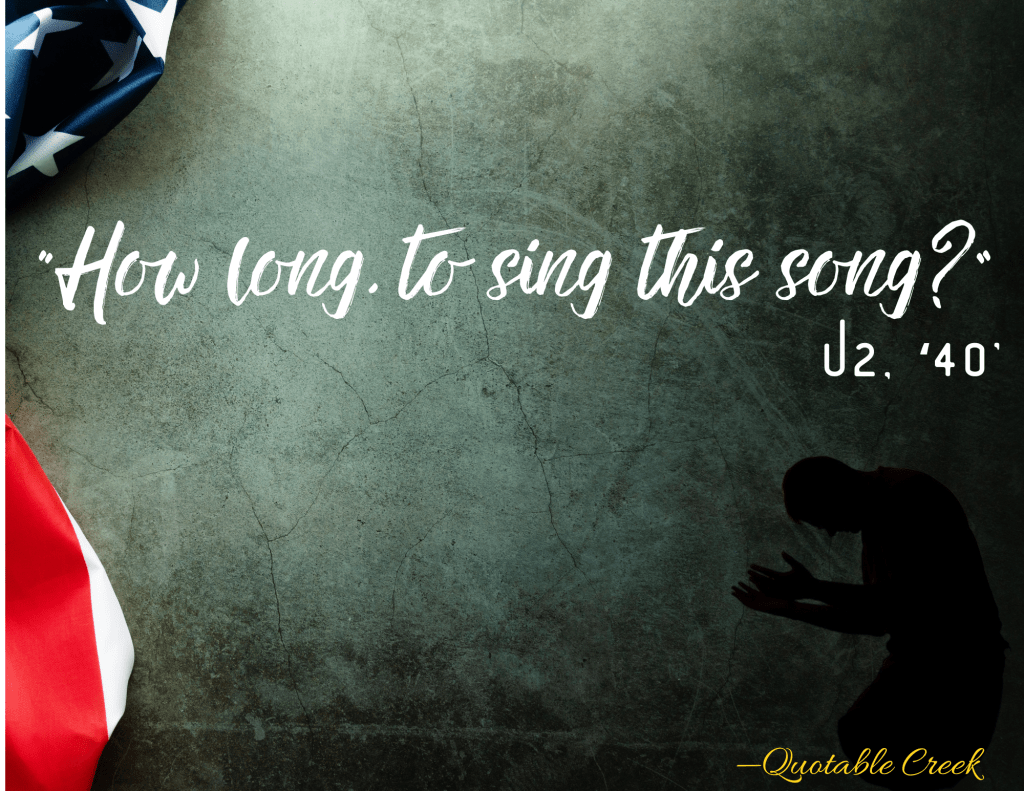
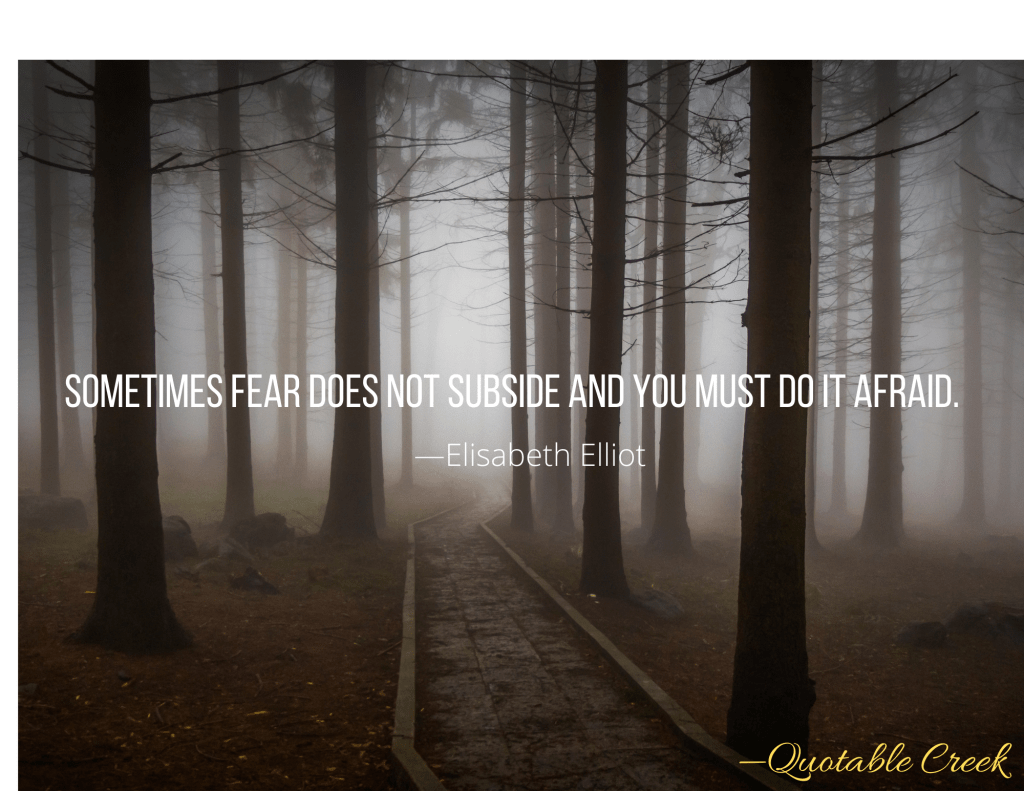
Many of us have been afraid, and fear can naturally lead us to withdraw and retreat from the world. And this makes sense.
But sometimes the things that made us afraid continue and become our new normal, and then we must learn how to continue to do what needs to be done despite the fear.
This is courage.
We each have hidden wells of courage to draw from in trying times. We each have within us a voice that calls us to act, whether it is in caring for one another or speaking out against injustice.
In these times of disorder and distress, we confront new normals at every turn. And part of these new normals necessarily involves confronting and accepting your new reality and learning how to continue to make a positive difference in the world despite the challenges.
It’s ok to be afraid. Do what needs to be done anyway.

 QuotableCreek.com