Have you been somewhere new recently? Maybe somewhere where everyone knows each other but you? Was there someone there who made you feel welcome?
When we remember what it feels like to be an outsider, we realize how powerful a warm welcome is. How generous the welcomer was to look outside of their usual orbit to notice a stranger and invite them in. A smile is the first step.
For today, consider this lovely poem on smiles and consider who you might welcome. How lucky you are to be in the position to welcome another!
Spring can be sneaky. Just when you feel that winter will last forever, a pop of green will peak out of the snow, or a leafless tree will bud, or a bird will sing, and you will remember the colorful, fragrant, joyful days of spring.
Inside every winter heart, a vibrant spring lies just waiting to bloom again.
In all the din, what is one voice more? Why bother speaking up? No one seems to listen to each other anymore anyway.
But inside you is a well spring, and you’re fueled by truth and an honest desire to help others. Your opinion matters.
Consider these words from Marianne Williamson:
“Our deepest fear is not that we are inadequate. Our deepest fear is that we are powerful beyond measure. It is our light, not our darkness that most frightens us. We ask ourselves, ‘Who am I to be brilliant, gorgeous, talented, fabulous?’ Actually, who are you not to be? You are a child of God. Your playing small does not serve the world. There is nothing enlightened about shrinking so that other people won’t feel insecure around you. We are all meant to shine, as children do. We were born to make manifest the glory of God that is within us. It’s not just in some of us; it’s in everyone. And as we let our own light shine, we unconsciously give other people permission to do the same. As we are liberated from our own fear, our presence automatically liberates others.”
Who are you to speak up?
You are a child of God. Let God’s light shine on a dark world through your words.
Spring is my favorite season. The birdsong, the colors, the blooms, jasmine-filled breezes. All of it. Yes, please.
We have yet more rain here in Cali, but even so, the birds are singing their hearts out. And the buds are forming, and the bulbs are up. And the hills are so beautifully green. And somewhere close, the bears are stirring.
Enjoy this spring poem by Mary Oliver.
SPRING
Somewhere
a black bear
has just risen from sleep
and is staring
down the mountain.
All night
in the brisk and shallow restlessness
of early spring
I think of her,
her four black fists
flicking the gravel,
her tongue
like a red fire
touching the grass,
the cold water.
There is only one question:
how to love this world.
I think of her
rising
like a black and leafy ledge
to sharpen her claws against
the silence
of the trees.
Whatever else
my life is
with its poems
and its music
and its glass cities,
it is also this dazzling darkness
coming
down the mountain,
breathing and tasting;
all day I think of her—
her white teeth,
her wordlessness,
her perfect love.
Mary Oliver, House of Light
Spring is also all of this —the wild, the fecundity, the passion, the thirst, and the quenching of thirst. The one question: how to love this world. Life’s yes. This, please.
Have you ever wished you could erase someone or something from your mind? That you could go back to that time when you hadn’t messed up or been hurt? We long for that before, don’t we? We hold on to the anger or regret because we miss that before so much, that innocent time before something wounded us or before we wounded someone else.
But holding that emotion grounds us in the past and our wounds don’t heal, but fester. It happened. We can’t erase it or take it back. We need to acknowledge that bad stuff happens, sometimes stuff we do ourselves, and move on, forgiving ourselves and others, into the future we have in front of us now rather than longing for the future we had in front of us before.
This, right here, right now, is what your life is. The future in front of you is built on all the things that have happened to you and things you have done up to this point, even the bad things.
Step into that future, let go of the past, and be the best you you can be.
Do you have any difficult people in your life? Chances are you can’t force them to be less toxic, but there are steps you can take to be less bothered by the encounter. In this article by Christine Carter, she suggests, among other things, that showing mercy to this difficult person will rebound to you:
Anne Lamott defines mercy as radical kindness bolstered by forgiveness, and it allows us to alter a communication dynamic, even when we are interacting with someone mired in anger or fear or jealousy. We do this by offering them a gift from our heart. You probably won’t be able to get rid of your negative thoughts about them, and you won’t be able to change them, but you can make an effort to be a loving person. Can you buy them a cup of coffee? Can you hold space for their suffering? Can you send a loving-kindness meditation their way?
Forgiveness takes this kindness to a whole new level. I used to think I couldn’t really forgive someone who’d hurt me until they’d asked for forgiveness, preferably in the form of a moving and remorseful apology letter.
But I’ve learned that to heal ourselves we must forgive whether or not we’re asked for forgiveness, and whether or not the person is still hurting us. When we do, we feel happier and more peaceful. This means that you might need to forgive the other person at the end of every day—or, on bad days, every hour. Forgiveness is an ongoing practice, not a one-time deal.
When we find ways to show mercy to even the person who has cost us sleep and love and even our well-being, something miraculous happens. “When we manage a flash of mercy for someone we don’t like, especially a truly awful person, including ourselves,” Anne Lamott writes, “we experience a great spiritual moment, a new point of view that can make us gasp.”
Here’s the real miracle: Our mercy boomerangs back to us. When we show radical kindness, forgiveness, and acceptance—and when we tell the truth in even the most difficult relationship—we start to show ourselves those things. We realize that we can love and forgive and accept even the most terrible aspects of our own being, even if it is only for a moment. We start to show ourselvesthe truth, and this makes us feel free.
Perhaps you can show that difficult person mercy today.
Faith is not a contest. It’s not praying louder or more eloquently for all to see. It’s not giving or fasting for show.
It’s an internal, deeply personal thing between you and God. It’s a dark of the night hope, and a bright green day joy. It the bulb pushing its way stubbornly through the soil with the promise of spring. It’s holding on to the values you know to be right even in the face of temptation, or expedience, or doubt.
Lent is a time for us to dig deep into our souls, to reconnect with God and each other, to remind ourselves of who and whose we are, and then live out that truth.
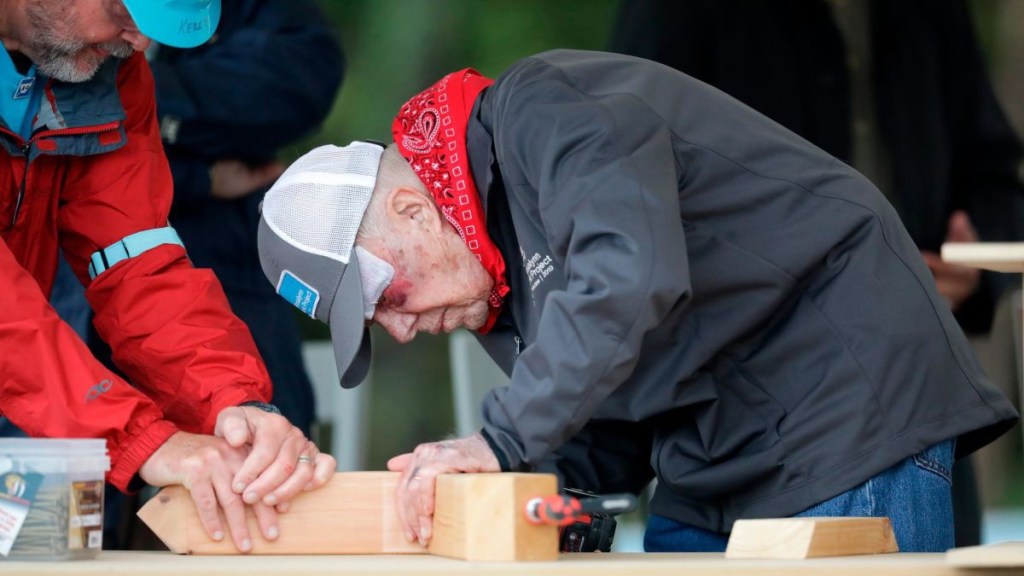
With the news this week that former President Jimmy Carter has entered home hospice care, many people have been sharing stories about his accomplishments in office—his efforts for peace, his push for environmental stewardship, and his efforts toward energy independence, among others.
But his most striking accomplishments perhaps are what he has done since he lost his re-election bid. Rather than retreat to Georgia and exit the public arena, he began building houses for the poor, and working for democracy—a principle he firmly believed in—around the world, and standing up for women’s rights, even when that stand conflicted with his religion, and working to eradicate disease and so on. He has never stopped showing up to make a difference.
In a world that has grown more cynical and jaded since his entry into the public spotlight, he continues to show us what it means to walk the walk, quietly, humbly, and without fanfare. Here, surely, is a good and faithful servant of God.
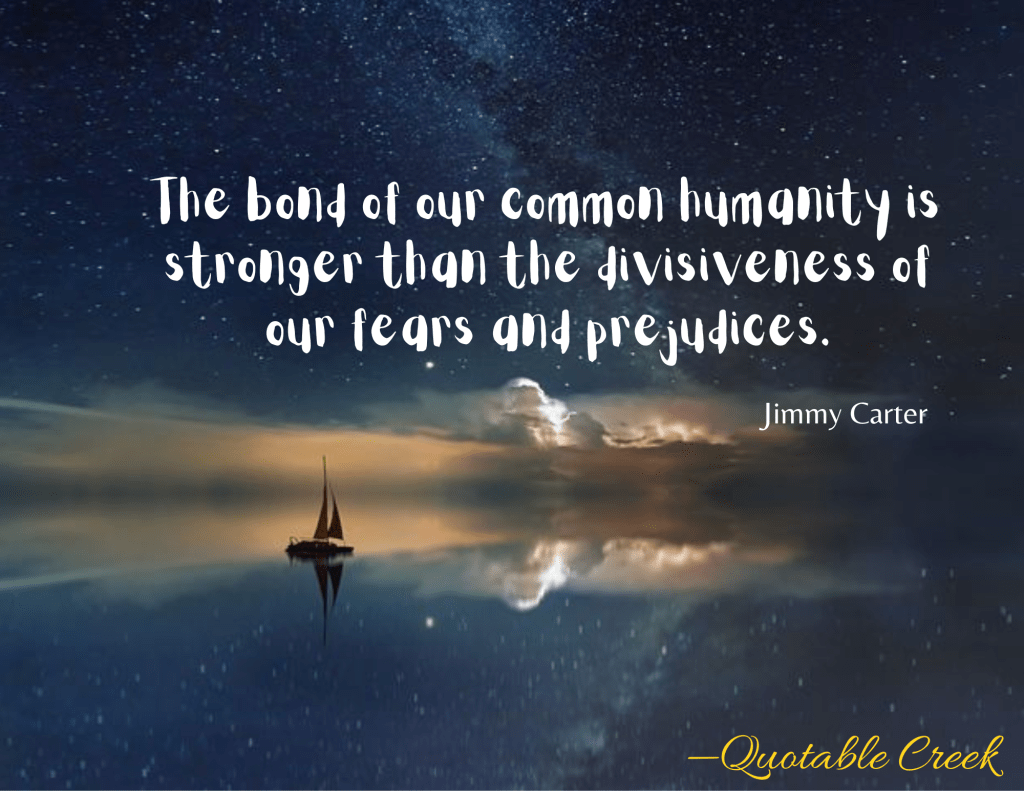
Have you ever stopped to consider how many of your decisions are controlled by fear? Or how others may attempt to control you by exploiting those fears?
Fear is a useful emotion. It can help us avoid danger and give us a boost of adrenaline to combat foes. But bathing in it, day in and day out, as some news sources would have us do, is a recipe for disease. Our bodies simply aren’t equipped to be in a constant state of fight or flight.
One of the answers must be to consider the reality of what makes you afraid. Is someone telling you stories to whip up your emotions? Is it true? If someone is manipulating you, you must find a way to step back and give yourself some perspective. Consider other sources. Evaluate the data. Analyze what will happen if the dreaded event comes true. Find physical ways to give your body comfort.
Ask yourself, what is this person trying to make me fear, and what are they trying to get me to do. What’s in it for them? That analysis will help give us the tools to determine if the fear is real or if someone is manipulating us.
We can buck up and deal with real threats. But imagined threats, particularly when someone is trying to keep you afraid to manipulate your actions, requires your own intervention.
In a week of mass shootings and other discouraging news, we need a dose of Mr. Rogers, a man who believed passionately in the value of children, just as they are, and dedicated his life to teaching them to manage and express their feelings. What a hero he was.
In this clip from 1969, he makes his case. His lessons are as important today as they were then. Take a listen.






 QuotableCreek.com