Being a good creature

Sy Montgomery’s delightful book, How To Be a Good Creature, is a ‘Memoir in Thirteen Animals‘. What an interesting way to organize a memoir, focusing on the impact various animals have made on her life and what they have taught her about co-existing as fellow creatures on this planet! It is a profound, yet simple, book.

If you were to write a memoir of your life through that lens, who would the animals be that impacted your life in meaningful and enriching ways? What life lessons did you learn? How were your limits expanded from sharing space with that fellow creature?

For inspiration, consider Montgomery’s words:

All the animals I’ve known–from the first bug I must have spied as an infant, to the moon bears I met in Southeast Asia, to the spotted hens I got to know in Kenya–have been good creatures. Each individual is a marvel and perfect in his or her own way. Just being with any animal is edifying, for each has a knowing that surpasses human understanding. A spider can taste the world with her feet. Birds can see colors we can’t begin to describe. A cricket can sing with his legs and listen with his knees. A dog can hear sounds above the level of human hearing, and can tell if you’re upset even before you’re aware of it yourself. Knowing someone who belongs to another species can enlarge your soul in surprising ways.

I often wish I could go back in time and tell my young, anxious self that my dreams weren’t in vain and my sorrows weren’t permanent. I can’t do that, but I can do something better. I can tell you that teachers are all around to help you: with four legs or two or eight or even none, some with internal skeletons, some without. All you have to do is recognize them as teachers and be ready to hear their truths.

Today, consider the wonder of creation around you and thank your teachers of the non-human persuasion.

Being a Good Samaritan

The Parable of the Good Samaritan is well known. In short, a man lies helpless and injured in the road. Religious leaders rush past offering no assistance, while a Samaritan stops and offers the wounded man succor and solace.

What makes one person stop to help while others rush by? Is it the belief that helping is the right way to show up in the world? A religious mandate even? Or is there more to it?

In a famous study at Princeton, researchers evaluated a group of seminarians, specifically discussing the Parable of the Good Samaritan, and then sending them to a task, indeed to lecture on the very parable, where they would necessarily walk right past someone needing help. Even with the parable fresh on their minds, the future pastors for the most part walked right by. Presumably these were nice people who intended to spend a lifetime in service. And yet, they walked right by. They acted in a way incongruent with their professed beliefs.

A surprising result to say the least. But the conclusion from the experiment was that the biggest influencer in whether they stopped to help was not their religious beliefs or their innate kindness, but their perception of time. The more of a hurry they were in, the less likely they were to help.

So how does this inform our choices?

A general kind intent to help is not enough. We are all the Princeton Divinity Students rushing to our next important task and potentially neglecting the plight of others right in our path. We must slow down the clock and really see the people around us. And we need to be ok with the idea that our plans and schedules might be disrupted. Surely stopping to help someone in need will change your day, will inconvenience you, and cause you to spend time and perhaps money in an unplanned way.

But the help you might be able to offer someone in need could be invaluable.

Everybody hurts

One good thing to come out of despair is the ability, once you are past it, to help someone in the middle of it realize that things will get better, that this, too, will pass. It’s as if we are all climbing our way out of a pit and reaching up to grab the hand of someone who has already made it out. Being able to reach your hand down to someone still in the pit is a blessing from something awful you may have gone through.

Along these lines, was the It Gets Better movement started several years ago, with prominent people from the LGBTQ community sharing their stories to help others who were struggling and feeling desperate.

Perhaps your last few years have been filled with grief. Certainly for many the pandemic has been a season of loss—of community, of norms, of freedoms, and, for many, of loved ones.

As you go forward, remember that we are each other’s support. We are each other’s comfort and hope. Reach out to each other.

For a very powerful rendition of R.E.M.’s, Everybody Hurts, listen to this rendition by priest, Father Ray Kelly. I stumbled onto this video several years ago, and it recently popped up again. I need to store it in a safe place to rewatch as needed. For me at least, it touches the soul and gives me solace.

Celebrating others

Sometimes it feels like such a competitive world. And we develop an either him or me kind of mentality. A zero sum game, where an advantage for one person represents a loss to another. Like pie. more for you, less for me.

But what if it’s not? What if something good for one person, elevates the amount of good in the world for us all? What if the very act of celebrating another person’s success benefits us as well and makes a more positive, harmonious world?

I didn’t watch the Golden Globes, but I was taken with this picture of Jamie Lee Curtis celebrating the success of her co-star Michelle Yeoh:

Fiercely supportive, celebratory, in Yeoh’s corner to the Nth degree. It wasn’t an award for Curtis, but it was a time for her to celebrate her friend. This energy inspires us all, doesn’t it?

The reaction to this now viral moment has surprised Curtis:

“I’m still stunned that a moment of natural exuberance and joy became some sort of a symbol for women supporting other women,” Curtis wrote in the [Instagram] post.

Let’s be there for each other, rejoicing in each other’s successes.

Deep roots

I’ve been thinking these days about roots. Trees are toppling in the recent rains because years of drought have kept their root systems shallow. Aspen trees look like separate trees above ground, but underneath share a complex intermingled root system that gives them extra strength. That root system allows the trees closest to water or minerals to send that sustenance to other struggling trees.

It seems like for many of us, years of pandemic have functioned a bit like drought causing us to disconnect from our social interactions and to pull up many of the roots that kept us grounded. Perhaps our interconnections are weakened.

We need our roots. We need our interconnections, our community, our sense of being part of a greater whole. What can we do to send our roots deeper, even in these unusual times we find ourselves living in?

Winging it

In this now third year of pandemic, we have learned something important. We must temper our expectations and hopes with the realization that nothing is a sure bet. To expect the unexpected. To prepare for the unforeseeable. And, perhaps most importantly, to find delight wherever and whenever we can. And to store it up.

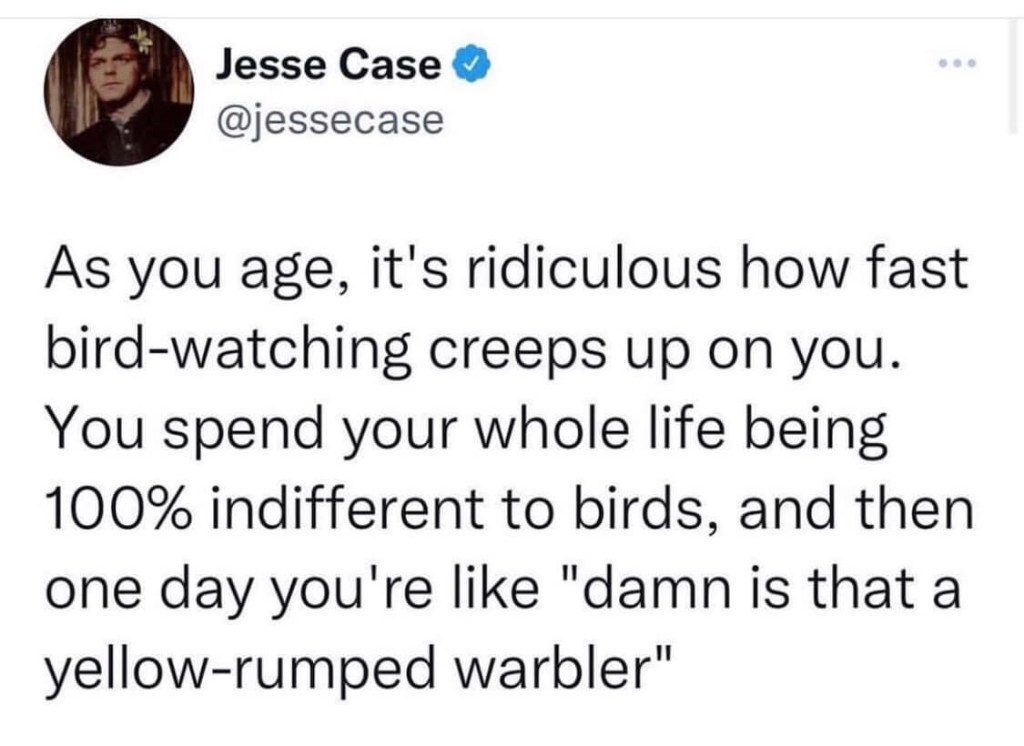
One of my absolute delights this year has been an early morning bird walk at Descanso Gardens with ‘real’ birders. What a joy it is to see these people in their element, knowing each call, able to spot and identify each bird, speaking with enthusiasm about the birds’ characteristics and habits. These birders are so kind, pointing and explaining, pointing and explaining. So much fascinating detail!

I’m a newbie to this bird watching thing, but I love it. It’s like a giant Where’s Waldo everywhere around you, all at once. I don’t yet have the eye or the ear to be a great spotter, and probably never will, but I have a secret weapon. I discovered Merlin. It’s an app that records the sounds around you, and tells you what birds are there. What a wonder!

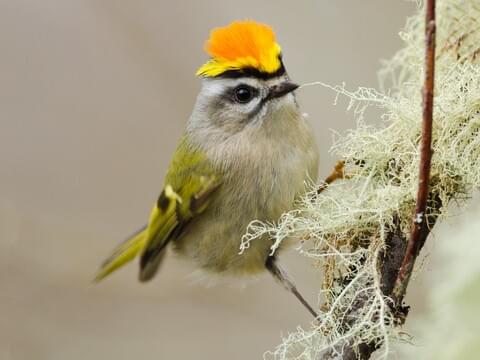
I turned it on while we were walking and discovered that there was a Golden Crowned Kinglet nearby. I didn’t see or hear it, at least not to know what I was seeing/hearing, but a leader was soon calling it out and pointing. Magic. (Just look at the cute little guy!)

Just since I’ve been typing this post, I’ve had my iPhone on the window sill while my cat, Marie, looks out over her domain, and Merlin has picked up 7 birds: Anna’s Hummingbird, Common finch, Lesser finch, Song Sparrow, Cassin’s Kingbird, California Scrub-Jay, and the Bushtit! This feels magical, like I’ve opened a doorway into another world and am tiptoeing in.

I hope this new year opens a magical doorway for you, perhaps something unexpected and new, that brings you delight.

Happiness is…

By Charles Schulz

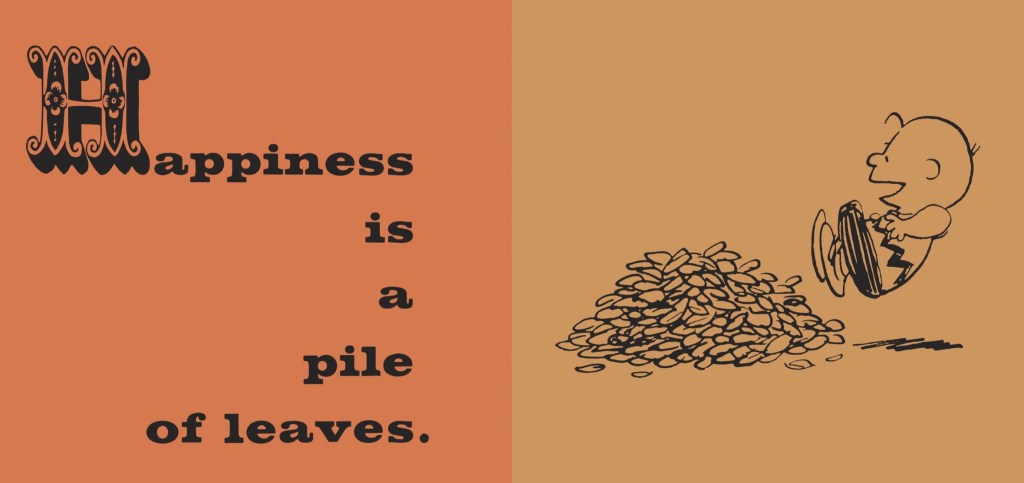
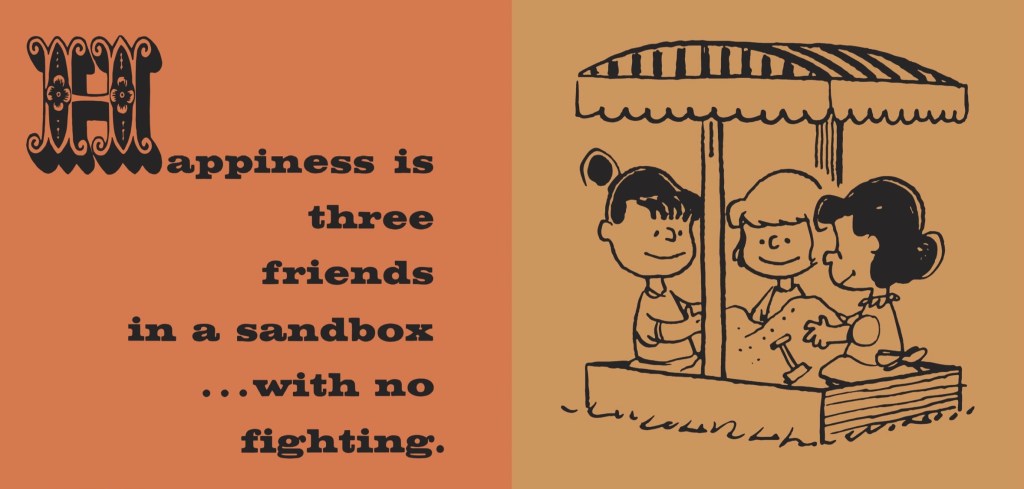
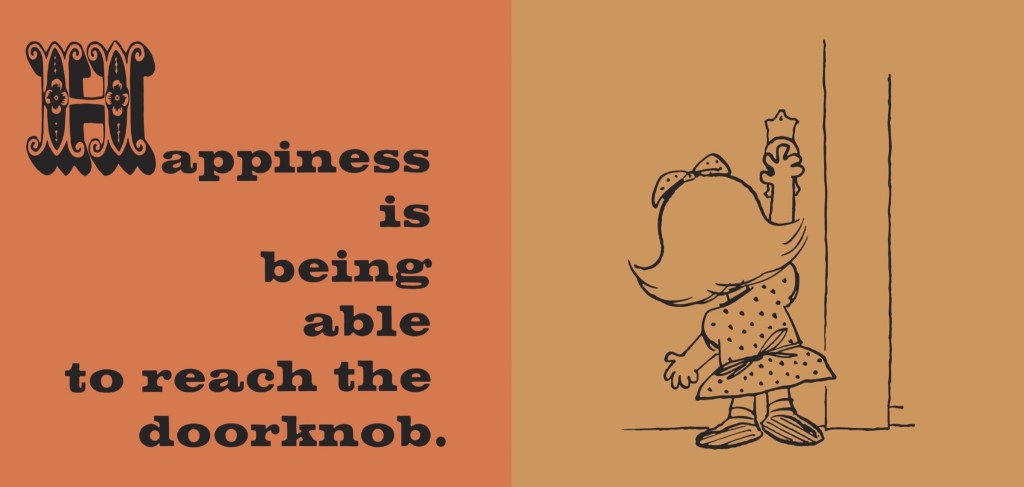
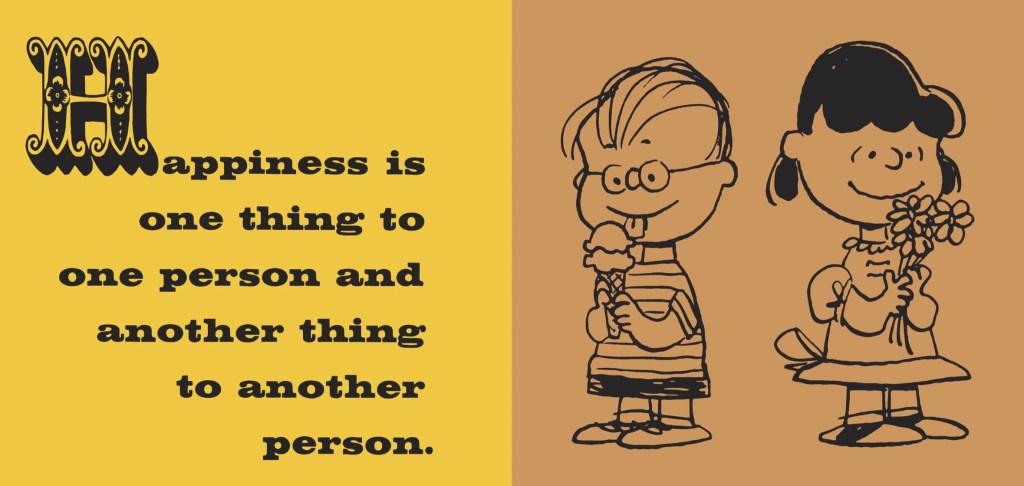
When I was young, I had the book Happiness is a Warm Puppy by Charles Schulz. I was remembering it lately with all the charming little moments it caught:

Each page captures a delightful, sweet, innocent, but meaningful, moment in the life of a child. Each attempting to capture that ineffable notion of happiness. I thought it would be fun to start collecting my own when I feel that surge of happiness, that feeling that all is right in the world, and I’m incredibly lucky and content.

Here are a couple of mine:

Happiness is…

The finches discovering their feeder.

Happiness is….

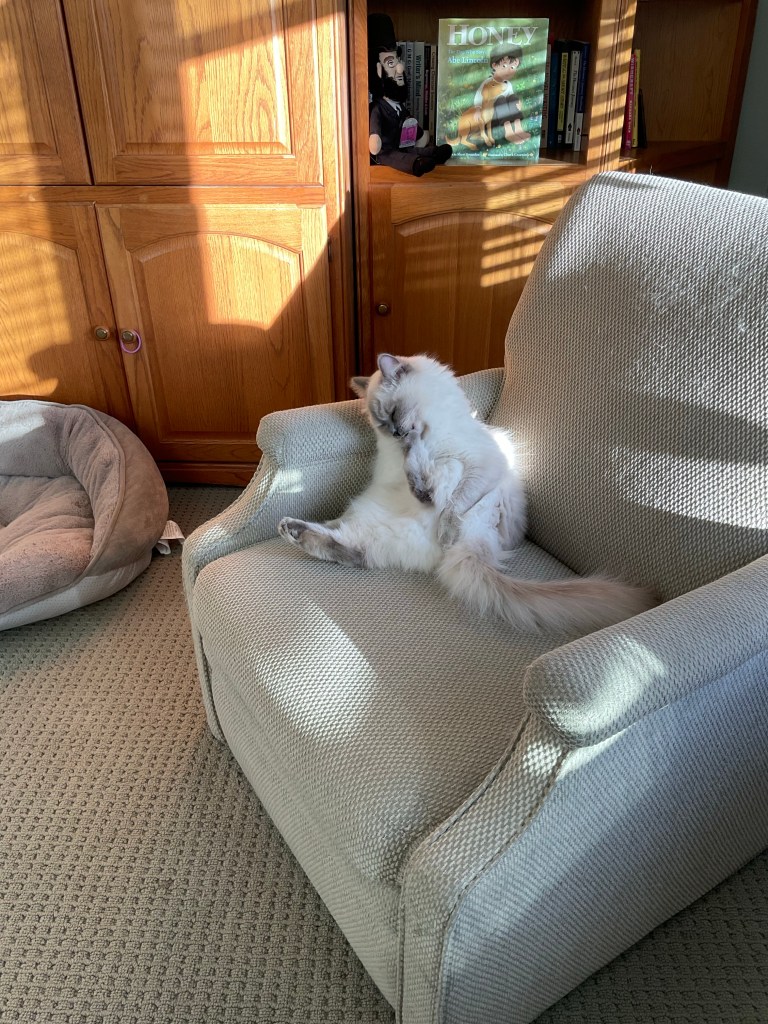
The cat keeping you company while you work.

Happiness is…

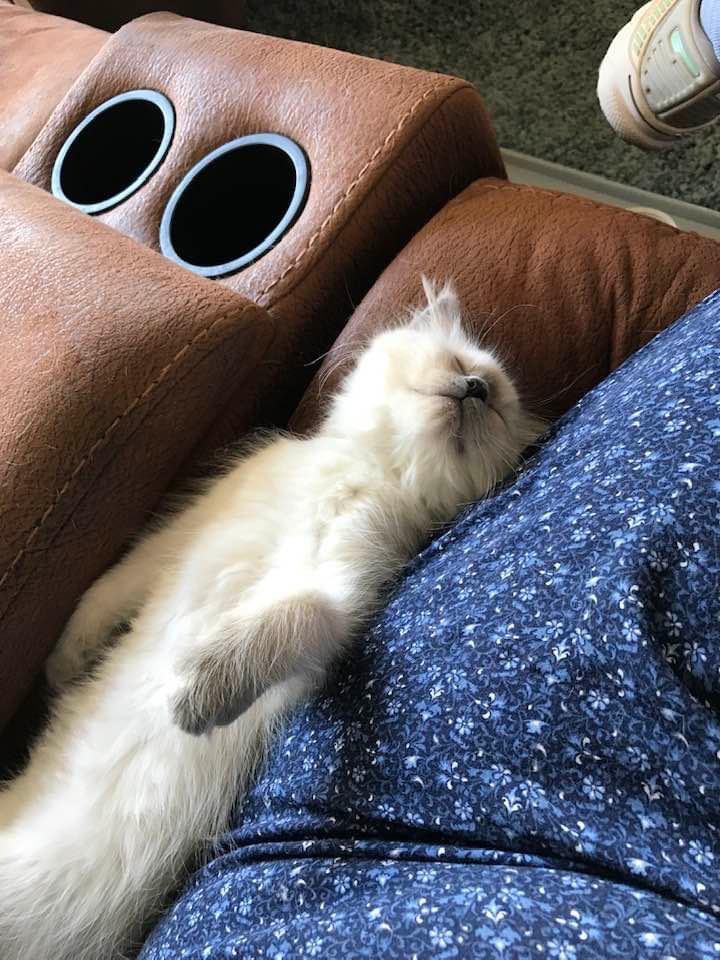
Being unable to move because the cat picked your lap.

And the list goes on. We each have moments that fill us with happiness and wonder. They slip away quickly because they’re ephemeral. But if we capture them somehow, in a gratitude journal, with a photo album, a list, we can turn to them later and smile. These are our ‘moments’

Schulz recognized that for each of of us, those moments will be unique and personal.

What are some of yours? If you feel comfortable doing so, I would love it if you shared them.

Pay attention

The Rose Parade is always a joyous start to the new year, the pageantry, the vivid colors, the community. The floats are huge, once nearly 100 feet tall. (Disney 2004). Every inch must be covered with something organic—mostly flowers, of course, but also oatmeal, potatoes, beans, seeds, and so on. The illusions created are remarkable. Look at the bicycles in the photo above (Kaiser 2023). Every detail created out of flowers and organic material. You think you’re looking at bicycles, but really you’re looking at a masterful combination of organic material:

The pink and yellow bikes are made from cut straw flowers confetti, while the blue bike is made from blue statice. The black bike tires are made from onion seeds and the handlebars are comprised of dark lettuce seeds. Other flowers and materials used include pampas grass, banana leaf, red and pink anthurium, commadore fern, Italian ruscus, lemon leaf, and green dianthus.

https://www.latfusa.com/article/2022/12/the-kaiser-permanente-rose-parade-float-has-40000-roses

In many ways, a Rose Parade float is a metaphor for life: you think you see things one way, but really everything is a combination of multitudes of factors—point of view, back story, nuance, history. Very little is as objective as we first think. This is particularly true when it comes to looking at each other. We are all a combination of life experience, history, bias, personality, filters and so on. We each bring that myriad of factors to our encounters.

Our job in everything is to look closely and pay attention, to move past assumption and bias. Jumping to hasty conclusions will get you trying to ride bicycles made of pampas grass.

Slowing down the clock

As we age, time feels like it is moving faster. This makes sense considering the math, perhaps. One year to a 100 year old is just one percent of their life, but to a two year old, it’s 50% more. But scientists are saying there is another reason having to do with the diversity of experiences.

“Our brain encodes new experiences, but not familiar ones, into memory, and our retrospective judgment of time is based on how many new memories we create over a certain period. In other words, the more new memories we build on a weekend getaway, the longer that trip will seem in hindsight.”

And this squares with why we felt that there was more time when we were younger when everything was new, and when our days were filled with varied experiences.

So perhaps there is a way to slow down time: fill it up, stretch your experiences, try new things, explore, savor, forswear the ordinary.

Seize the day.

https://www.scientificamerican.com/article/why-does-time-seem-to-speed-up-with-age/