In a grieving, struggling world, we pray. Full of humility, we fall to our knees. Gobsmacked by the fragility of life and the interconnectedness of all creation, we lift our eyes to the Lord and join voices around the world to offer thanks, plead for mercy, and reach for hope.
Never before has it been more obvious that we belong to each other and are all in this together.
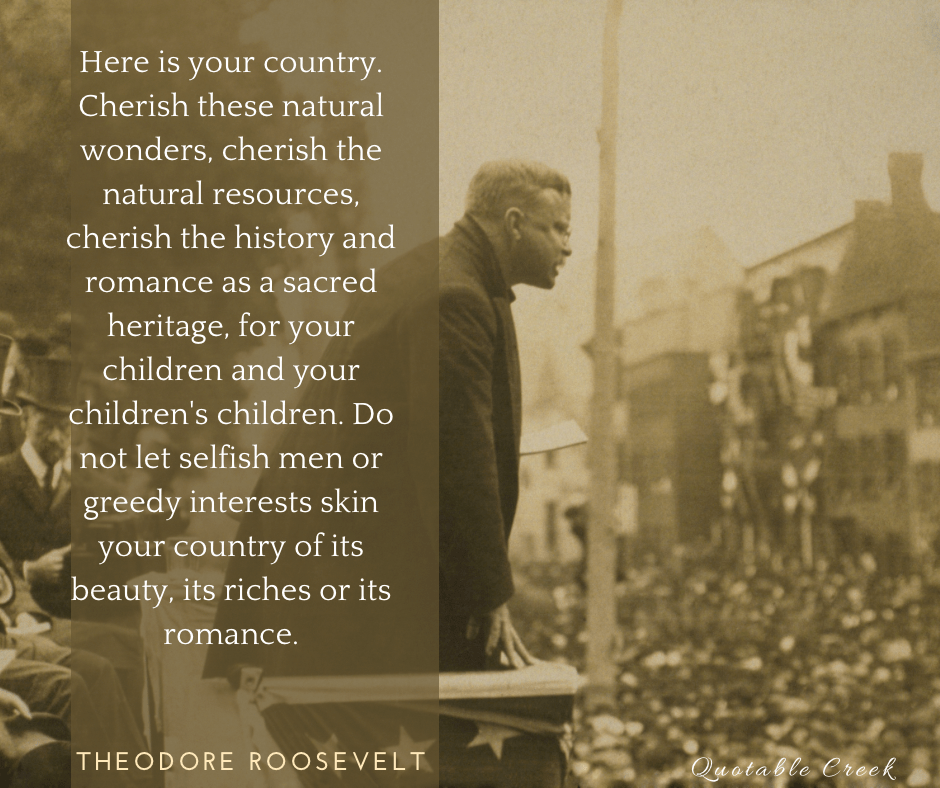
When we think of America, what do we picture? Surely the abundance of natural beauty, much of it, 230 million acres worth, protected by President Roosevelt. National Parks, wildlife refuges, forests, oceans, Great Lakes.
Perhaps we also think of American ideals like freedom in religion and speech, the right to petition the government for redress of grievances, the concept of equal justice under the law, the notion of the American dream that no matter where you come from, you can rise above your circumstances with integrity and hard work. American values.
Perhaps we picture our strength in diversity, of backgrounds, countries of origin, viewpoints, and culture. A heterogeneous mix of people coming together e plutibus unum, out of many, one.
President Roosevelt urged us to cherish our country, its natural wonders and resources, its history and romance, its sacred heritage for our children and children’s children. Let us heed his words. America is a special place and must be protected, valued, and nurtured.
I wonder about Christians responding to the challenges confronting our world right now. How does worshipping a humble carpenter, a servant, a loving non-violent man, inform our choices now?
He shunned power. He empathized with the suffering of others. He humbled himself even unto death.
I wonder about the choices he made while tempted in the desert before embarking on his ministry:
Then Jesus was led by the Spirit into the wilderness to be tempted by the devil. 2 After fasting forty days and forty nights, he was hungry. 3 The tempter came to him and said, “If you are the Son of God, tell these stones to become bread.”
4 Jesus answered, “It is written: ‘Man shall not live on bread alone, but on every word that comes from the mouth of God.’”
5 Then the devil took him to the holy city and had him stand on the highest point of the temple.6 “If you are the Son of God,” he said, “throw yourself down. For it is written:
“‘He will command his angels concerning you, and they will lift you up in their hands, so that you will not strike your foot against a stone.’”
7 Jesus answered him, “It is also written: ‘Do not put the Lord your God to the test.’”
8 Again, the devil took him to a very high mountain and showed him all the kingdoms of the world and their splendor. 9 “All this I will give you,” he said, “if you will bow down and worship me.”
10 Jesus said to him, “Away from me, Satan! For it is written: ‘Worship the Lord your God, and serve him only.’”
11 Then the devil left him, and angels came and attended him.
Matthew 4:1-11
Would Christians today think he made the right decision to eschew power? A while back, WWJD (What would Jesus do?) was a common question. It’s still worth thinking about now.
We see Jesus saving the lost, healing the sick, speaking truth to power, standing up for the marginalized, refusing to grab power. Isn’t that what he would expect those of us who follow him to do now?
And he would, of course, tell us, as he told so many when he walked this Earth,
If you look carefully, can you tell who is suffering a storm in their lives? Maybe the fog of depression, the tumult of marital strife, the buffeting of indecision, the downpour of failure? Often a calm demeanor masks these inner storms. Maybe you’ve experienced some rough weather of your own. In all of these situations, your personal sunshine–a warm smile and cheerful disposition–can quiet the storms, or at least make people feel not quite so lonely until the sun shines again. Today, bring your sunshine with you; you never know who is in a stormy place.
Nowhere can you experience life from someone else’s point of view better than in a book. You can feel what it is like to be another gender, race, lifeform. Time is no limitation–you might experience life now, in the past, in the future. Opening those pages allows you to step inside someone else’s shoes. And that can’t help but change you, stretch your empathy, and expand your experience.
What would it be like if you could talk over things with those characters? Ask them about life in their shoes?
In a very cool project, doing exactly that, library patrons have the chance to check out a human book. Hopefully the human book they check out will be someone with a different life experience and perspective.
So check out a book, or maybe talk with someone as unlike from you as you can find. You’ll be surprised at all the things you have in common.
What tools do we need before we start to improve the world? What are we waiting for? Perhaps we are waiting for extra money or time. Perhaps we are waiting for retirement. Perhaps we are waiting to get all our own issues squared away first before we start thinking about helping someone else with theirs. Perhaps we are waiting for someone to ask us for help.
But consider Anne Frank. Forced to live in hiding to avoid the Nazi round-up and murder of Jews, she had little contact with the outside world. She, herself, was in mortal danger around the clock. She was just a kid, really, someone we think of helping rather than being the helper. And yet her attitude was so full of optimism and hope, it continues to shine now, decades later, lighting a weary world.
What a difference an attitude makes! She didn’t wait for the right time or resources. She didn’t wait until she could have a huge impact on the world. She didn’t wait until she was old or famous or wealthy. She didn’t even wait until she was safe. She started right then with what she had. A cheerful disposition, a concern for her family and the others in hiding with her, a willingness to step forward and try to make the world a better place.
What can you do to improve the world? Isn’t it wonderful that you can start right now?
Miep Gies was a young office worker when she hid and supported Anne Frank and her family, protecting them from Nazis and the danger of being sent to a concentration camp. After Anne and her family were betrayed and captured, Miep collected Anne’s diaries and eventually returned them to Anne’s father, Otto, who survived the war. That diary has been read by millions of people now, inspiring acts of heroism and showing, in a very intimate way, the horror of WWII as viewed through the eyes of an innocent, complex, lovely, vibrant girl, Anne.
Miep wasn’t famous or rich or particularly accomplished, yet she managed through her actions to shine a very bright light on hate and replace it with a more powerful portrait of love. Anne, too, wasn’t famous or rich or accomplished, although we can see now how she was a gifted author, but her words have been inspiring and a powerful force against evil in the world.
No matter our position or age or wealth or gender, we each can make a contribution that makes the world more bright.
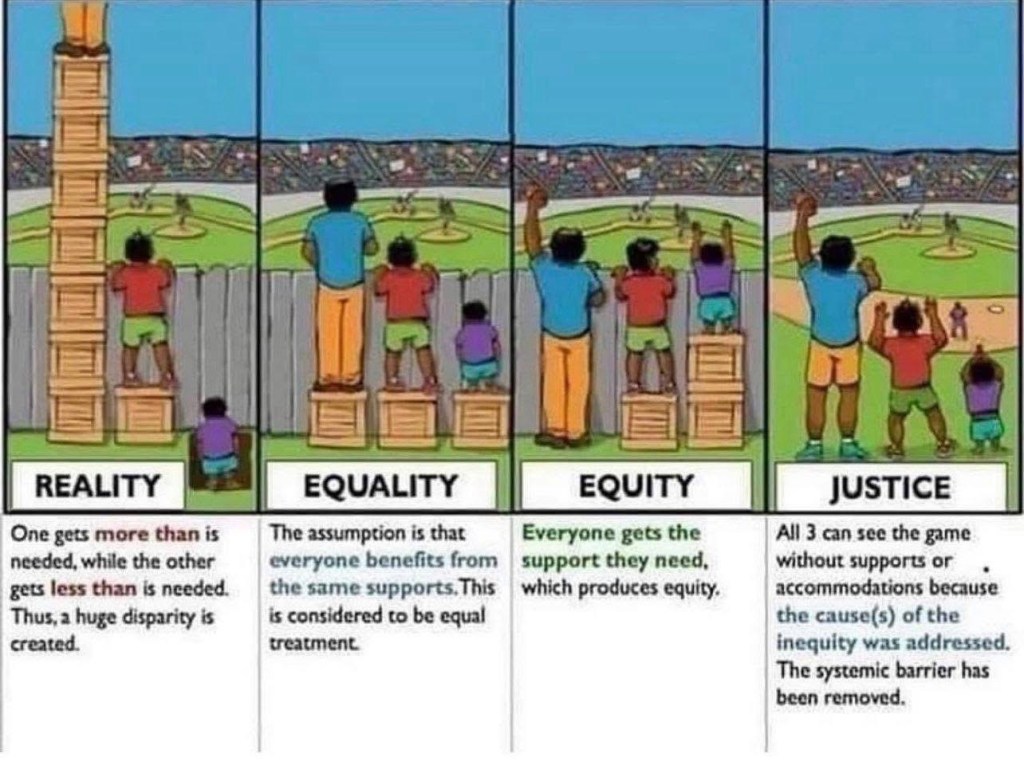
What does justice look like in a world of extreme wealth and extreme poverty? Where the systems in place work to keep furthering that disparity? Is justice possible in such a system?
Abraham Lincoln once said:
As I would not be a slave, so I would not be a master. This expresses my idea of democracy. Whatever differs from this, to the extent of the difference, is not democracy.
Consider this picture:
Removing systemic barriers to equity must be the work of those who seek justice, and, thereby, peace. There are those among us who would prefer to see themselves advantaged and others reduced in order for them to stay on top. These individuals may currently have the levers of wealth and power to their advantage. But they are outnumbered. As more people come to understand the graphic above, we can work together toward a more level playing field, and a more just and peaceful world.
Answer: Play. Question: What is something children do that adults need desperately?
What did you like to play when you were little? Can you remember losing track of time because you were busy tracking caterpillars or coloring or sculpting sandcastles or building a fort? Is there any way you can take a break today and play?
It can’t be all work, worry, stress, repeat. We need to find time to play, too.



 QuotableCreek.com