Thank you for this ordinary day.
Sometimes we see the extraordinary in the ordinary. This poem perfectly captures the blessing in such a day:

Lord, here I am.

How strange it is,

That some days feel like hurricanes

And others like glassy seas

And others like nothing much at all,

Today is a cosmic shrug.

My day planner says,

Rather conveniently,

That I will not need you,

Cry for you, reach for you.

Ordinarily, I might not think of you at all.

Except, if you don’t mind,

Let me notice you.

Show up in the small necessities

And everyday graces.

God, be bread.

Be water.

Be laundry.

Be the coffee cup in my hands

And the reason to calm down in traffic.

Be the gentler tone in my insistence today

That people pick up after themselves for once.

When I catch my own reflection

Or feel my own self-loathing

Fluttering in my stomach.

Calm my mind,

Lift my spirit,

Make this dumb, ordinary day

My prayer of thanks.

Be the reason I feel loved.

The Lives We Actually Have, by Kate Bowler and Jessica Richie
Exercising your compassion muscle.

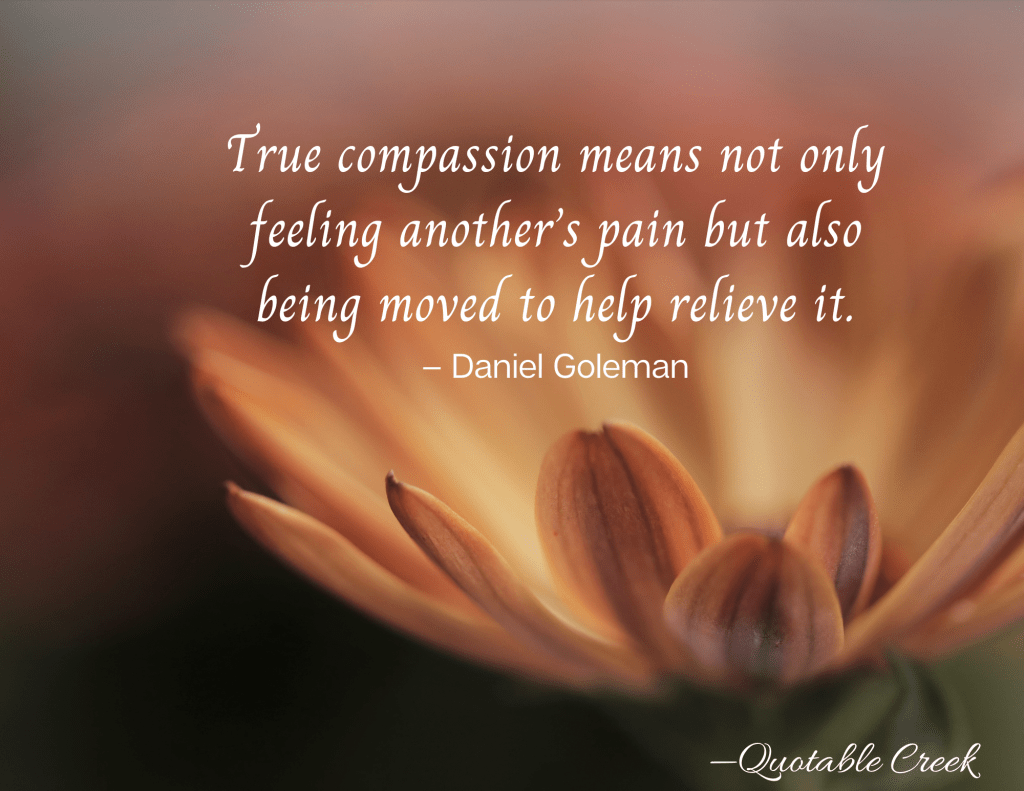
Compassion is an active, engaging emotion. It recognizes that another’s pain is as important as your own and seeks to help alleviate it. It is the emotion behind all social justice reform.

Compassion comes from empathy which is very different from sympathy. Dr. Eric Perry describes the two like this:

To better understand empathy, it is important to distinguish it from sympathy. Sympathy is the ability to understand another person’s situation from your point of view. It is a self-centered point of view that helps you understand what the other person is going through based on your own circumstances. You are able to acknowledge how the other person is feeling but, from a distance. You do not become emotionally connected to the person. For example, you are able to sympathize with someone having problems in their relationship because you have had problems in your own relationship. You do not feel what they are feeling but you have an understanding of what they are experiencing.

Empathy is a bit more complicated and abstract. In order to experience empathy, you must have the ability to identify the emotion and to place yourself in the other person’s position. The focus of empathy is self-less. You are experiencing another person’s emotional life by your ability to connect with them. In a sense, you are vicariously feeling the emotion. For example, through empathy, you are able to feel a stranger’s loss of a child, even if you are childless, by seeing the loss through their perspective. Through this connection, you are able to wear the emotional skin of another and essentially feel with them.

The inability to imagine yourself in someone else’s place in order to understand what they are feeling will result in difficulty in connecting with others.

Narcissists and sociopaths can feel sympathy. They use their knowledge of a person’s emotions, not to help them, but to manipulate and control them. But the empathetic person shares the pain of another and works to alleviate it.

The good new is that compassion is like a muscle and can be practiced and strengthened. In this fascinating article by Greater Good, they outline some steps for increasing your empathy.

They identify four goals to the practice:

  • Bringing attention or awareness to recognizing that there is suffering (cognitive)
  • Feeling emotionally moved by that suffering (affective)
  • Wishing there to be relief from that suffering (intentional)
  • A readiness to take action to relieve that suffering (motivational)

https://greatergood.berkeley.edu/article/item/six_habits_of_highly_compassionate_people

The article is well worth a few minutes to identify and exercise these compassion strengthening muscles. Flex!

Favorite things.

When you get a group of kids together, and ask them their favorite color, there is always that one kid who picks rainbow. I admire this kid.

I was never this kid.

I’ve always played by the rules, even if it caused me tons of angst trying to somehow weigh my fondness for the blue of a cloudless summer day, or the lavender of a jacaranda tree, or buttercup yellow, or soft blush pink. How do people pick these kind of things? Favorites?

But the rainbow kid stretches his arms wide and says, ‘I’ll pick them all, all the colors of the rainbow.’ This kid embraces color, life, variety, and has little concern with limits and rules. Gusto. Zest. Vibrancy. These are the attributes of this kid.

I hope, but cannot confirm, that I wasn’t the kid who told him to pick just one. Who told him rainbow wasn’t a color, and that picking rainbow was like picking infinite wishes from a genie. Against the rules. Or that kind of teacher for that matter. Because sometimes we are meant to throw our arms wide and say, ‘All of it. I love all of it. Color itself. How wonderful we live in a world of color.’

(I’ve settled in on answering periwinkle because I adore that color, it was my grandmother’s favorite color, and I adored her, and it has a wonderful sounding name that tickles me.)

The importance of self reflection.

We’ve always done it this way. Have you heard this? Said it? Maybe it’s time to look at ‘it’ with fresh eyes.

The same is true for the way we act, think, believe. Take a look. Is there anything there that is worth a reconsideration?

As we age, it’s easy to fall into ruts, easy to believe our way is the right way, easy to assume any problems are the other person’s fault.

Self-reflection, hard, soul-deep reflection, the kind of reflection that might be filled with regret and tears and epiphanies and apologies, is a good tune-up for our inner selves. Without it, there will be no progress.

Difficult people.

Do you  have any difficult people in your life? Chances are you can’t force them to be less toxic, but there are steps you can take to be less bothered by the encounter. In this article by Christine Carter, she suggests, among other things, that showing mercy to this difficult person will rebound to you:

Anne Lamott defines mercy as radical kindness bolstered by forgiveness, and it allows us to alter a communication dynamic, even when we are interacting with someone mired in anger or fear or jealousy. We do this by offering them a gift from our heart. You probably won’t be able to get rid of your negative thoughts about them, and you won’t be able to change them, but you can make an effort to be a loving person. Can you buy them a cup of coffee? Can you hold space for their suffering? Can you send a loving-kindness meditation their way?

Forgiveness takes this kindness to a whole new level. I used to think I couldn’t really forgive someone who’d hurt me until they’d asked for forgiveness, preferably in the form of a moving and remorseful apology letter.

But I’ve learned that to heal ourselves we must forgive whether or not we’re asked for forgiveness, and whether or not the person is still hurting us. When we do, we feel happier and more peaceful. This means that you might need to forgive the other person at the end of every day—or, on bad days, every hour. Forgiveness is an ongoing practice, not a one-time deal.

When we find ways to show mercy to even the person who has cost us sleep and love and even our well-being, something miraculous happens. “When we manage a flash of mercy for someone we don’t like, especially a truly awful person, including ourselves,” Anne Lamott writes, “we experience a great spiritual moment, a new point of view that can make us gasp.”

Here’s the real miracle: Our mercy boomerangs back to us. When we show radical kindness, forgiveness, and acceptance—and when we tell the truth in even the most difficult relationship—we start to show ourselves those things. We realize that we can love and forgive and accept even the most terrible aspects of our own being, even if it is only for a moment. We start to show ourselvesthe truth, and this makes us feel free.

Perhaps you can show that difficult person mercy today.

Looking closely.

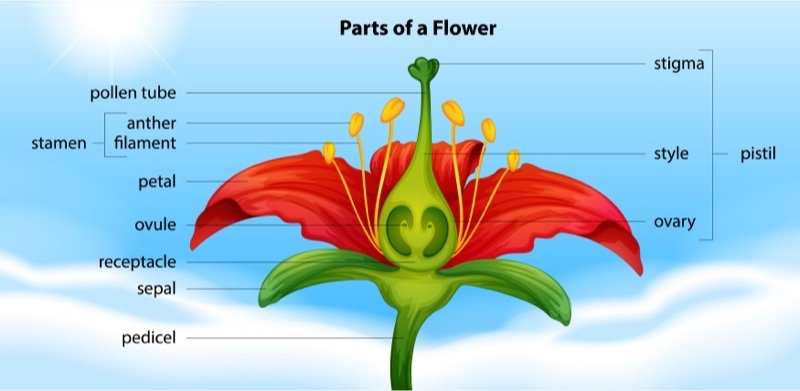
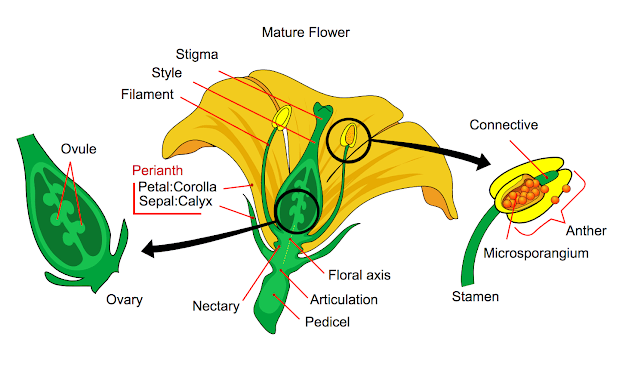
One of the lessons from my elementary school days that still stands out in memory was flower dissection day. I was astonished with the intricacy in a flower. Where before I saw just a flower, now I saw intricate systems for reproduction, male and female organs, color and smell to attract pollinators, a whole interconnection of systems. And this was just what I could see with my naked eye. Later I would discover the microscopic diversity and complexity of plant life. But then as a little 8 year old girl, I was gobsmacked with the complexity of it all.

Isn’t it all miraculous?

These days I need to stop and remember to let my much older self still stand in awe of the complexities of life. The interconnectedness of creation in all its abundance, from the dung beetle pushing its treasured clomp up a hill backwards with its hind feet, to the elements swirling together in a once in a generation storm.

Standing in awe requires both decentering ourselves and paying attention, absorbing both the tiniest details and the grand ones, and realizing our small place in the midst of it all. And even we humans are an amazing complexity of systems and organisms functioning together to keep us alive, made up of around 30 trillion human cells, and 39 trillion non-human microbial cells living on and in us. Our own body is essentially made up of many separate ecosystems. It is staggering.

I love being gobsmacked.

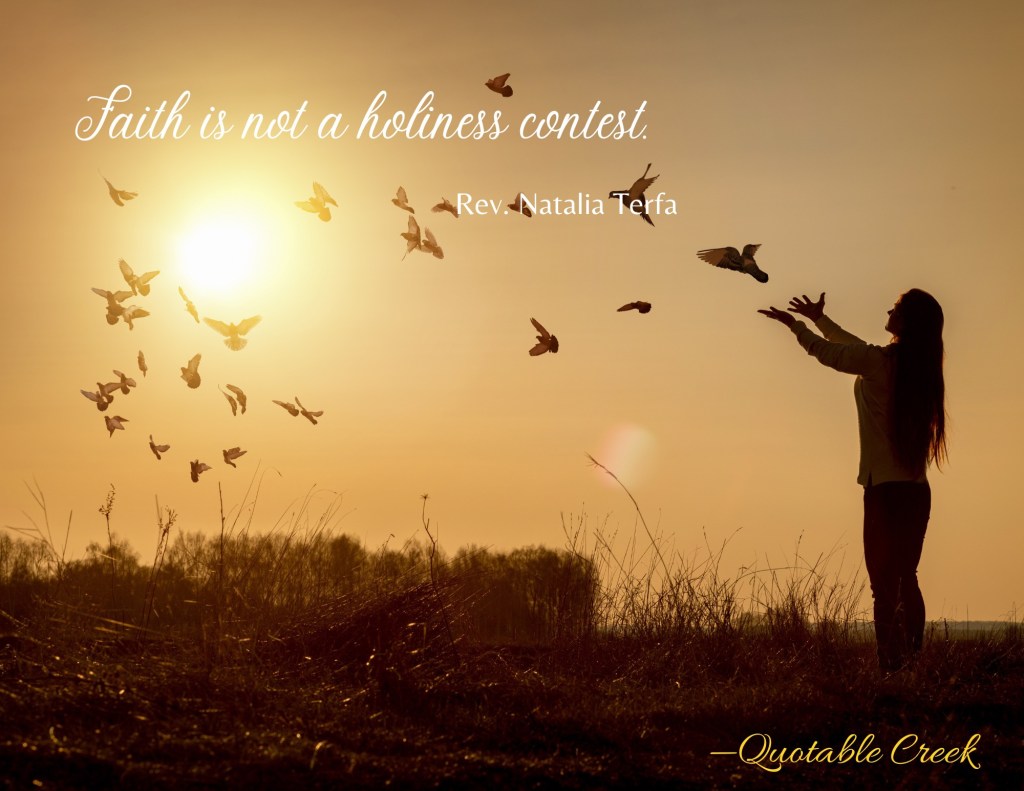
Faith is not a contest.

Faith is not a contest. It’s not praying louder or more eloquently for all to see. It’s not giving or fasting for show.

It’s an internal, deeply personal thing between you and God. It’s a dark of the night hope, and a bright green day joy. It the bulb pushing its way stubbornly through the soil with the promise of spring. It’s holding on to the values you know to be right even in the face of temptation, or expedience, or doubt.

Lent is a time for us to dig deep into our souls, to reconnect with God and each other, to remind ourselves of who and whose we are, and then live out that truth.

Rain

We can’t choose everything in life, but we can choose what kind of person we want to be.

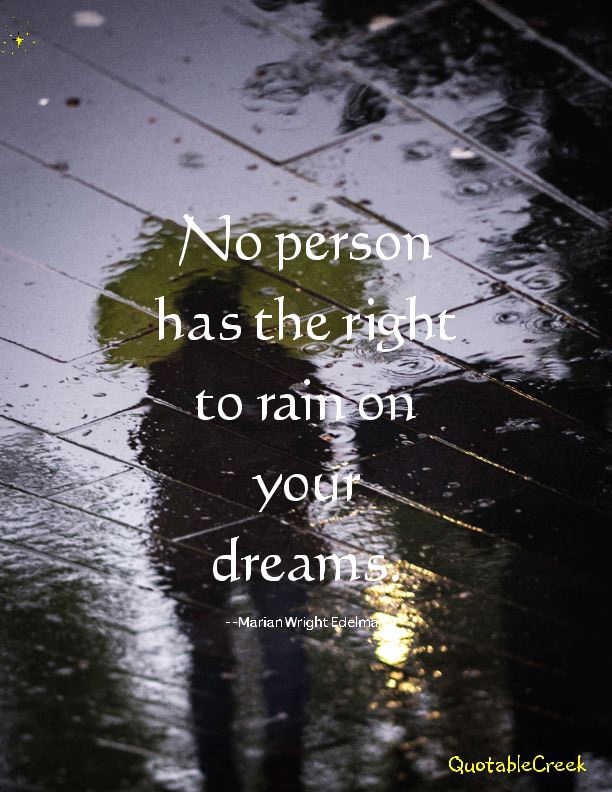
As we deal with storms across the country and unprecedented blizzard watches here in Southern California, consider the importance of rain. Rain can be like encouragement, bringing nourishment and rebirth to dry parched land. It can promote an abundance of life and energy.

But, in excess, rain can cause flooding and landslides. It can sweep people away into rushing water and leave the landscape devastated.

Our words have the same power. We can be supportive and encouraging, fostering life and vitality in those we engage with. Or we can be harsh and critical, pessimistic and judgmental. Our words can both heal and wound. Our choice.

We can choose to be encouraging and supportive, rather than bleak and pessimistic.

We can avoid being the person who rains on someone else’s parade.

Carrot or stick?

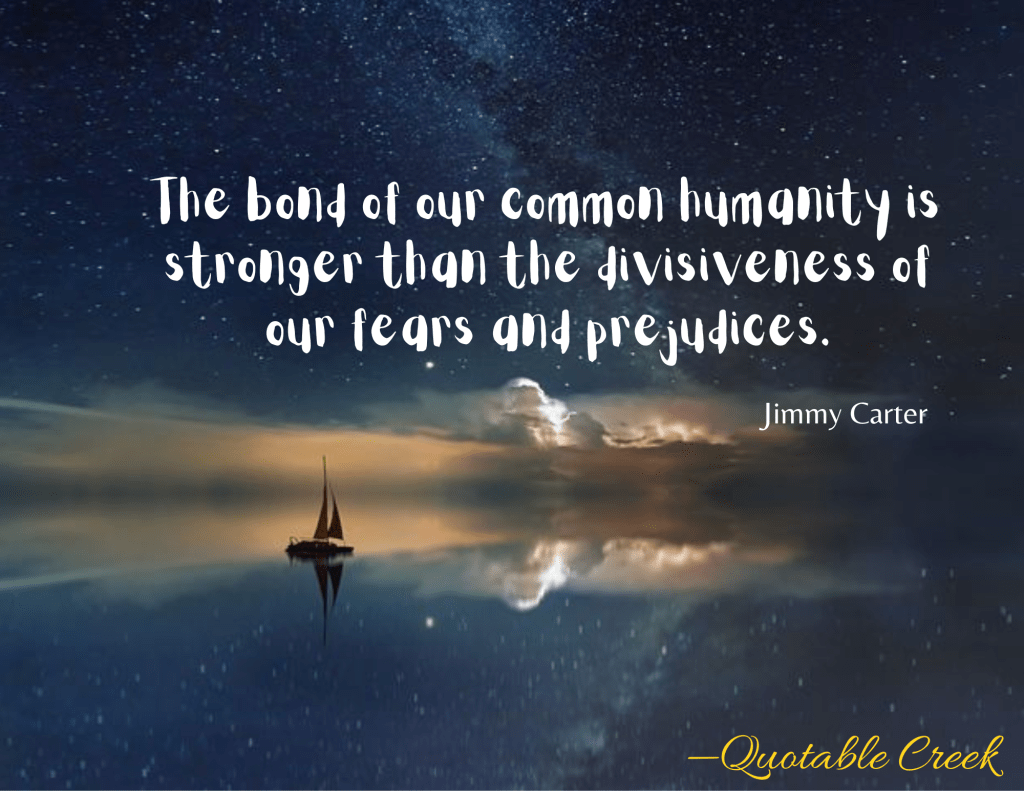
Have you ever stopped to consider how many of your decisions are controlled by fear? Or how others may attempt to control you by exploiting those fears?

Fear is a useful emotion. It can help us avoid danger and give us a boost of adrenaline to combat foes. But bathing in it, day in and day out, as some news sources would have us do, is a recipe for disease. Our bodies simply aren’t equipped to be in a constant state of fight or flight.

One of the answers must be to consider the reality of what makes you afraid. Is someone telling you stories to whip up your emotions? Is it true? If someone is manipulating you, you must find a way to step back and give yourself some perspective. Consider other sources. Evaluate the data. Analyze what will happen if the dreaded event comes true. Find physical ways to give your body comfort.

Ask yourself, what is this person trying to make me fear, and what are they trying to get me to do. What’s in it for them? That analysis will help give us the tools to determine if the fear is real or if someone is manipulating us.

We can buck up and deal with real threats. But imagined threats, particularly when someone is trying to keep you afraid to manipulate your actions, requires your own intervention.

True blue

It’s startling to hear something you’ve shared with someone in confidence being talked about elsewhere. It makes you feel so exposed, but, more important, it undermines trust in the relationship. Perhaps keeping secrets isn’t possible, and Ben Franklin was right when he said, “Three may keep a secret, if two of them are dead.”

But, just maybe, people should try harder to be worthy of trust. Brené Brown talks about the important elements of trust, to the acronym BRAVING:

Boundaries
Setting boundaries is making clear what’s okay and what’s not okay, and why

Reliability
You do what you say you’ll do. At work, this means staying aware of your competencies and limitations so you don’t overpromise and are able to deliver on commitments and balance competing priorities.

Accountability
You own your mistakes, apologize, and make amends.

Vault
You don’t share information or experiences that are not yours to share. I need to know that my confidences are kept, and that you’re not sharing with me any information about other people that should be confidential.

Integrity
Choosing courage over comfort; choosing what’s right over what’s fun, fast, or easy; and practicing your values, not just professing them.

Nonjudgment
I can ask for what I need, and you can ask for what you need. We can talk about how we feel without judgment.

Generosity
Extending the most generous interpretation to the intentions, words, and actions of others.

https://brenebrown.com/resources/the-braving-inventory/

It is important to learn which stories are yours to share, to leave the decision whether to share in the hands of the person who owns the story, and to be a safe place for your friend to come. We all need friends; let’s be good ones.