Celebrating others

Sometimes it feels like such a competitive world. And we develop an either him or me kind of mentality. A zero sum game, where an advantage for one person represents a loss to another. Like pie. more for you, less for me.

But what if it’s not? What if something good for one person, elevates the amount of good in the world for us all? What if the very act of celebrating another person’s success benefits us as well and makes a more positive, harmonious world?

I didn’t watch the Golden Globes, but I was taken with this picture of Jamie Lee Curtis celebrating the success of her co-star Michelle Yeoh:
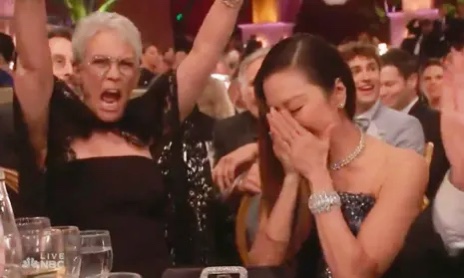
Fiercely supportive, celebratory, in Yeoh’s corner to the Nth degree. It wasn’t an award for Curtis, but it was a time for her to celebrate her friend. This energy inspires us all, doesn’t it?

The reaction to this now viral moment has surprised Curtis:

“I’m still stunned that a moment of natural exuberance and joy became some sort of a symbol for women supporting other women,” Curtis wrote in the [Instagram] post.

Let’s be there for each other, rejoicing in each other’s successes.
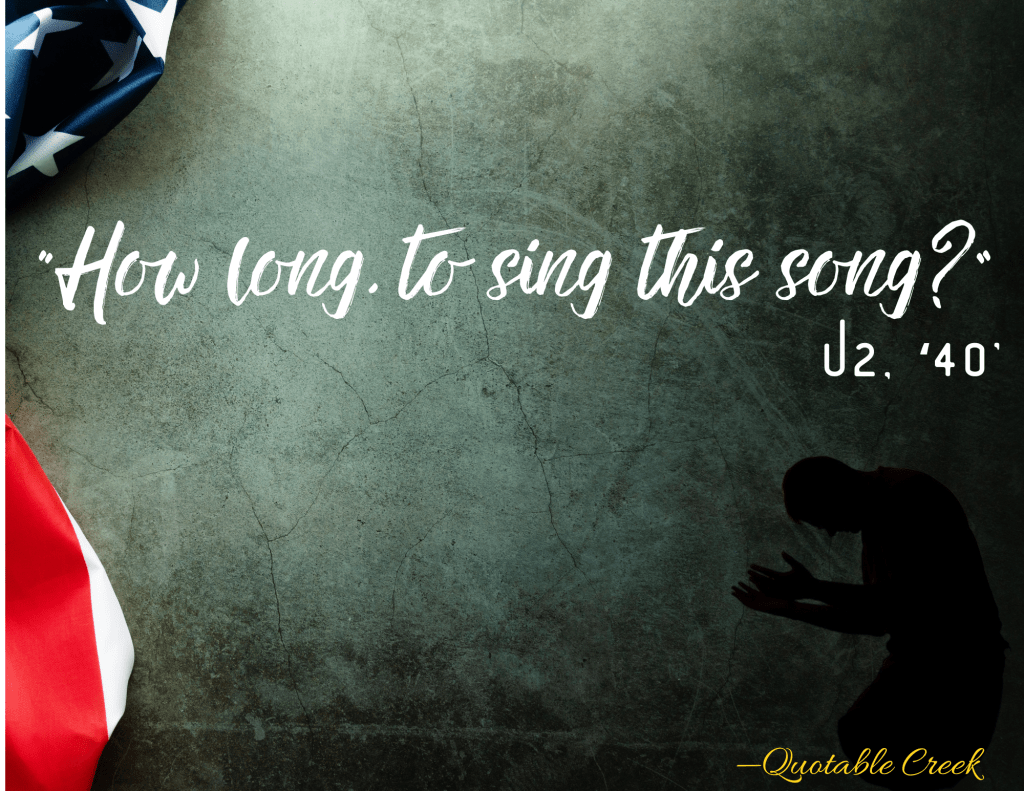
How long?

It has been 54 years since Martin Luther King, Jr. was killed. As long as between the date of his death and 1914. A long, long time. Yet here we are still fighting for the world he envisioned, a world where people would be judged by the content of their character rather than the color of their skin.

We must press on.

“We’ve got some difficult days ahead,” Martin Luther King, Jr., told an overflowing crowd in Memphis, Tennessee, on 3 April 1968, where the city’s sanitation workers were striking. “But it really doesn’t matter with me now, because I’ve been to the mountaintop … I’ve seen the Promised Land. I may not get there with you. But I want you to know tonight, that we, as a people, will get to the Promised Land.” Less than 24 hours after these prophetic words, King was assassinated by James Earl Ray.

https://kinginstitute.stanford.edu/encyclopedia/ive-been-mountaintop

Today, take a moment with his favorite hymn, the hymn he requested shortly before his death, “Take Me Home, Precious Lord’ and gather strength to continue his fight, all of our fight, toward the promised land:

https://www.youtube.com/watch?v=uYUwO6_lysw

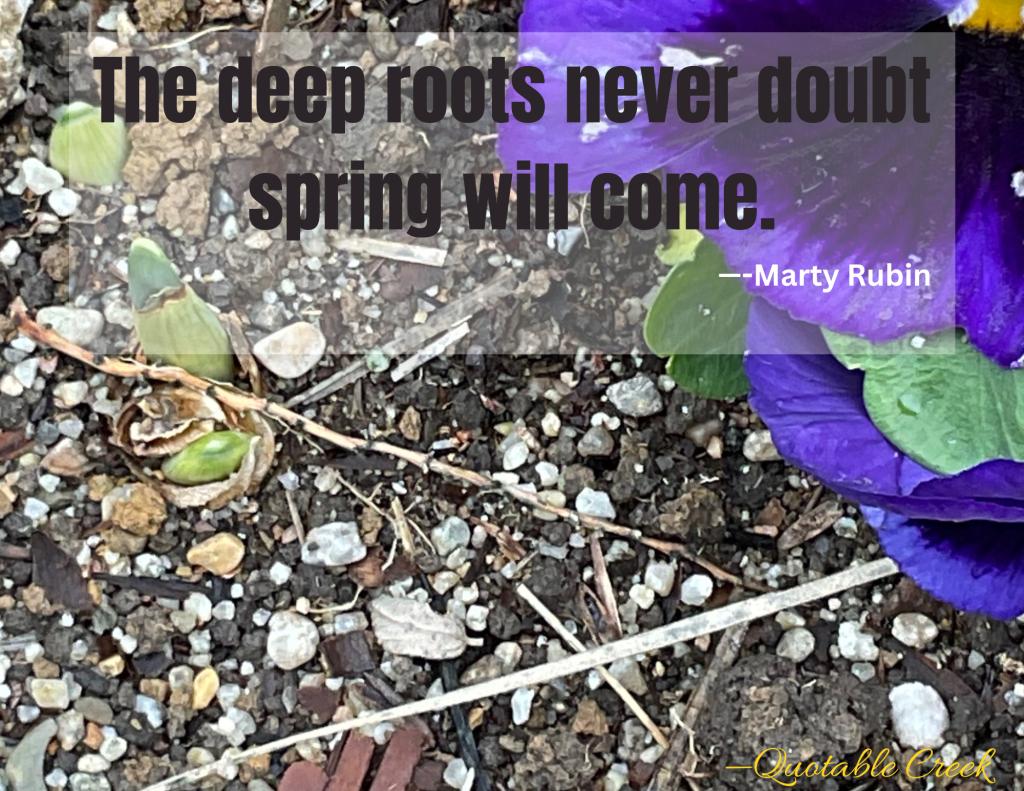
Deep roots

I’ve been thinking these days about roots. Trees are toppling in the recent rains because years of drought have kept their root systems shallow. Aspen trees look like separate trees above ground, but underneath share a complex intermingled root system that gives them extra strength. That root system allows the trees closest to water or minerals to send that sustenance to other struggling trees.

It seems like for many of us, years of pandemic have functioned a bit like drought causing us to disconnect from our social interactions and to pull up many of the roots that kept us grounded. Perhaps our interconnections are weakened.

We need our roots. We need our interconnections, our community, our sense of being part of a greater whole. What can we do to send our roots deeper, even in these unusual times we find ourselves living in?

Counting blessings instead of sheep

Are you ever sleepless? Sometimes it’s hard to stop ruminating over things long enough to fall asleep. We replay events of the day, preview possible scenarios for tomorrow, stew over grievances from yesterday. It’s hard to just sink off and get the sleep we need.

In her short story, “The Cure for Sleeplessness“, Maeve Binchy creates a magic cure for sleeplessness:

Molly read the advice slowly. It was a detailed instruction about how the cure would take three weeks and you had to follow every step of it. First you had to buy a big notebook with at least twenty pages in it, and stick a picture on the cover, something connected with flowers. It could be a field of bluebells or a bunch of roses. Then on the night you couldn’t sleep you must get up quietly and dress properly as if you were going out visiting. You had to fix your hair and look your best. Then you made a cup of tea and got out the notebook with the flower on the cover. In your best handwriting you wrote “My Book of Blessings” on it. That first night you chose just one thing that made you happy. No more than one, and choose it carefully. It could be a love, a baby, a house, a sunset, a friend. And you wrote one page, no more, no less, about the happiness that this particular blessing brought you.

Then you spent a whole hour doing something you had meant to do, like polishing silver, or mending torn curtains, or arranging photographs in an album. No matter how tired you felt, you must finish it, then undress carefully and go back to bed….

Every night she wrote about a different blessing.

Things like the night Gerry finally told her he loved her, when his face was white and red alternately, in case she might not love him too.

Like the moment after Billy was born when she held him in her arms.

Like her parents’ silver wedding anniversary, when they had said that they knew their daughters would be as happy as they were and everyone had cried.

Like that time in the advertising agency when the boss said that Molly had saved all their jobs by her quick thinking and they had all raised a glass of Champagne to her for winning the account.

Now most of this advice and all of the examples are pure Binchy, but the gratitude part is backed by science.

A gratitude journal is good for what ails you. As you call to mind your blessings, think about why you are grateful for that particular blessing, the details surrounding it, the sensations associated with it. Write it down somewhere so you can remember. If so inclined, write a thank you note to someone who made a difference in your life. Remember to say thank yous at work, home, and school. If you encounter a problem, try to see if there is an unexpected blessing hidden there somewhere.

And then, tonight, if you should have trouble falling asleep, count your blessings instead of sheep.

Pay attention

The Rose Parade is always a joyous start to the new year, the pageantry, the vivid colors, the community. The floats are huge, once nearly 100 feet tall. (Disney 2004). Every inch must be covered with something organic—mostly flowers, of course, but also oatmeal, potatoes, beans, seeds, and so on. The illusions created are remarkable. Look at the bicycles in the photo above (Kaiser 2023). Every detail created out of flowers and organic material. You think you’re looking at bicycles, but really you’re looking at a masterful combination of organic material:

The pink and yellow bikes are made from cut straw flowers confetti, while the blue bike is made from blue statice. The black bike tires are made from onion seeds and the handlebars are comprised of dark lettuce seeds. Other flowers and materials used include pampas grass, banana leaf, red and pink anthurium, commadore fern, Italian ruscus, lemon leaf, and green dianthus.

https://www.latfusa.com/article/2022/12/the-kaiser-permanente-rose-parade-float-has-40000-roses

In many ways, a Rose Parade float is a metaphor for life: you think you see things one way, but really everything is a combination of multitudes of factors—point of view, back story, nuance, history. Very little is as objective as we first think. This is particularly true when it comes to looking at each other. We are all a combination of life experience, history, bias, personality, filters and so on. We each bring that myriad of factors to our encounters.

Our job in everything is to look closely and pay attention, to move past assumption and bias. Jumping to hasty conclusions will get you trying to ride bicycles made of pampas grass.

Slowing down the clock

As we age, time feels like it is moving faster. This makes sense considering the math, perhaps. One year to a 100 year old is just one percent of their life, but to a two year old, it’s 50% more. But scientists are saying there is another reason having to do with the diversity of experiences.

“Our brain encodes new experiences, but not familiar ones, into memory, and our retrospective judgment of time is based on how many new memories we create over a certain period. In other words, the more new memories we build on a weekend getaway, the longer that trip will seem in hindsight.”

And this squares with why we felt that there was more time when we were younger when everything was new, and when our days were filled with varied experiences.

So perhaps there is a way to slow down time: fill it up, stretch your experiences, try new things, explore, savor, forswear the ordinary.

Seize the day.

https://www.scientificamerican.com/article/why-does-time-seem-to-speed-up-with-age/

Hope, and hope again.

What is hope, really, but a persistent insistence that things can be better, that there is more to it, that the final answers are yet to be revealed. Emily Dickinson describes hope as

“Hope” is the thing with feathers –

That perches in the soul –

And sings the tune without the words –

And never stops – at all –

And sweetest – in the Gale – is heard –

And sore must be the storm –

That could abash the little Bird

That kept so many warm –

I’ve heard it in the chillest land –

And on the strangest Sea –

Yet – never – in Extremity,

It asked a crumb – of me.”

And this feels right. Hope sits there perched, singing, warming our souls and keeping us fed. A wordless song because we may not even have the ability to put our emotions into words or know what it is we hope for. And this is a positive, persistent hope, but somewhat passive, waiting.

And yet, we know, too, that hope gets its fingernails dirty because while hope sits on the periphery expectant, it can also be in the fray fighting for a better world. That kind of hope is captured by Matthew @CrowsFault:

“People speak of hope as if it is this delicate ephemeral thing made of whispers and spider’s webs. It’s not. Hope has dirt on her face, blood on her knuckles, the grit of cobblestones in her hair, and just spat out a tooth as she rises for another go.”

And this, too, seems true. Hope keeps our souls fed but also prompts our entering the arena, helping us to do the hard work to make a better world for all.

Let 2023 be a year of hope, perched and singing to our souls, but also inching us forward to do the hard work, offering our time and talents, to bring about a better today.

Look at all you’ve done…

The new year brings with it an expectation to reflect and set intentions for how to perhaps improve from the last. Often these reflections result in an examination of all the ways we’ve fallen short and a profession to do better, eat better, exercise better…be better. Often the premise unspoken is that we’re not enough, we must improve, be different.

I wonder if there is a better way to start a new year. Perhaps in astonishment that we have made it through a year filled with so many challenges and yet we persisted. Perhaps filled with gratitude that our opportunities to contribute and bring joy to others continues. Perhaps thinking about all the small wonders that make up our life and rejoicing.

Each new year is an opportunity to wake up with the enthusiasm of Scrooge after his ghostly visits and realize that here we are, in the thick of it, able to love and be loved, able to contribute, and make a difference, filled with delight:

“Running to the window, he opened it, and put out his head. No fog, no mist; clear, bright, jovial, stirring, cold; cold, piping for the blood to dance to; Golden sunlight; Heavenly sky; sweet fresh air; merry bells. Oh, glorious. Glorious!”

When he finds out from a boy outside his window that it is still Christmas Day, Scrooge says, “I haven’t missed it. Yes, the spirits did it all in one night—they can do anything they want to do.”

Then his thoughts turn, with glee, to anonymous giving, saying to himself, “I’ll send [a turkey] to Bob Cratchit’s! rubbing his hands, and splitting with a laugh. “He shan’t know who sends it. It’s twice the size of Tiny Tim….”

“The chuckle with which he said this, and the chuckle with which he paid for the Turkey, and the chuckle with which he paid for the cab, and the chuckle with which he recompensed the boy, were only to be exceeded by the chuckle with which he sat down breathless in his chair again, and chuckled till he cried.”

Chuckled until he cried. How thin the edge between joy and grief. What a gift it is to be here. How precious in its finiteness. But here we are, dancing, able to bring joy to others. Here now, but not forever.

Rejoice!

Happy new year!

Woven delights.

Everything is a bit of a mix, isn’t it? Even a perfect moment is inseparable from its transience. Glennon Doyle coined the term ‘brutiful’ for this, a mix of brutal and beautiful.

In his Book of Delights, Ross Gay embarks on a quest to document the delights of each day for a year. Everything from bindweed to community to the joys of gardening. That act of paying attention, looking for the delights in each day, is, in itself, a delight, an opening to the promise and possibility of each moment.

Just the act of searching for those delights and holding them up, maybe even writing them down, serves to make each moment more meaningful and appreciated. As we train and condition ourselves to notice the things that delight us, even those we would never normally consider delights, we grow in gratitude and awe. Our worlds take on more depth and value. And we are better able to see the roses amidst the thorns.

Happy New Year!

It doesn’t really matter what your New Year’s resolution is, it’s all about the how, not the what. Adverbs are important when it comes down to it.

If your resolution is to lose a few pounds, does it make a difference whether you lose it sensibly or too fast or maybe, even, because you’re ill?

If your resolution is to make more money, does it make a difference if it is done at someone else’s expense or illegally?

No matter what we pick as the what of the resolution, the focus really must be on the how as well. Consider the adverb. The how of things makes a difference.

Generously or greedily. Selfishly or selflessly. Safely or recklessly. Kindly or maliciously. Honestly or dishonestly.

For every action that you can resolve to do, there is a spectrum of hows to reach that goal. Maybe, even, there is a line that can be crossed on that spectrum where the what isn’t important anymore because it involves a how that will make us someone who we don’t want to be.

So, when you’re going about planning your new year, consider what adverbs you want to be a part of it.