Follow your bliss.

bliss

What is your bliss? What fills you with purpose and passion and spills out of you into the world around you?

That’s not always an easy question.

Sometimes we can look at the high moments in our work or life, the moments that brought joy and satisfaction, and follow them like breadcrumbs back to the bliss, that thing that we love doing.

Sometimes, we are born knowing our passion and purpose. It is as apparent as the nose on our face, if we can see it and follow it before it’s squashed by life.

In the attached video, one boy seems to know what brings him joy and purpose right out of the gate: making bears for hospitalized children, turning sadness into joy, despair into hope, and, maybe even, saving his own dad in the process.

There is so much to love about this story, but, as you watch, consider his parents’ response. They don’t force him to be like all the other boys. They don’t mock or deride him for his dream. They don’t push him into a mold of their own devising.

They let him blossom.


Be the river.

river

Life is like a river. It moves faster and faster as it draws to its conclusion. It draws us along and challenges us to go with the flow, to confront the challenges head on, to stay alert, to enjoy the view. We don’t know what is around each bend, but we do know how to meet challenges–with love, with acceptance, with courage.

Enjoy Garth Brooks on this point!


What to do?

everything

You want to make a difference. You want it to have mattered that you were here. But where to start? It seems like there is so much to do.

One suggestion is to examine your life and consider where you are indispensable. You may be the whole world to someone. Start there.

As you expand your circle of influence, consider your gifts and talents. Is there something you can do that no one else can do? Perhaps you are the boss and have the ability to influence the climate or policies in your workplace. Perhaps you are from a group that needs a spokesperson and you have a gift for advocacy. Perhaps you have some skills or strengths that can be put to use helping others?

How do you pick? Consider your heart– What breaks it or what makes it swell to bursting? Go there. Either way, follow your passion right into your purpose. You can’t do everything, but you can do something. And that something will make a powerful difference.

Be a good friend.

friendshpcement

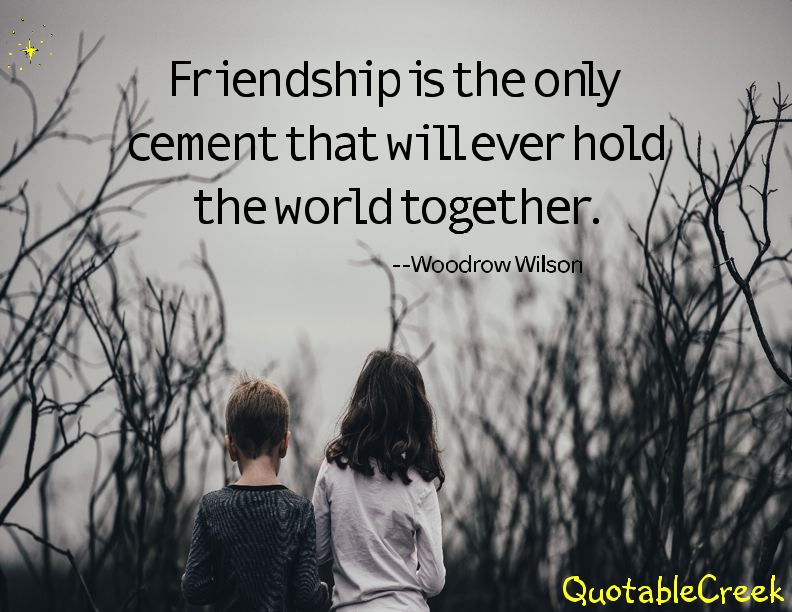
Friendships are taking a hit these days. Politics, world views, differing opinions are tearing people apart. What is it that holds people together instead? One thing is an abiding concern for the other person, despite your differences. If you can advocate against the death penalty on behalf of a stranger, couldn’t you bring yourself to see what is good and redeemable inside a former friend? Inside an enemy even? Searching for common ground is hard work, but really the main point of living in community. Isn’t it?

Be the storm.

storm

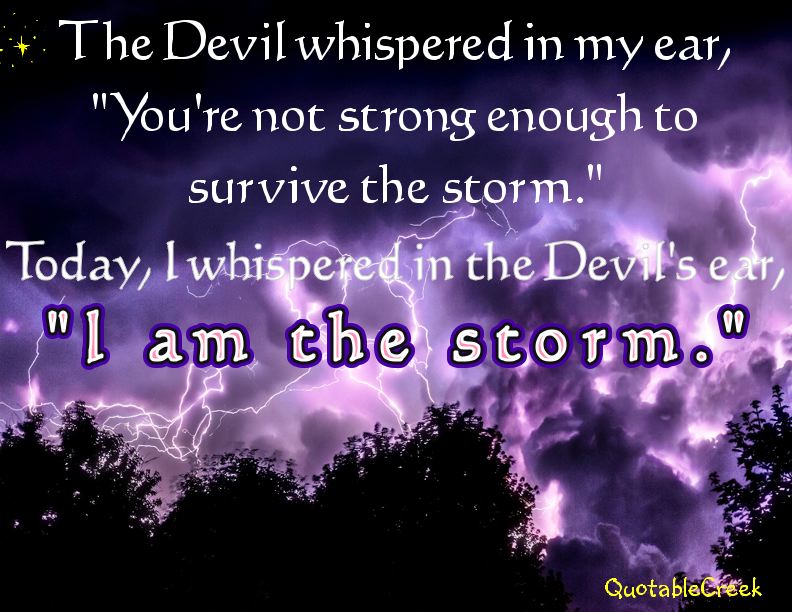
Is there a sleeping giant inside of you waiting to wake up and make a difference? Perhaps there is a cause you want to help or a need you see in your community? Are there people who need an ally? What can you do? How can you help?

You are more powerful than you ever dreamed.

Now is the time.


Be kind.

kindness

Kindness isn’t something you ponder in your heart. It is something you do–with your hands, with your words, with your gifts. Person to person, face to face. Lift those who have fallen; feed those who are hungry; speak up for those without a voice; reach out to those who feel alone.

In her song, Hands, Jewel reminds us that even when our hands are small, they are the tools we have to help others and we must use them. That is the way we will use our lives to make a difference for the better in the lives of those around us.

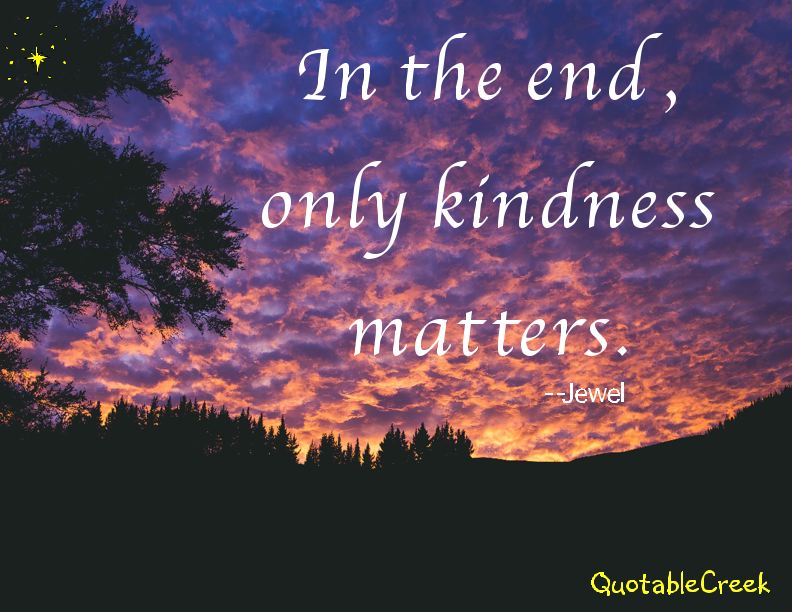
When she was 18, pop singer Jewel lived in a van. One day, she walked into a store to shoplift a dress; but looking at her hands, she realized she controlled them. “I realized I was cheating myself.” Here’s a song titled ‘Hands’ with a beautiful refrain: ‘In the end, only kindness matters.”

Listen to Jewell’s beautiful song here. And, today, contemplate her words:

We will fight, not out of spite
For someone must stand up for what’s right
Cause where there’s a man who has no voice
There ours shall go singing

My hands are small, I know,
But they’re not yours they are my own
And I am never broken

Today, be kind. Look for any and every opportunity to make a difference.


Lead your children well.

children

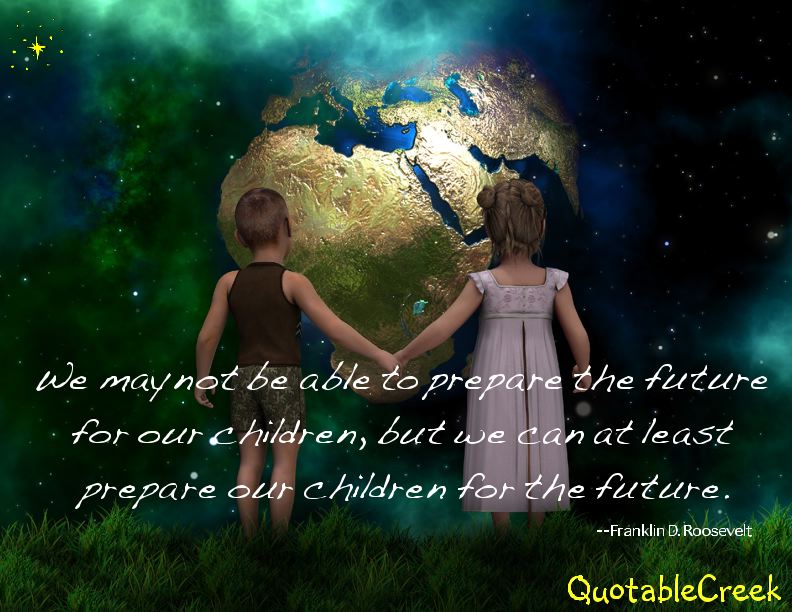
None of us knows what the future holds. But we do know the values we hold dear–honesty, integrity, love, compassion, empathy, respect, tolerance. As we raise our children, we instill these values. As adults, we model these values whether we win or lose, succeed or fail, sink or swim.  Watching us, they learn, and, as they go forward into their futures, they will bring these values to their own decisions. If each of us does this, we will leave the world a better brighter place for our having been here.

Rise up.

serenity

Life knocks us down. What helps us get back up?

It’s not about how smart we are, or who we know, or what school we went to. It’s about resilience. Our emotional IQs may be just as important, if not more important, than our actual IQs.

Our emotional intelligence is subtle:

Emotional intelligence is the “something” in each of us that is a bit intangible. It affects how we manage behavior, navigate social complexities, and make personal decisions that achieve positive results. Emotional intelligence is made up of four core skills that pair up under two primary competencies: personal competence and social competence.

And, as luck would have it, our emotional intelligence is something we can work to improve:

Unlike your IQ, your EQ is highly malleable. As you train your brain by repeatedly practicing new emotionally intelligent behaviors, your brain builds the pathways needed to make them into habits. Before long, you will begin responding to your surroundings with emotional intelligence without even having to think about it. And as your brain reinforces the use of new behaviors, the connections supporting old, destructive behaviors will die off.

Consider these nine habits of emotionally intelligent people:

1. They’re relentlessly positive. 
2. They have a robust emotional vocabulary.

3. They’re assertive.

4. They’re curious about other people.

5. They forgive, but they don’t forget. 
6. They won’t let anyone limit their joy.

7. They make things fun.

8. They are difficult to offend. 
9. They quash negative self-talk.

Focus on the things you can control. Don’t get lost in the negativity of things beyond your sphere of influence. Remember to stay positive and joyful.

And then get yourself back up!


Chuck the lies.

honesty

Lie? Why not? Everyone does it, don’t they?

We have many words for lies: white lies, fudging, fibs, whoppers, but what is at the heart of each is knowingly substituting a different version of the facts for what we know is the truth. Sometimes, like with Wells Fargo and Bernie Madoff, the lies result in substantial financial gain for the liar and substantial loss for the victim.

What propels someone to lie so extravagantly or, even, at all?

Studies show that the big whoppers evolve from the littlest of lies: our brain changes as we lie, making us more and more willing to tell bigger and bigger lies:

A new study claims to provide the first empirical evidence showing that dishonesty gradually increases over time. By using scans that measured the brain’s response to lying, researchers saw that each new lie resulted in smaller and smaller neurological reactions ― especially in the amygdala, which is the brain’s emotional core.

In effect, each new fib appeared to desensitize the brain, making it easier and easier to tell more lies.

This is alarming, not just because it can lead to widespread fraud but also because a liar begins to live in an alternate reality. Over time, people can begin to believe the lies they tell themselves and others, putting them in a position where their beliefs just don’t square with the world they’re living in. They are constantly confronted with the disconnect between their altered reality and reality itself, leading to greater and greater anger and frustration. Sometimes those lies are self-delusional, leading people to never adequately address and progress beyond their own problems. In short, lies lead to fragmentation, discord, breach of trust, chaos.

Now, truth doesn’t always lead to harmony. Some truths lead to a road of very hard work, reconciliation, and compromise. But at the heart of telling the truth is an increase in trust which is the glue that binds a couple, a family, a community, a country, and is necessary for any true progress.


Color your world!

color

Are you having a basic beige day? A blue day? A red explosion day? Color is surprisingly important behind the scenes to our mood and can affect how you feel.

Some studies have shown that color can have dramatic consequences on behavior:

  • One study found that warm-colored placebo pills were reported as more effective than cool-colored placebo pills.

  • Anecdotal evidence has suggested that installing blue-colored streetlights can lead to reduced crime in those areas.

  • The temperature of the environment might play a role in color preference. People who are warm tend to list cool colors as their favorites, while people who are cold prefer warmer colors.

  • More recently, researchers discovered that the color red causes people to react with greater speed and force, something that might prove useful during athletic activities.

  • One study that looked at historical data found that sports teams dressed in mostly black uniforms are more likely to receive penalties and that students were more likely to associate negative qualities with a player wearing a black uniform.

One study suggests that placing misbehaving children in a pink room can calm them down better than anything else! And that calming effect has been employed in visiting team’s locker room to mellow them out and make them less likely to win a game.  Many things have been written about the use of color in decorating in creating a home that reflects the mood you are after.

So what to make of these interesting tidbits? First, there is so much more going on in our brains with respect to our moods and behaviors than we realize. But, second, why not try a bit of a color experiment on yourself? If you are feeling blue, dress in yellow. If you want some comfort, how about a nurturing tan? If nothing else, it will feel a lot like playing dress up, and we all know how good play is for even the most serious among us.