Light in darkness.

It is hard to overestimate the importance of hope, even when going through the most dire of circumstances. Retaining our own spark.

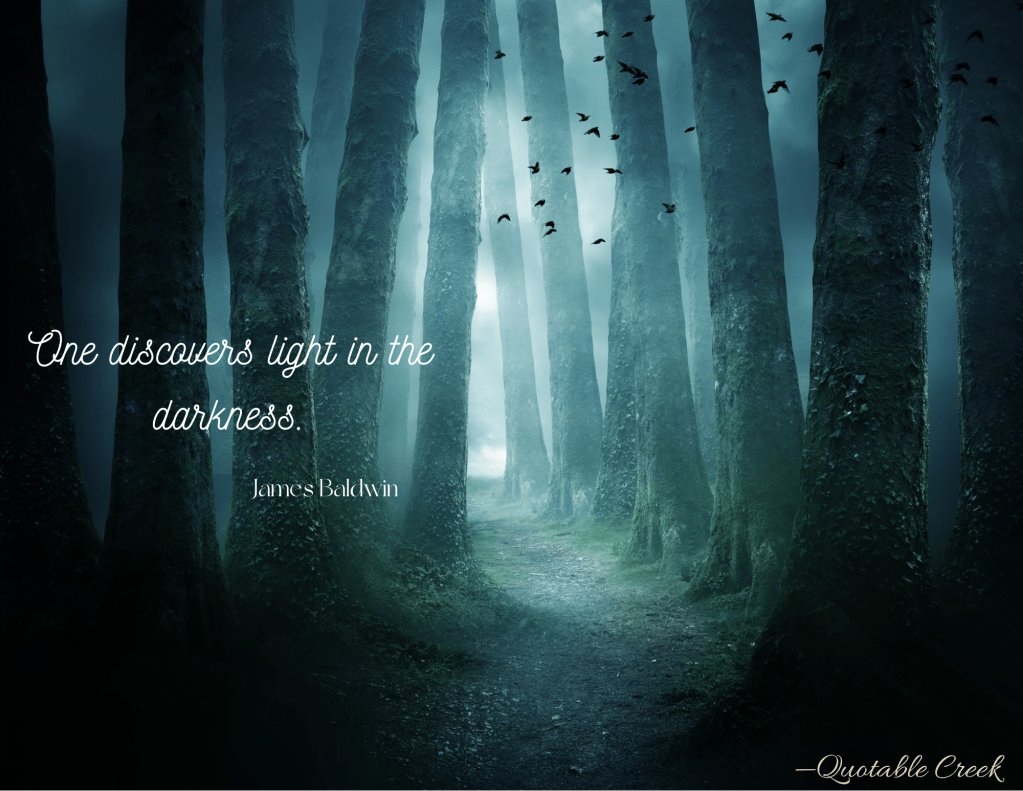
As James Baldwin continues:

One discovers the light in the darkness, that is what darkness is for; but everything in our lives depends on how we bear that light. It is necessary, while in darkness, to know that there is a light somewhere, to know that in oneself, waiting to be found, there is a light.

How will we bear that light?

Self control in an out of control world.

Not gonna lie. These days are wild. The news cycle is intense, and it can feel dizzying. I wonder what students in school in the future will study about these years. It will definitely be a large chapter with tons of footnotes! And yet, as we work our way through this present, how can we keep our psyches from spinning out of control right with the swirls of events?

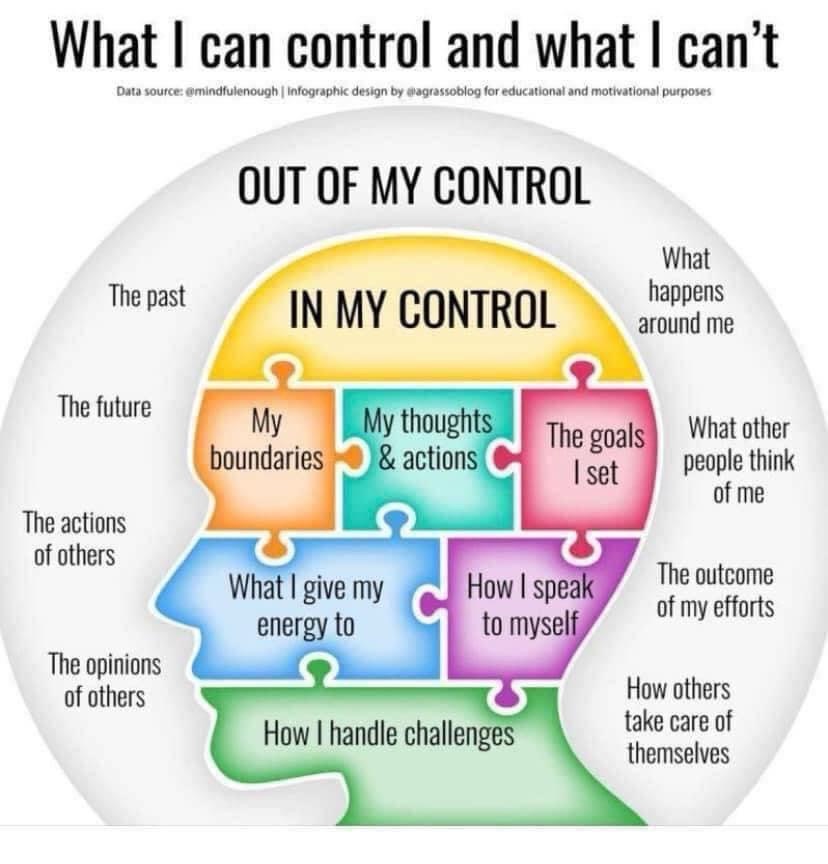
One thing to keep in mind is to focus our attention and efforts on the things over which we have control.

Consider this graphic:

Try to let the things in the gray area consume less of your time and attention, focusing on what is in your control. It can be frustrating, no doubt, but therein lies our sanity in crazy times.

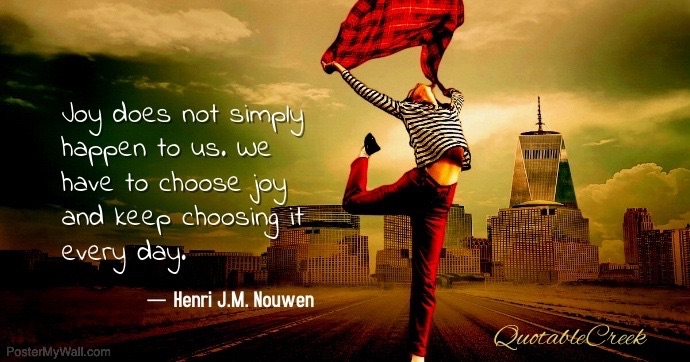
Choosing joy.

Sometimes joy is a matter of perspective. It’s reaching down and being grateful for it all, the mess, the euphoria, the triumphs, and the tragedies. Grateful to be here, to have a voice, to have people to care about, to have a chance to make a difference. Joy in it all is a choice.

In Bread for the Journey, Henri Nouwen unpacks this further:

Joy is what makes life worth living, but for many joy seems hard to find. They complain that their lives are sorrowful and depressing. What then brings the joy we so much desire? Are some people just lucky, while others have run out of luck? Strange as it may sound, we can choose joy. Two people can be part of the same event, but one may choose to live it quite differently from the other. One may choose to trust that what happened, painful as it may be, holds a promise. The other may choose despair and be destroyed by it.  What makes us human is precisely this freedom of choice.

What is the promise behind the circumstances that threaten to steal your joy? Is there something hopeful there? Seeing that promise may just be the key you are looking for.

The extraordinary in my cup of coffee.

Sometimes we see the extraordinary in the ordinary. This poem perfectly captures the blessing in such a day:

Lord, here I am.

How strange it is,

That some days feel like hurricanes

And others like glassy seas

And others like nothing much at all,

Today is a cosmic shrug.

My day planner says, 

Rather conveniently,

That I will not need you,

Cry for you, reach for you.

Ordinarily, I might not think of you at all.

Except, if you don’t mind,

Let me notice you.

Show up in the small necessities

And everyday graces.

God, be bread.

Be water.

Be laundry.

Be the coffee cup in my hands

And the reason to calm down in traffic.

Be the gentler tone in my insistence today

That people pick up after themselves for once.

When I catch my own reflection

Or feel my own self-loathing

Fluttering in my stomach.

Calm my mind,

Lift my spirit,

Make this dumb, ordinary day

My prayer of thanks.

Be the reason I feel loved.The Lives We Actually Have, by Kate Bowler and Jessica Richie

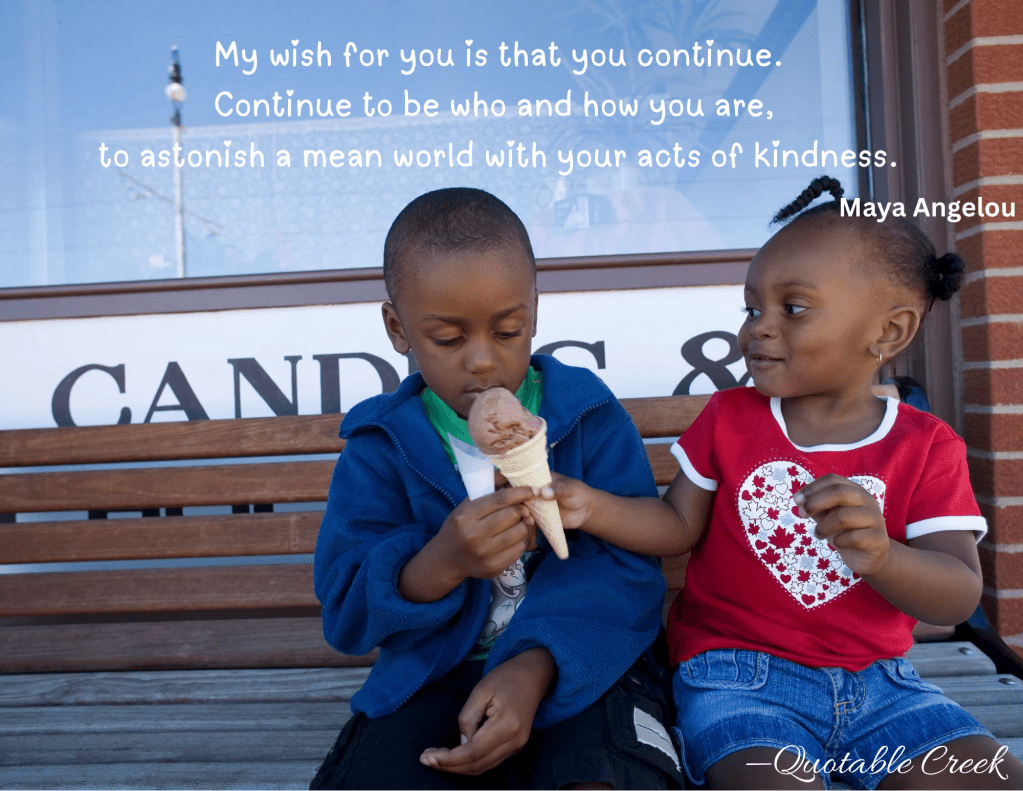
Astonishing a mean world.

Astonishing a mean world is quite the life goal. Flipping the script. Not buying in to the smallness, pettiness, and cruelty you see around you.

Imagine the ripple effects of such kindness.

Perhaps you’ve heard the story of the man and the starfish. In sum, a man is walking along the beach at low tide finding starfish that have landed too far above the water line to survive. He dislodges them and throws them back into the ocean. A bystander is astonished and scolds him, saying that he will never be able to make a difference as there are miles and miles of beach with hundreds of stranded starfish. The man responds, tossing another back into the ocean, “Made a difference to that one,” he remarks.

Making a difference doesn’t have to be a grand gesture. It can be quite small, perhaps only affecting the person in front of you right now. Perhaps the difference is choosing an unexpected response to cruelty. Perhaps the response is to not lose hope.

Hang in there. The starfish are right in front of you on your path if you choose to see them.

An infinite succession of presents.

This moment we are in is but one in the collection of moments that make a life, a story, a history. Each moment building on the last, forward toward a powerful culmination. To stay hopeful and earnest in each moment, no matter how dire, is a testament to what we hold dear, to hope, to a belief that all things will ultimately work together for good.

As Howard Zinn says,

TO BE HOPEFUL in bad times is not just foolishly romantic. It is based on the fact that human history is a history not only of cruelty, but also of compassion, sacrifice, courage, kindness.
What we choose to emphasize in this complex history will determine our lives. If we see only the worst, it destroys our capacity to do something. If we remember those times and places—and there are so many—where people have behaved magnificently, this gives us the energy to act, and at least the possibility of sending this spinning top of a world in a different direction.
And if we do act, in however small a way, we don’t have to wait for some grand utopian future. The future is an infinite succession of presents, and to live now as we think human beings should live, in defiance of all that is bad around us, is itself a marvelous victory.

Do not give up on the beliefs you have. To be decent, kind, not returning hate for hate, to speak truth to power, to retain hope for a brighter future, a future willing to work for. That is a marvelous victory.

Walking humbly.

When we find ourselves in challenging times and are unsure which way to turn, let these words help guide you. 

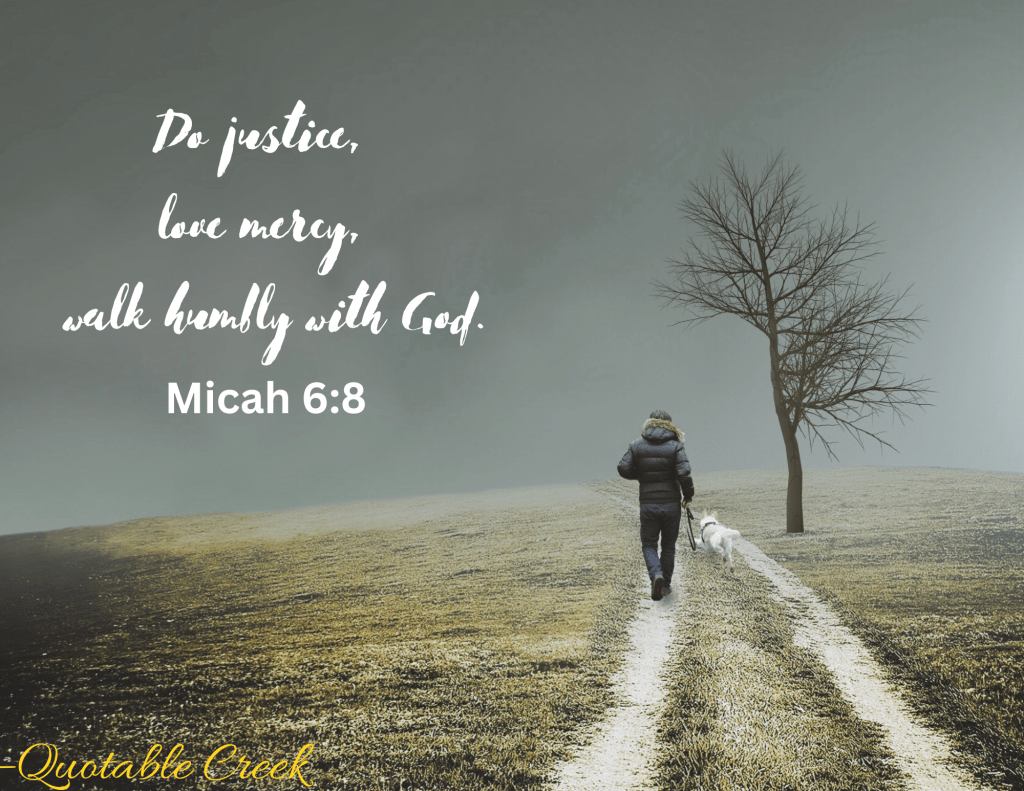
Do justice. Peace, justice, love are things we do and bring about, not things we wait for. With our best discernment, we offer ourselves to the world, hoping to make a difference. Kind words, loving hearts, calm demeanors, patience, forbearance, and forgiveness. The way of the One we follow. A servant’s heart but a leader’s strength. 

Love mercy. Oh, how the world loves vengeance, cancelling, grudges, getting even, punishment. To love mercy is a kinder, gentler path, one that believes in the redeem-ability of every last one of us. One that doesn’t insist on being avenged or having the last word. One that delights in forgiveness and healing. 

Walk humbly. No matter how hard we try to do or be right, we may be wrong. The other guy might be right. And, get this, God loves the other guy as much as God love you. 

Tortoise and the hare

I’ve been watching Lessons in Chemistry, based on a wonderful book. One part stood out for me last night. A dog character, Six Thirty, remembers why his person, Calvin, said he loves running. Calvin said even when it is hard or you don’t think you can go on anymore, you just keep putting one foot in front of the other.

“One foot. One foot. And then sure enough, you’ll be home.”.

Isn’t that profound? In this life, we keep putting one foot in front of the other, until we’re home.

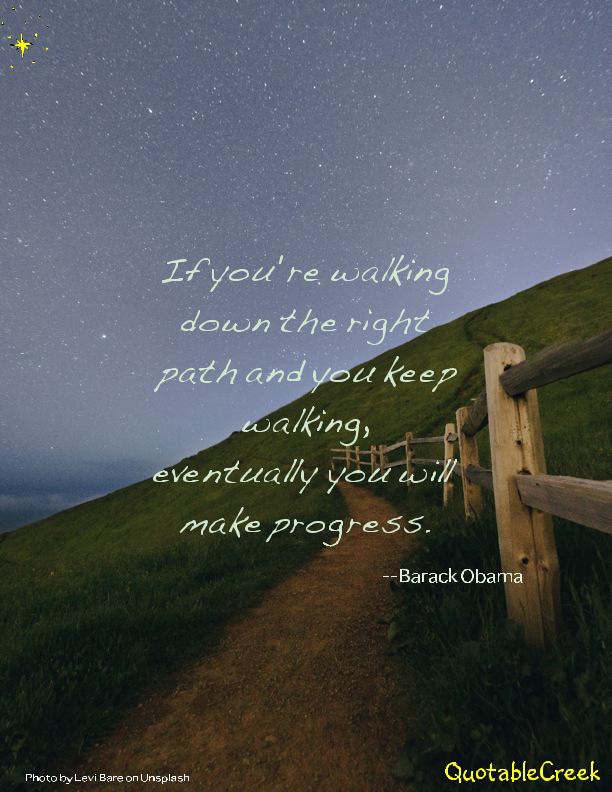
Slow and steady wins the race. We get discouraged and stop, or chase after another enticing goal, or turn back. But, if we stay true, we will make progress. One foot, one foot.

Remember the tortoise and the hare? They had a rematch recently:

This is my yopp.

Sometimes turning off the news is the best form of mental health protection.

But then we remember. In times of darkness, there are always those working to light a path, helping, fighting for the common good, making progress.

And maybe we, too, can help.

Maybe not in large, brokering peace kind of ways. But in small ways that, combined together with the small ways of many, many others, may help to right a wrong or turn a tide.

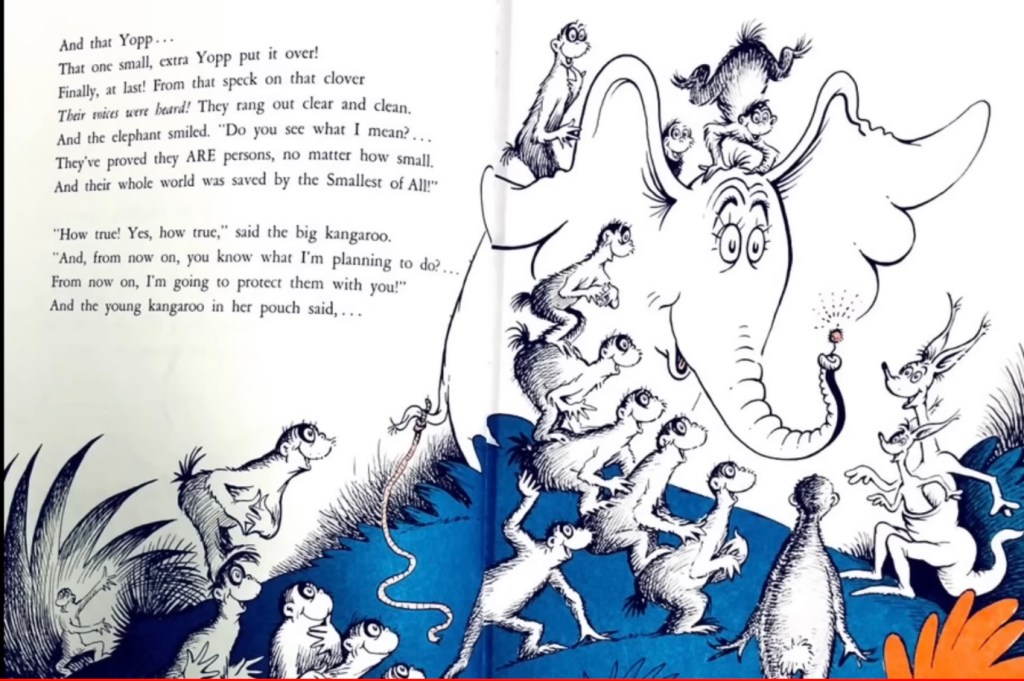
I think of Horton Hears a Who by Dr. Seuss, everyone shouting and banging on pots to be heard, but it is the final Yopp of a child that turns the tide, saving their world.

What is your ‘Yopp’?

Praying with the news.

How do we read the news and not get overwhelmed or angry, disconnected or depressed? How do we keep showing up with compassion and grace in a world where there is so much hate? How do we keep ourselves on the right path through the midst of it all? How do we continue to show up from a place of compassion, forgiveness, and grace? how do we keep our hearts from growing hard?

In this thoughtful letter, Rabbi Yael Levy shares his insights on how to pray with the news:

The 17th of the Hebrew month Tammuz initiates a three-week period of mourning that leads to Tisha b’Av, which is the day that marks the destruction of the Temples in Jerusalem in 586 BCE and 70 CE.

Tradition teaches that the Temple was destroyed because hatred became the operating principle in the community. The scorn, contempt and disdain that characterized daily interactions caused the Divine Presence to flee and leave the Temple vulnerable to attack.

These next three weeks ask us to reflect on the hatred that we allow to take root in our hearts. The wisdom of the tradition acknowledges that hatred can sometimes feel energizing and “so right,” but allowing it to fill our bodies and guide our actions leads to destruction.

Many years ago I was taught the practice of praying with the news. I have shared it over the years and always find myself returning to it during this season.

In this practice, each time we read or listen to a news report that enrages us, we turn our attention to those harmed by what is happening and pray for their healing and well-being. Doing so encourages us to acknowledge feelings of anger, grief and despair, and at the same time it turns our attention toward connection and compassion. Praying with the news can help us learn to bear witness to devastation and mayhem, while keeping our hearts soft, our minds calm, and our actions clear.

I am struggling mightily with this practice these days in the wake of continued violence and oppression in this country and throughout the world. Hatred can sometimes feel like such a welcome harbor. Not only does it feel so right, it can also act as a shield, creating the illusion that I don’t have to acknowledge the grief and heartbreak I am experiencing.

I need practices to help quiet the rage and fear, to loosen the constriction of hatred and to help me be with overwhelming grief. I need practices to help me return to compassion, love, joy and possibility. I find praying with the news both painful and helpful. It keeps me connected, allows sorrow, and grounds me in care and love.

Weekly reading from the Awakin.org newsletter.