Our greatest strength.
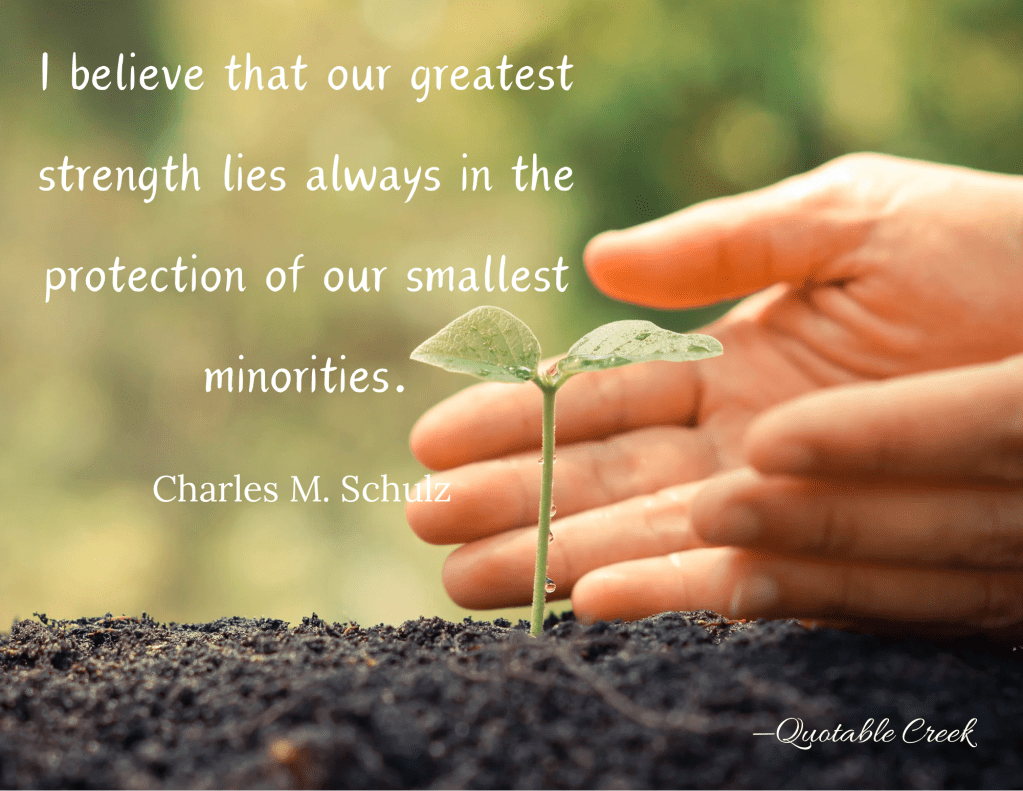
Imagine writing to one of your literary heroes and getting a serious letter back. Over 50 years ago, then fifth grader Joel Lipton wrote to Charles Schulz, the creator of the comic strip Peanuts, to ask him what made a good citizen.

And Schulz wrote back:
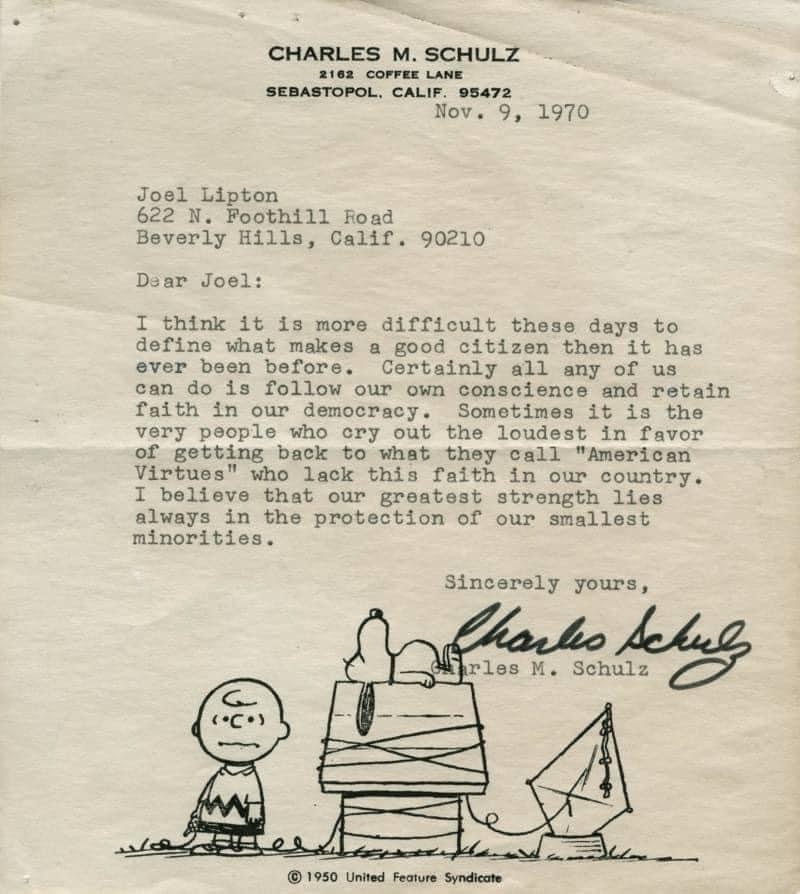
In 1970, students in a fifth-grade class at Hawthorne School in Beverly Hills were assigned to write a letter to someone they admired, asking them “What makes a good citizen?”

Joel Lipton, 10 years old at the time, wrote to Peanuts cartoonist Charles Schulz.

Fast-forward to this past February, when Lipton and his wife were cleaning out their closet. “And she pulled out a box and started going through some photos,” Lipton says today. “And between some old photos was this letter. I said, ‘Oh, wow, there’s the Charles Schulz letter!’”

Lipton remembers getting a response from the famed cartoonist, typed on official stationery from his Sebastopol studio, and hanging it on his bedroom wall with thumbtacks. But he was amazed when he re-read Schulz’s letter almost 50 years later, and realized how prescient it was.

https://www.kqed.org/arts/13852729/charles-schulzs-letter-about-democracy-discovered-50-years-later

Schulz’s words are no less powerful today as we come together to vote for our future in America, a country defined not by homogeneity of race or religion, but by common principles. Principles of equal justice under the law, of democracy, and of a government of the people, by the people, and for the people.

Misery won’t touch you gentle.

Oh, child. How I wish for you to have a life without misery and heartache, a world without disillusionment and betrayal, a childhood unmarred by neglect or abuse, a journey without conflict. But, alas, that will not be. We do not live in a utopian world, but here in this world, and you will  know sorrow and pain and, as much as I would love to shield and protect you from it, I cannot. There will be dark days, my love.

But you are brighter than the darkness, and, even in your misery, you will find a way to shine. And when you are at your lowest point, I will be there beside you knowing that you will rise again and that this pain will make you more compassionate and humble, more honest and fierce, more determined to make this world a more perfect place, because you, my beautiful child, are not meant to be kept down in the darkness, but to shine.

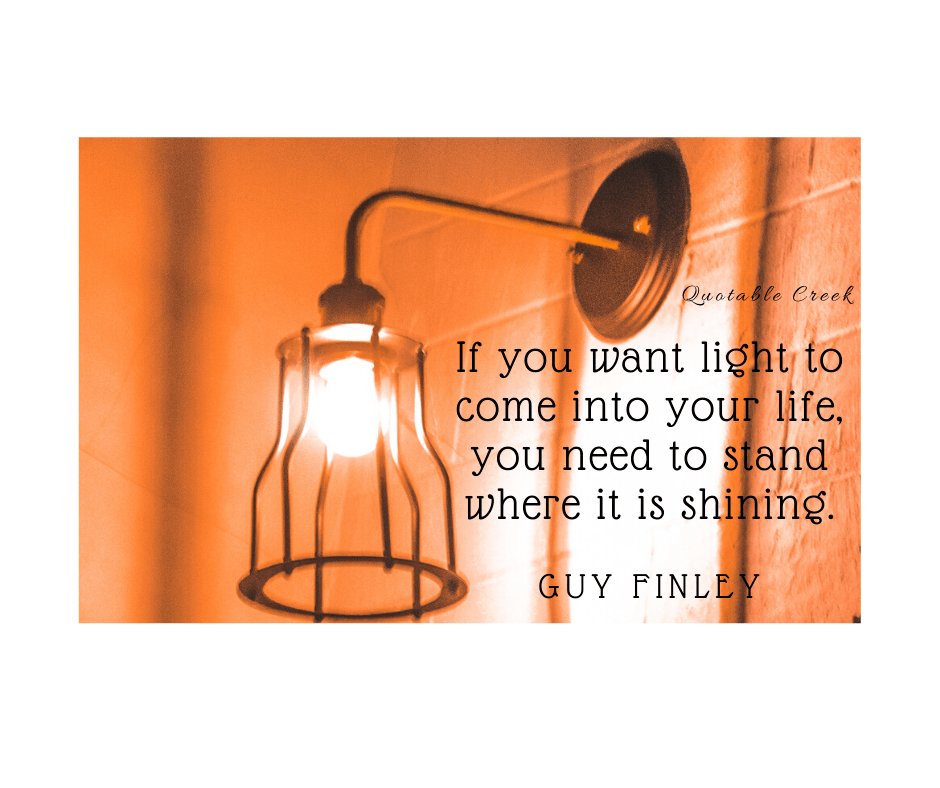
Stand where the light is shining.

Sometimes, when we feel down, we need to evaluate the input coming into our lives. Are we steeped in negativity? Maybe not just news, but the vitriol that follows it in the comments? The political back and forth can get ugly and pull us down. And then we can think about the friends we surround ourselves with. Are they upbeat, trying to make things better, or always complaining? 

And, while we don’t want to retreat from fighting the good fight or the friends who are going through a rough patch, it’s so easy for people to tear things down, to find the flaws, to make a conflict, and, when we are around that kind of energy constantly, we can feel beaten down. 

But, there is good news to be had, and there are positive people and opportunities to be found. Sometimes we need to focus our attention there, if only for a break from the storm.

Sowing the right kind of seeds.

The potential for a loving relationship is in one embrace. The potential for peace is in forgiveness. The potential for harmony is in stillness. The potential for quality conversation is in listening.

Consider the opportunities you have to make your world and the world in general a better kinder place with the actions you sow today.

Crocodile tears.

Crocodile tears. Derived from an ancient anecdote that crocodiles shed tears for the creature they are eating; the phrase has come to refer to a hypocritical display of false emotion. Insincerity. Sometimes worse– a show of emotion to lull someone in to sharing their story or revealing their vulnerabilities only to use that information against them. Dante reserved his 8th circle of Hell (out of 9, with 9 being worst) for the fraudulent–the hucksters, the corrupt politicians, the panderers and seducers, the false teachers, the perjurers and liars.

Why are they so bad? Perhaps it is because trust is so sacred, a bridge to community, a link between people that keeps us all from chucking it and living like recluses behind a bush. But also, perhaps it is because we do not come with built in BS meters. We are born trusting; we have to learn cynicism. And the way we learn that is to be let down, over and over, by the insincere. And when that harm makes us close off and guard, we become less than what we really are.

So the solution, it seems, is to fight back, not with insincerity of our own, but with authenticity and vulnerability come what may, to keep putting it out there every day, in every circumstance with truth and love and a whole heart. To be sincere. Authenticity and sincerity will help heal those damaged by crocodile tears, and they definitely won’t land us in one of Dante’s circles.

Being shelter.

Of all the compliments you could receive, perhaps the best is that you feel like shelter. That, in all the storms and chaos that swirl around us, talking to you feels like safety. Not in the sense of being a yes man or echo chamber, or even in the sense of being able to do anything to stop the storm, but in the sense of home. 

“I find it shelter when I speak to you,” says Emily Dickinson. What might we do and say to make someone feel that way? Shelter implies that the storm is still swirling, the elements are still fierce, but talking to you is a respite from that and an entry into something welcoming and safe. A place where you are known, and heard, and cared for. A place of comfort. 

Certainly there are plenty of people making themselves someone’s storm. Wouldn’t it be wonderful to be someone’s shelter instead?

What can you do in this increasingly chaotic and exhausting world for someone to find it shelter when they talk with you?

A better peace.

What does it take to prevent a country fracturing from disagreements and divisions? Perhaps it is the same thing that keeps any relationship from severing. First, a deep desire for reconciliation. A laying down of arms. A recognition that the whole is greater than the sum of its parts, and that there is value and growth in working things out. Next, perhaps would be a deep humility, a recognition that one side doesn’t have all the answers while the other is ignorant and foolish, but an understanding that both sides have stories to tell and an eagerness to be heard. And finally, perhaps would come respect. Each side coming together voluntarily, knowing their future strength is in union rather than destruction. 

Are you lost?

Have you ever been lost? Perhaps in a crowd when you look up and realize all the people you know are gone, and, despite the crowd, you are alone. Or maybe driving when nothing is familiar, and you are getting farther and farther from your destination. Or maybe you’ve been lost emotionally, confronted with too many choices and unsure of which way to move forward.

In most of these scenarios, when we are deeply and profoundly lost, we need help. There is someone who knows where you are and where you are trying to be and can help point out the way for you. Or someone who can make an announcement over the PA that they are holding on to a lost child. Or someone who can help you walk through your choices and make the best decision.

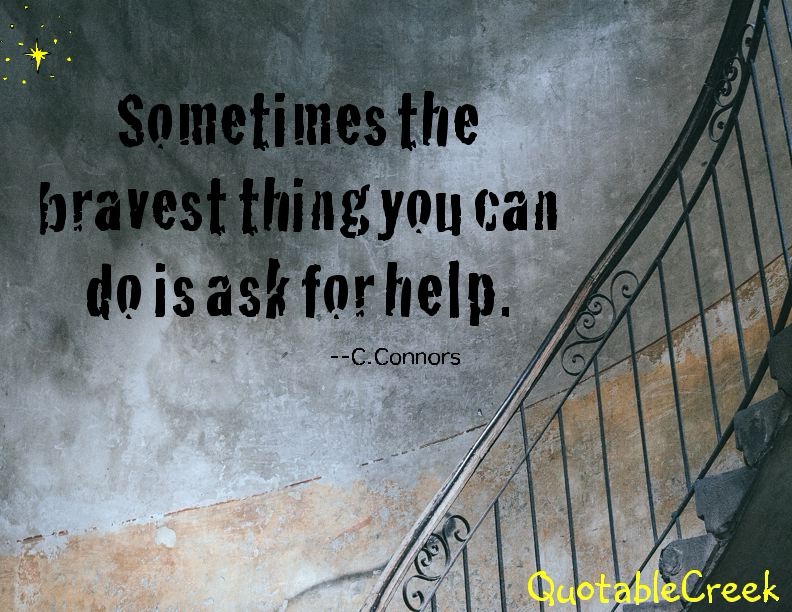
There are times when asking for help is our best option. And despite all our tendencies to want to solve the problem ourselves or keep the problem hidden from the world or to tough it out, seeking help is a brave and rewarding choice.

If you are feeling lost, do not be afraid to ask for help. And for a heart-warming video that demonstrates how rewarding it is both to be found and to help someone who is lost, go here to see a baby bird stuck in a PVC pipe and separated from its parents get reunited through the help of a young man who finds the experience one of the most meaningful he has ever lived.

Wiping the dust off our souls.

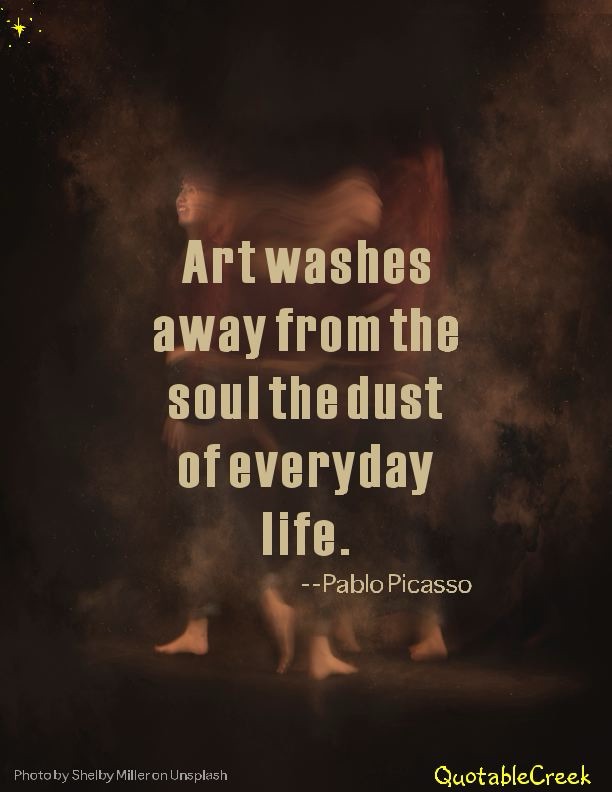
It is so easy to get discouraged when living a creative life. Your words are criticized; your paintings don’t sell. “They” don’t believe you have any promise. Sometimes the struggle to be commercially successful in a creative field can be so daunting that you abandon the art. But then you remember that art isn’t about “them” or “success” or “critical acclaim” at all. It’s about bringing your truths into the light, being creative, pushing yourself, being you.

Nowhere is this better illustrated than in the case of Henri Rousseau, a forty year old toll collector who wanted to paint. His work was derided, and yet he continued. He found joy in the painting. Not until the end of his life did anyone take his work seriously. As summarized by Maria Popova:

Long before history came to celebrate him as one of the greatest artists of his era, long before he was honored by major retrospectives by such iconic institutions as the MoMA and the Tate Museum, long before Sylvia Plath began weaving homages to him into her poetry, he spent a lifetime being not merely dismissed but ridiculed. And yet Rousseau — who was born into poverty, began working alongside his plumber father as a young boy, still worked as a toll collector by the age of forty, and was entirely self-taught in painting — withstood the unending barrage of harsh criticism with which his art was met during his entire life, and continued to paint from a deep place of creative conviction, with an irrepressible impulse to make art anyway…. [Rousseau’s life is] an emboldening real-life story, and a stunningly illustrated one, of remarkable resilience and optimism in the face of public criticism, of cultivating a center so solid and a creative vision so unflinching that no outside attack can demolish it and obstruct its transmutation into greatness.

The message from Rousseau’s life speaks to all of us: he was a success all along. He persevered with a remarkable resilience to produce work that spoke to him and pursued a passion that made him happy. That, the pursuit of great art, rather than the financial success was what gave his journey depth and meaning and lifted up his soul.

Connections in a big old world.

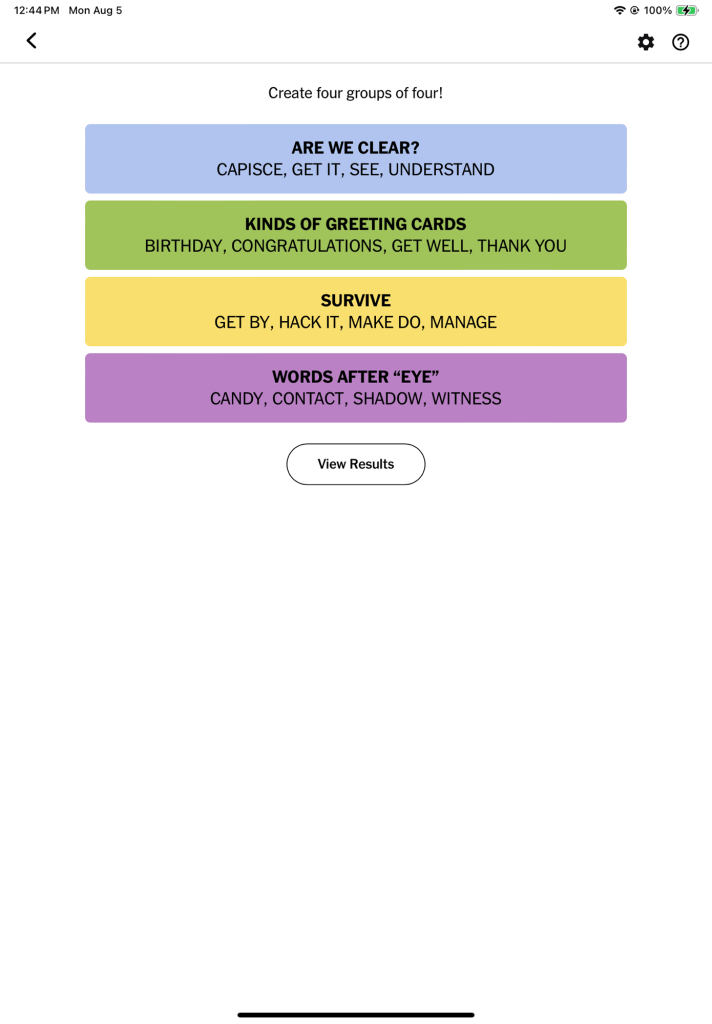
Every morning, I wake up and play games. My favorite these days is Connections, a collection of 16 words that you need to group in four groups of four based on a shared connection. Here’s the solution from one last week:

Now, looking at the solution, it’s easy to see the connections. Not so, though, when the words are all scrambled and the connections are unclear. Words may have more than one meaning or be multiple parts of speech. Often the answers are homonyms or are missing a letter. It can be challenging to find the connections among the words.

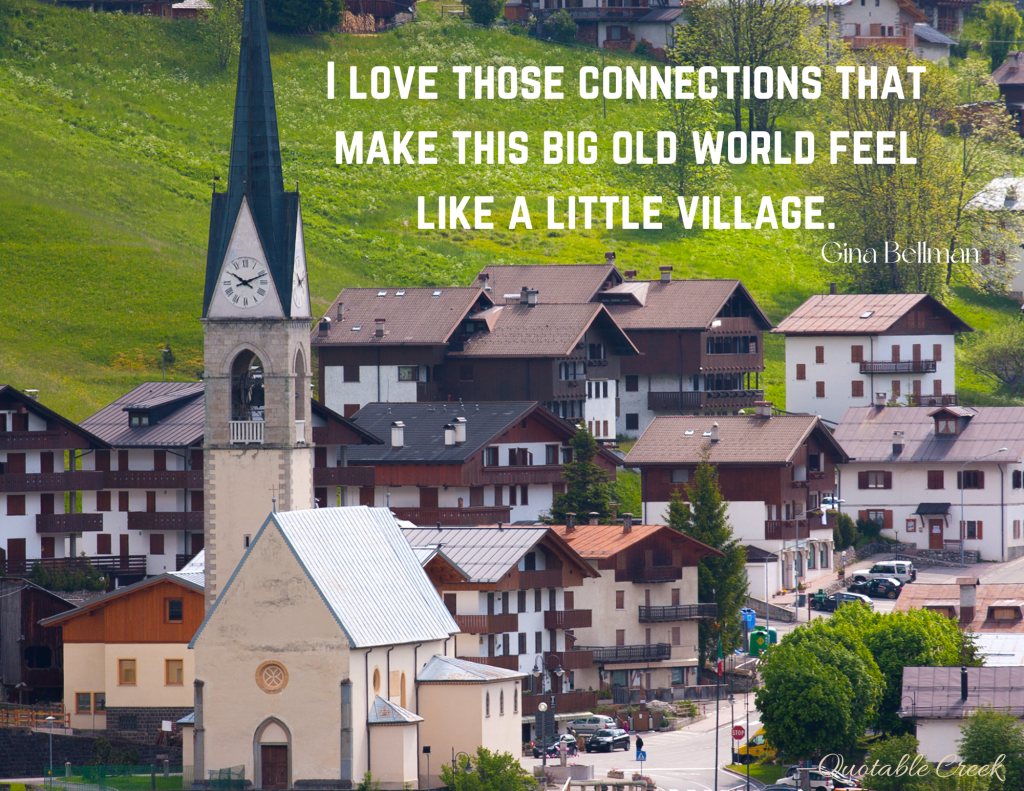
So, too, with the connections among people. There are some obvious superficial connections perhaps— gender, political affiliation, nationality, religion, age. But what of those deeper, hidden ones? How do we find those to help us feel more like a community?

I thought about this when reading an article about how an introvert, Jay Krasnow, made friends. He had struggled to find true connections at work functions or forced social gatherings, but when he dug deeper, to consider the things he was passionate about and find others who shared those passions, he found the connection he was looking for. He explains:

My failure at connecting wasn’t due to a lack of trying. I spent my 20′s and 30′s collecting and studying books on how to network, forge friendships and build character. 

Yet, my principal achievement from reading these books was that I became adept at identifying when other people had read these same books. Meanwhile, my networking skills didn’t significantly improve. Even worse, I felt that by reading books with titles like “How to Talk to Anyone,” I was turning myself into a robot that spewed out inauthentic lines to people who I genuinely wanted to know. 

There had to be a better way to build relationships.

For Jay, he decided to start a book club, not one reading the same book, but one where you came and told people about the book you were currently reading. It took off, people came. And those relationships centered on a shared passion spilled over into other friendships:

Connecting with other people through books seemed natural, but I didn’t know if anyone would come. I was prepared to read my book quietly if no one else showed up. Fortunately, both my friends came, and we were joined by one other person we didn’t know.

After the first event, more people started coming, and I started making new friends almost immediately. 

The group’s membership grew exponentially. It wasn’t long before I was inviting my new friends to dinners and other events. Because we had established we shared a similar passion, it was easy to branch out from there and find other things to do and talk about.

I wonder if this is what the world needs right now— connections based on a shared love or passion. So much of identity seems tied into a shared hatred or shared anger over something. It seems like that just leads to more loneliness and separation.

Time to try a new approach.