Stand convicted of positive thinking.

positive thinking

How will we use our words?

William Zinsser notes:

“Writers can write to affirm and to celebrate, or they can write to debunk and to destroy; the choice is ours.”

But we all have that choice, don’t we? Not just the artists and writers. We all are choosing what we say, how we respond, where we focus our emphasis. We each can choose to lift others up by focusing on the positive.

Mistakes are to learn from.

mistakes

Mistakes are inevitable. As you practice a piano piece, you’ll hit some clunkers. Go on. As you learn to walk, you’ll stumble. Keep walking. As you reach out in kindness, you may be rebuffed. Keep being kind.

Consider this fascinating account of some of Thomas Edison’s unknown mistakes:

“One of the things that makes Edison stand out as an innovator was he was very good at reducing the risk of innovation—he’s not an inventor that depends on just one thing,” DeGraaf says. “He knows that if one idea or one product doesn’t do well he has others…that can make up for it.”

Chances are you haven’t heard of Edison’s botched ideas, several of which are highlighted here, because the Ohio native refused to dwell on them. DeGraaf says, “Edison’s not a guy that looks back. Even for his biggest failures he didn’t spend a lot of time wringing his hands and saying ‘Oh my God, we spent a fortune on that.’ He said, ‘we had fun spending it.’”
Read more: https://www.smithsonianmag.com/innovation/7-epic-fails-brought-to-you-by-the-genius-mind-of-thomas-edison-180947786/#I8co0DAKgoFZTybb.99

Keep stretching. Keep innovating. Keep reaching out. One attempt may not work, but you have thousands, maybe millions, in you.

You are braver than you know.

lion

In all the din, what is one voice more? Why bother speaking up? No one seems to listen to each other anymore anyway.

But inside you is a well spring, and you’re fueled by truth and an honest desire to help others. Your opinion matters.

Consider these words from Marianne Williamson:

“Our deepest fear is not that we are inadequate. Our deepest fear is that we are powerful beyond measure. It is our light, not our darkness that most frightens us. We ask ourselves, ‘Who am I to be brilliant, gorgeous, talented, fabulous?’ Actually, who are you not to be? You are a child of God. Your playing small does not serve the world. There is nothing enlightened about shrinking so that other people won’t feel insecure around you. We are all meant to shine, as children do. We were born to make manifest the glory of God that is within us. It’s not just in some of us; it’s in everyone. And as we let our own light shine, we unconsciously give other people permission to do the same. As we are liberated from our own fear, our presence automatically liberates others.”

Who are you to speak up?

You are a child of God. Let God’s light shine on a dark world through your words.

Today is a new day.

today

On days that seem dark and heavy, mired with concerns about the future, it is nice to remember that babies are being born, people are proposing, family members are coming home, and we are all here today.

Today, where we still have power to work toward better tomorrows.


Do not lose heart.

heroism

It feels like we have fought this battle before. Why won’t it go away? Why are we here again?

Perhaps it is as simple and complex as that there are epic forces of good and evil alive in the world. Evil, whether in the form or racism, misogyny, selfishness, and so on, keeps coming back, even when we think progress has been made. That is the nature of the world we live in.

The answer: to keep flooding the world with good, keep fighting the good fight.

Do not lose hope.

Sincerely yours,

distrust

Crocodile tears. Derived from an ancient anecdote that crocodiles shed tears for the creature they are eating; the phrase has come to refer to a hypocritical display of false emotion. Insincerity. Sometimes worse– a show of emotion to lull someone in to sharing their story or revealing their vulnerabilities only to use that information against them. Dante reserved his 8th circle of Hell (out of 9, with 9 being worst) for the fraudulent–the hucksters, the corrupt politicians, the panderers and seducers, the false teachers, the perjurers and liars.

Why are they so bad? Perhaps it is because trust is so sacred, a bridge to community, a link between people that keeps us all from chucking it and living like recluses behind a bush. But also, perhaps it is because we do not come with built in BS meters. We are born trusting; we have to learn cynicism. And the way we learn that is to be let down, over and over, by the insincere. And when that harm makes us close off and guard, we become less than what we really are.

So the solution, it seems, is to fight back, not with insincerity of our own, but with authenticity and vulnerability come what may, to keep putting it out there every day, in every circumstance with truth and love and a whole heart. To be sincere. Authenticity and sincerity will help heal those damaged by crocodile tears, and they definitely won’t land us in one of Dante’s circles.

Spread ripples.

ripple

In a world where you can feel small and anonymous, never forget that you can make a difference. The little kindnesses you put out in the world inspire other such acts and so on and so on, rippling ever outward. Those ripples together make for a kinder gentler world.

In the video below, watch how the kindness ripples through a community and consider how you might add your own kindness ripples into your day.


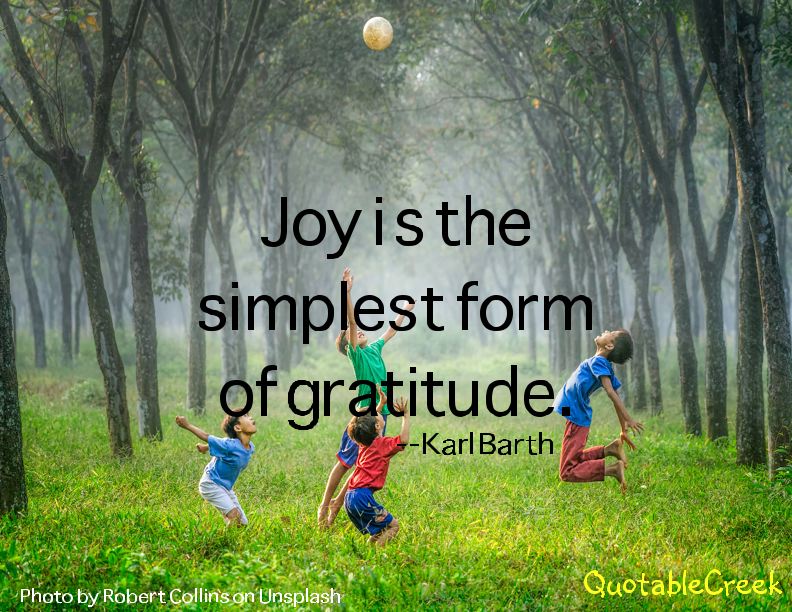
The joy of it all.

joy

Oh, to be a kid, before we’ve learned to wear masks and tamp down our emotions to keep from looking silly. We’ve mastered the art of staying calm when really we want to grab someone and spin them around in the air because we are so happy to see them, or to guffaw at a joke or funny thought, or to just break out in dance walking down the street.

We are so civilized.

But sometimes, maybe, it’s nice to be like this dog and just let someone know how you feel:

That’s wearing his heart on his sleeve, isn’t it? But life’s short; what’s the point of hiding our joy?

Sing your song.

image

They say there is an African tribe where, when a woman is pregnant, she goes into the jungle with the other women of the village, and together they pray and meditate until they discover that child’s song.When that child is born, the community gathers to sing his song. And at each of the major stages of his life, they will sing his song–as he becomes a man, marries, and finally as he meets death to accompany him on the journey. When that child commits an anti-social act, the community will not focus on or be fooled by the mistakes or the dark, broken or ugly places within him but will gather around him in a circle to sing him his song, for the answer is not punishment but to remind him of his true identity, his unique place in the community.

This is such a lovely picture of service and community and being seen and valued as a unique individual. Many of us long for that place. But in this world in which we find ourselves, often we don’t know our song. Or we sing someone else’s song. Or our song is drowned out. Or we are too busy, distracted, or afraid to sing our song. Or, frankly, we just mouth the words.

Today, make sure to sing your song. It’s not about whether you sing on key or whether your song is ready for a band tour. It’s about authenticity and offering the gifts that you uniquely have to offer. Sing away, little bird.

Giving up control.

control

We want to support the people we love as they go through difficult times, but how often does that support turn into telling them what to do or criticizing them for what they’ve done? How often does it make our loved one feel smaller or shamed or detached? What message does our trying to control them or the situation send them about our confidence in their abilities to handle the curve balls that life throws at us all?

In this powerful column on the concept of holding space, Heather Plett explains how we can show up for the people we care about without controlling them or the outcome, how our presence can be constructive rather than destructive, how we can offer support in a healthy way. She learned these lessons from Ann, a palliative care nurse who helped her deal with the challenges of her aging mother’s impending death. Here are Heather’s eight take-aways:

  1. Give people permission to trust their own intuition and wisdom. When we were supporting Mom in her final days, we had no experience to rely on, and yet, intuitively, we knew what was needed. We knew how to carry her shrinking body to the washroom, we knew how to sit and sing hymns to her, and we knew how to love her. We even knew when it was time to inject the medication that would help ease her pain. In a very gentle way, Ann let us know that we didn’t need to do things according to some arbitrary health care protocol – we simply needed to trust our intuition and accumulated wisdom from the many years we’d loved Mom.
  2. Give people only as much information as they can handle. Ann gave us some simple instructions and left us with a few handouts, but did not overwhelm us with far more than we could process in our tender time of grief. Too much information would have left us feeling incompetent and unworthy.
  3. Don’t take their power away. When we take decision-making power out of people’s hands, we leave them feeling useless and incompetent. There may be some times when we need to step in and make hard decisions for other people (ie. when they’re dealing with an addiction and an intervention feels like the only thing that will save them), but in almost every other case, people need the autonomy to make their own choices (even our children). Ann knew that we needed to feel empowered in making decisions on our Mom’s behalf, and so she offered support but never tried to direct or control us.
  4. Keep your own ego out of it. This is a big one. We all get caught in that trap now and then – when we begin to believe that someone else’s success is dependent on our intervention, or when we think that their failure reflects poorly on us, or when we’re convinced that whatever emotions they choose to unload on us are about us instead of them. It’s a trap I’ve occasionally found myself slipping into when I teach. I can become more concerned about my own success (Do the students like me? Do their marks reflect on my ability to teach? Etc.) than about the success of my students. But that doesn’t serve anyone – not even me. To truly support their growth, I need to keep my ego out of it and create the space where they have the opportunity to grow and learn.
  5. Make them feel safe enough to fail. When people are learning, growing, or going through grief or transition, they are bound to make some mistakes along the way. When we, as their space holders, withhold judgement and shame, we offer them the opportunity to reach inside themselves to find the courage to take risks and the resilience to keep going even when they fail. When we let them know that failure is simply a part of the journey and not the end of the world, they’ll spend less time beating themselves up for it and more time learning from their mistakes.
  6. Give guidance and help with humility and thoughtfulness. A wise space holder knows when to withhold guidance (ie. when it makes a person feel foolish and inadequate) and when to offer it gently (ie. when a person asks for it or is too lost to know what to ask for). Though Ann did not take our power or autonomy away, she did offer to come and give Mom baths and do some of the more challenging parts of caregiving. This was a relief to us, as we had no practice at it and didn’t want to place Mom in a position that might make her feel shame (ie. having her children see her naked). This is a careful dance that we all must do when we hold space for other people. Recognizing the areas in which they feel most vulnerable and incapable and offering the right kind of help without shaming them takes practice and humility.
  7. Create a container for complex emotions, fear, trauma, etc. When people feel that they are held in a deeper way than they are used to, they feel safe enough to allow complex emotions to surface that might normally remain hidden. Someone who is practiced at holding space knows that this can happen and will be prepared to hold it in a gentle, supportive, and nonjudgmental way. In The Circle Way, we talk about “holding the rim” for people. The circle becomes the space where people feel safe enough to fall apart without fearing that this will leave them permanently broken or that they will be shamed by others in the room. Someone is always there to offer strength and courage. This is not easy work, and it is work that I continue to learn about as I host increasingly more challenging conversations. We cannot do it if we are overly emotional ourselves, if we haven’t done the hard work of looking into our own shadow, or if we don’t trust the people we are holding space for. In Ann’s case, she did this by showing up with tenderness, compassion, and confidence. If she had shown up in a way that didn’t offer us assurance that she could handle difficult situations or that she was afraid of death, we wouldn’t have been able to trust her as we did.
  8. Allow them to make different decisions and to have different experiences than you would. Holding space is about respecting each person’s differences and recognizing that those differences may lead to them making choices that we would not make. Sometimes, for example, they make choices based on cultural norms that we can’t understand from within our own experience. When we hold space, we release control and we honour differences. This showed up, for example, in the way that Ann supported us in making decisions about what to do with Mom’s body after her spirit was no longer housed there. If there had been some ritual that we felt we needed to conduct before releasing her body, we were free to do that in the privacy of Mom’s home.

That #4 is a tough one, yes? We want to be important; we want to save the day; we think we know best. But giving others a safe place to find their own path forward empowers them to meet future challenges with resilience and courage. If they are dependent on us and our ‘wisdom’, they may not trust their own abilities. And, let’s be honest, do we really have all the answers anyway; isn’t life surprising and full of struggles that we don’t anticipate fully? Don’t we all need to develop the resilience and courage to respond to these challenges?

For more on Terry Crews and the background of the powerful quote above, including his conclusion that we can evolve and change and do things better, go here.