Leaving the world a bit better.

breatheeasier

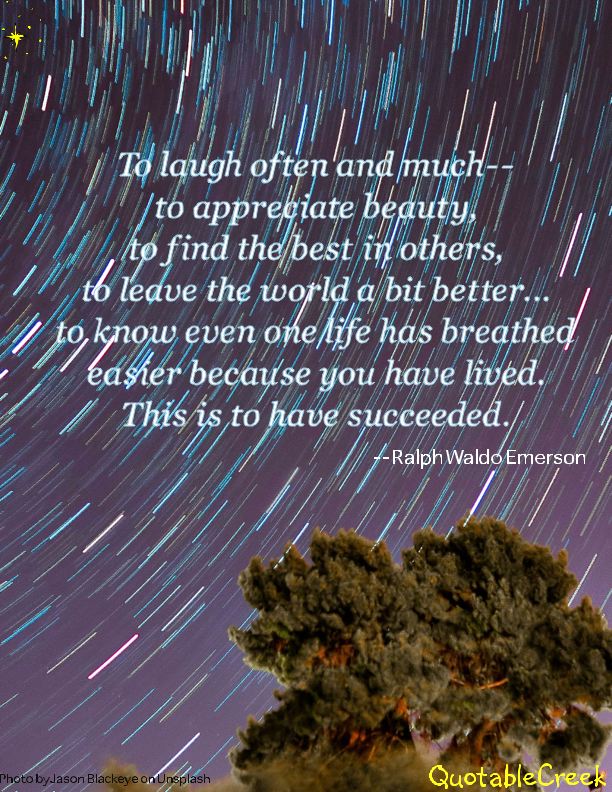
We all want to succeed, but what is the metric for measuring whether we’ve been successful? There are so many. Money, status, power, bucket lists, fame, travel… but what of the little things? Are you successful if you have enough money to buy a small country but no one to love or trust? Is it success if you are famous but lonely? If you have power but wield it to cause pain and misfortune to others, how can that be considered success? If you’ve traveled the world but not been truly present anywhere, does that count?

Perhaps true success at this thing called life is as simple as Emerson’s thoughts above. To leave the world a bit better, to ease the burdens of others, to look for and bring out the best in others, to do no harm. These all matter, maybe not in measurable concrete ways, but in ways we can all feel and appreciate if not count. More important, these are all things we each can do. We have the ability to be successful beyond our wildest imaginings.

And don’t forget to laugh often and much. Finding the joy and not letting it slip right past you undetected is important, too.

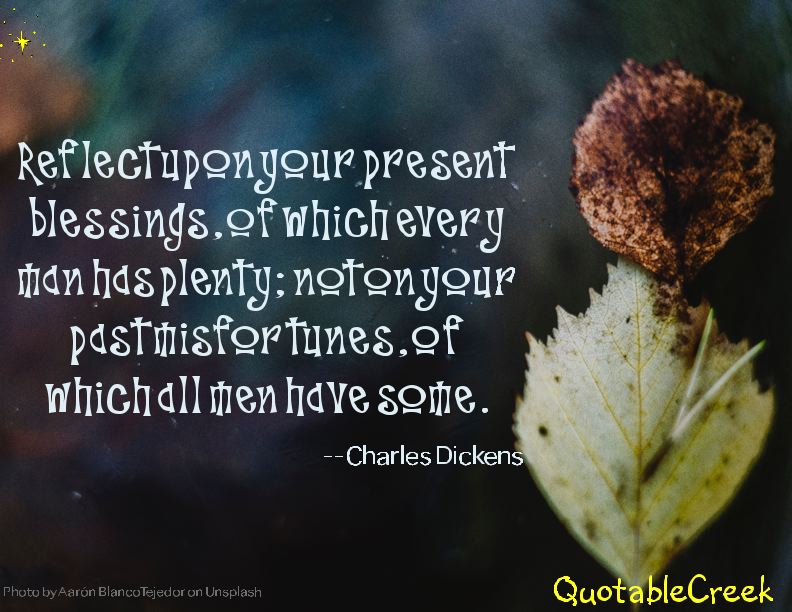
Count your blessings instead of sheep.

presentblessings

When your weary head fills with all the things you need to do or all the things that have gone wrong and keeps you from sleep, consider instead your present blessings. Let the negative thoughts drift from your focus like clouds blowing across a starlit sky, and turn your attention to the things you are grateful for, right here, right now.

For inspiration, consider this poem, Three Gratitudes, by Carrie Newcomer:

Every night before I go to sleep
I say out loud
Three things that I’m grateful for,
All the significant, insignificant
Extraordinary, ordinary stuff of my life.
It’s a small practice and humble,
And yet, I find I sleep better
Holding what lightens and softens my life
Ever so briefly at the end of the day.
Sunlight, and blueberries,
Good dogs and wool socks,
A fine rain,
A good friend,
Fresh basil and wild phlox,
My father’s good health,
My daughter’s new job,
The song that always makes me cry,
Always at the same part,
No matter how many times I hear it.
Decent coffee at the airport,
And your quiet breathing,
The stories you told me,
The frost patterns on the windows,
English horns and banjos,
Wood Thrush and June bugs,
The smooth glassy calm of the morning pond,
An old coat,
A new poem,
My library card,
And that my car keeps running
Despite all the miles.
And after three things,
More often than not,
I get on a roll and I just keep on going,
I keep naming and listing,

Until I lie grinning,
Blankets pulled up to my chin,
Awash with wonder
At the sweetness of it all.


Pleasant dreams.

Be amazed.

amazement

When was the last time you were amazed? Maybe it’s time to look around you and marvel. The complexity, the beauty, the interconnection of all things. The realization that all this amazingness swirls around you and in you and through you every second of every day. That you live and breathe it, that you are a part of it –both inside as something to be marveled at yourself, and outside as something to behold the beauty and majesty of it all and marvel. And then love it all intimately despite the vastness.

Sorry. Not sorry?

goodapology

Some apologies make things worse. They don’t feel like apologies at all. They feel, instead, like just more hurt. Other apologies acknowledge the wound and help it heal. What makes the difference?

In When Sorry Isn’t Enough: Making Things Right with Those You Love, Gary Chapman (of Five Love Languages fame) and Jennifer Thomas suggest that a true apology must have six characteristics:

Expressing regret–It’s important for an apology to be for something you did or said.  The more specific, the more it acknowledges the harm caused, the better. “I’m sorry you’re so sensitive,” doesn’t really feel like an apology because it is just restating some perceived flaw in the victim and isn’t focussing on anything you did wrong. Even if the harm was wholly unintended, when your actions cause another person pain, an apology is warranted. It goes to the very essence of the apology: I did not mean to hurt you.

Accepting responsibility— Yes, the pressures of the world can sometimes lead us to get wound up and stressed and to hurt other people, but that does not make it the world’s fault. We control ourselves. We are responsible if we act badly. Blaming the boss, the dog, the economy, the other drivers is deflecting. Apologies for the state of the world or all its ills will not feel like a real apology to the person you lashed out at. Apologizing for losing your temper or not considering the effects of your actions will.

Making restitution–“How can I make it right?” are powerful words. It shows an acknowledgement that what you did caused someone else harm. Maybe you can’t make it right. Maybe you can never make it right. But listening to the victim explain the damage is a powerful step forward in the process. Listening here is key–no justifying your actions, no quarreling with the facts, no defenses, just listening to the other person share their perspective. If there is something you can do to make things better, do that thing.

Genuinely repenting–If you are truly sorry, and have listened deeply to the pain you’ve caused, you will not want to cause that person pain again. You will stop causing the damage. You will want to change. Maybe you will need to write down the steps you want to take to prevent causing further harm. Maybe you will slip up and need to start again. But the most important thing is that you will try to not do this again. Otherwise, are you really sorry?

Requesting Forgiveness–“Can you forgive me?” are powerful words. They show you care about the relationship. They show you understand you did things wrong. They show you are not in control of the relationship.

Everyone messes up. Not everyone takes responsibility for messing up. When we do take responsibility for the harm we’ve caused, it may strengthen our relationships and help them grow stronger. Trust can reenter, fostering healing.

Randy Pausch, the author of the quote above, gave a powerful Last Lecture before he died young of pancreatic cancer. His timeless words can teach us all a lesson about life and living.
Good fences make good neighbors?

bridge


So much divides one person from another. Some of these things are walls we build ourselves. What does it take to unite people rather than divide them?

Take a minute to watch this delightful video of a boy and his neighbor dog overcoming the fence that divides them.


What can we do today to build bridges?


Be the crane.

protect

Where would we be without people who passionately care about others, including those beyond their immediate circle? Who will protect the vulnerable, the voiceless, and the overlooked? Who will speak out on behalf of Earth herself?

We protect the things we love. When we see a hurting world and people, maybe we need to broaden our love.

Take a minute to watch this remarkable video of a father crane protecting his young from an alligator.

What a beautiful metaphor this father crane is for us: yes there are alligators in the world; they come in lots of shapes in sizes.

But let’s hear it for the cranes.

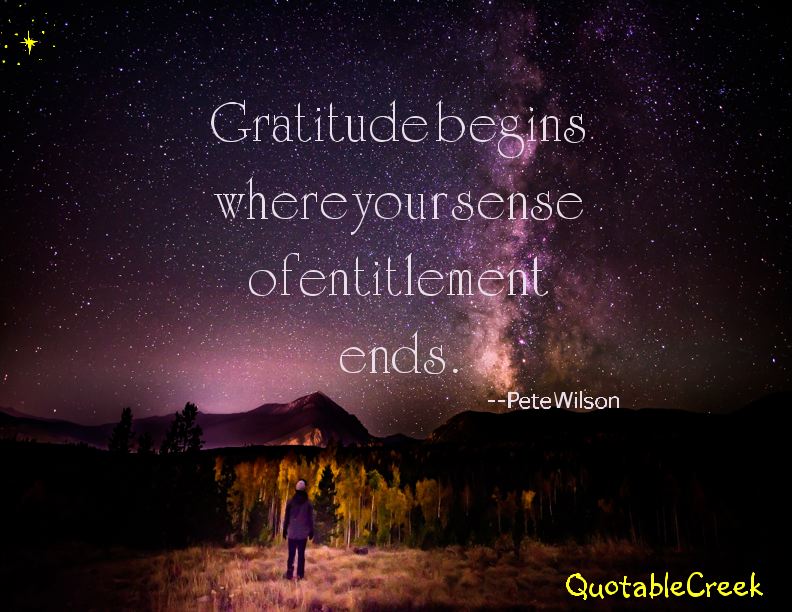
Ever grateful.

entitlement

What do you feel entitled to? Your life, job, spouse, happiness, health, good weather? It’s remarkable how we can feel that we have earned our stations in life and are entitled to all the good things.

Until something happens to take it away.

A diagnosis, job loss, natural disaster, and then we realize we weren’t entitled to any of it after all. It was a gift, and we hadn’t been grateful.

Think of all you have been blessed with and be grateful.

Create.

artist

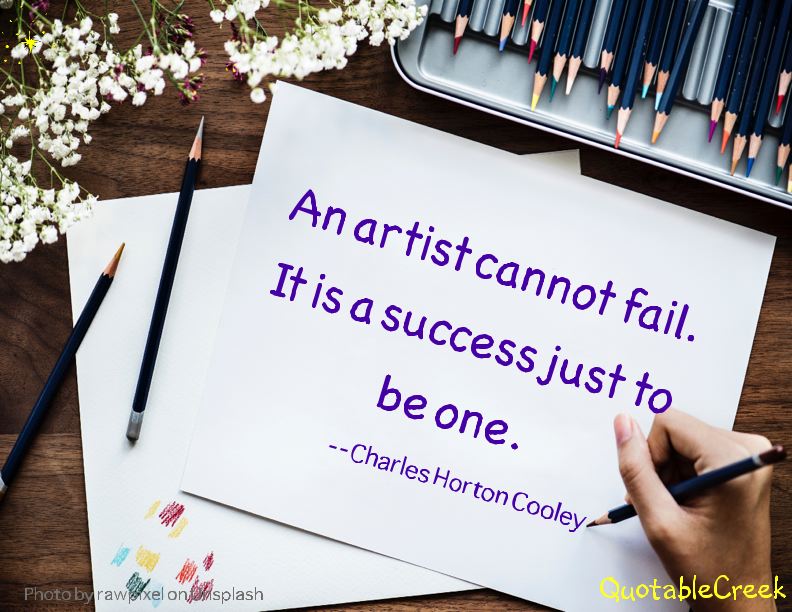
How do you define success?

Is it in a purely monetary way or is it more nuanced and complex?

A creative life expands the heart and sharpens the senses. It opens the creator to insight and wisdom. It constantly pushes the creator to new levels. It is a fountain of youth and immortality all in one.

Mountain or molehill?

mad

We talk so much louder with our actions than our words. How we treat other people, what rankles us, what motivates us, who our heroes are–these speak volumes about who we are regardless of what’s on our resumes.

What gets you mad?

If you step back and look reasonably objectively at it, you can get glimpses into your inner self that may appall you. Maybe ego, pride, pettiness, and self-pity are more present than you would have ever guessed, and now’s the time to change that up and set your sites on bigger foes.

What to contribute?

contribute

Consider the inspiring story of Amanda Southworth, a teen who attempted suicide seven times but then went on to use her experience to create an app to help others facing debilitating depression. Amanda explained what helped her make that transition:

What saved her: a sixth-grade robotics club in 2011, which introduced her to the possibilities of technology and inspired her to soak up knowledge about web development and artificial intelligence from the internet and textbooks.

Her first app, AnxietyHelper, a mental health resource guide, debuted in the app store in September 2015 during her ninth-grade Latin class. Her excited classmates downloaded it, and she finished the day with 18 users. Even that small achievement gave her belief in her own power and a sense of purpose, Southworth says.

“I was always very destructive toward myself. Coding is the opposite. It’s about creating. It’s about taking different characters on a keyboard and transforming them into something bigger than you,” she said.

In May 2017, she launched a mobile app called Verena for the LGBTQ community after friends were bullied in the tense political climate around the presidential election. Verena, which means protector in German, locates hospitals, shelters and police stations and users can create a list of contacts to be alerted in an emergency.

“Everything in my life has shown me that both good and bad things in this world will continue to happen and that’s out of our control. But it’s what we do with the things that happen to us that can make all of the difference,” she said in a TedX talk last November in Pasadena, California. “My name is Amanda Southworth, I’m 15 years old, a junior in high school and I’m still alive.”

Southworth’s conclusion that “it’s what we do with the things that happen to us that can make all of the difference” is profound. Each of us faces challenges and hardships. But each of us also has the ability to use our experiences to make a contribution for others, to make our lives count.

What’s your contribution?

SaveSave

SaveSave