Pay attention.

waterfallattn

What do we miss simply by failing to pay attention? By rushing?

In 2007, in the arcade area of a subway in D.C., over a thousand people missed something spectacular. Joshua Bell, one of today’s foremost classical musicians, played a few pieces by Bach and Mendelssohn, among others, on his multi-million dollar violin. Three days before this, Bell had performed to a filled Symphony Hall in Boston where tickets for average seats went for over $100.

Over a thousand people rushed by on their way to work and failed to notice the free gift. Why?

Was it because of the context? Bell wasn’t in a tuxedo; he had an open violin case in front of him sprinkled with change and a couple bucks; the forum was mundane; Bell looked just like any other street musician.

Why didn’t Bell’s expertise and the difficulty and complexity of the pieces he played transcend the day to day and encourage people to stop and listen?

Perhaps it is because we have become a bit numb to beauty. We don’t look for it in the ordinary places. Maybe we even look away from the ordinary places.

We miss so much when we rush.

Slow down. What amazing thing is right there if only you stop to see?

Against the wind.

againstthewind

Will you go faster walking uphill or downhill, against the wind or with the wind at your back?

But which will make you stronger?

There are times in life when we can coast. And that’s fun, frankly. But when we want to get strong, we need opposition. We use weights to work out; we pick harder puzzles; we challenge better athletes; we set more complex goals; we tackle more difficult projects. This is when we progress.

Even when challenges are involuntary, we can use those opportunities to dig deep and find answers. Sometimes challenges force us to realize that we are all connected and to seek help from others knowing that, one day, we will be the one offering help. There is strength in community.

If you are struggling now, remember those times when you faced a challenge and won. You will get stronger.

Persist.

Bless you.

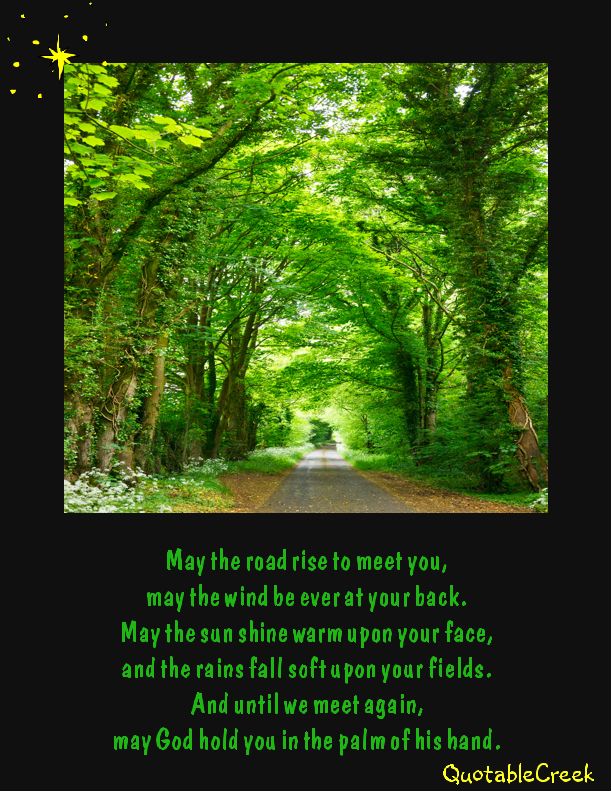
Irishblessing

An Irish blessing for St. Patrick’s Day.

And another:

May there always be work for your hands to do
May your purse always hold a coin or two;
May the sun always shine on your windowpane;
May a rainbow be certain to follow each rain;
May the hand of a friend always be near you;
May God fill your heart with gladness to cheer you.

And one more for the road:

May the blessing of light be upon you,
Light on the outside,
Light on the inside.

With God’s sunlight shining on you,
May your heart glow with warmth,
Like a turf fire
that welcomes friends and strangers alike.

May the light of the Lord shine from your eyes,
Like a candle in the window,
Welcoming the weary traveller.

Happy St. Patrick’s Day!


Camouflage?

camouflage

Are you hiding? Are you like a chameleon that changes colors depending on its surroundings? Is there a real you in there wanting to be seen?

We all play a bit of camouflage, don’t we? We go along with jokes that make us cringe. We dress the part we are expected to play. We let our hair down with some people but stay buttoned up around others. And perhaps some degree of that is necessary to the social fabric.

But there comes a time when we lose ourselves if we stay disguised. And, if we are hidden even from ourselves, that’s too dangerous a game.

What is your lens?

perception

What is your lens?

Do you see the world as friendly or hostile? How many of these biases do we bring to our relationships with each other and strangers?

So much of perception is bias. We see what we expect to see–based on what we think we know.

In this fascinating study, photographers were told different life stories about the man they were about to photograph– a millionaire, a hero, a former inmate, a psychic, a former alcoholic, a fisherman.

The photographers’ feelings about him based on those stories dramatically influenced the resulting portraits. It looked like they had photographed six different people.

How do your biases influence the way you see people? Can you set aside that perception to look a bit deeper?

Do your bit.

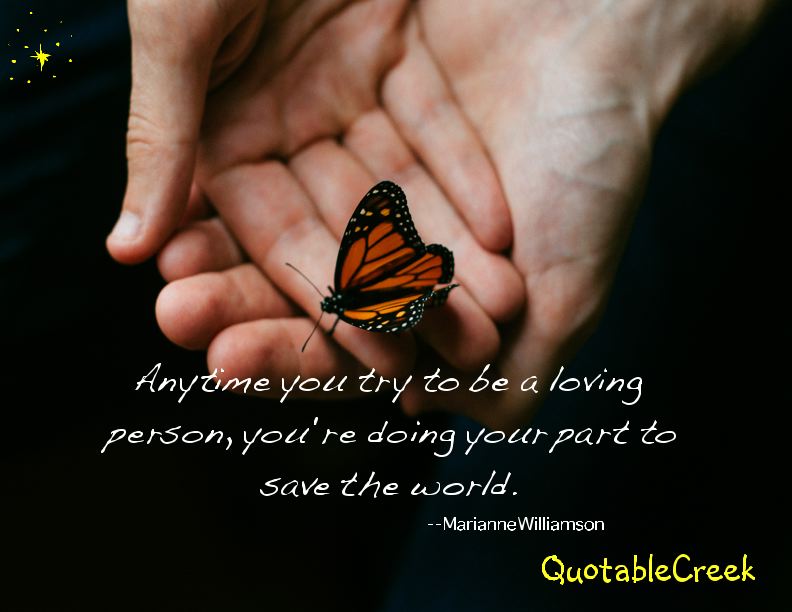
handsbutterfly

So much to do. Where to start? It is easy to get overwhelmed with the world’s problems and think there is nothing you can do to solve them. And that may well be true— if you had to work alone. But problems tend to be solved by many people, each doing their own little bit. Small actions multiplied by large numbers of people yield results.

And what about the smaller problems? Can you solve them? The answer is that you are far more powerful than you realize, and that by putting your love out there into the world you are making a difference. Maybe in profound ways.

For one guy, his little difference, his bit, saved an entire species:

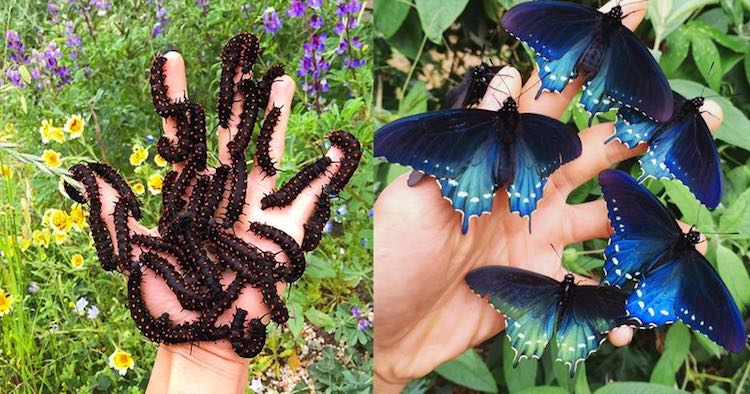
When [Tim Wong]  first learned of the predicament of the pipevine swallowtail, the 28-year-old swooped in to help by creating a screened backyard enclosure with ideal environmental conditions for the insect.

He filled it with specific plants that the insects like to feed on. Then, he gathered a group of 20 different pipevine swallowtail caterpillars from nearby areas. As he carefully nursed the small tribe of precious insects, their numbers began to quickly multiply.

Now years later, the DIY butterfly breeder brings dozens of caterpillars to the San Francisco Botanical Garden’s “California Native” exhibit every week—and thanks to Wong’s efforts, the pipevine swallowtail has been successfully repopulated in the city for the first time in decades.

Imagine that.

Pipevine-Swallotail-Butterflies-Tim-Wong

What is your little bit? What are the ways you can put love out there in the world?

Don’t for a minute think it doesn’t make a difference.

What’s your question?

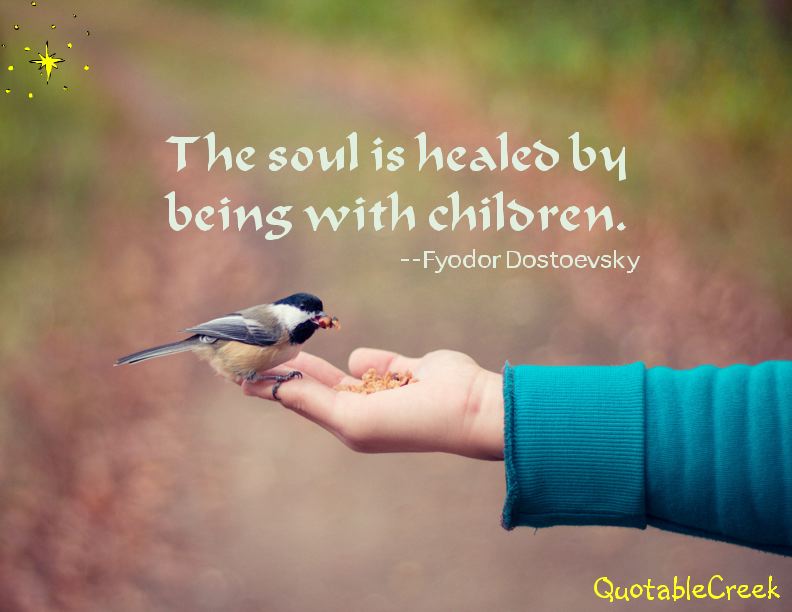
soulchildren

Children have a way of cutting through the fake and getting to the real. They look around themselves and wonder why things are the way they are. Sometimes the questions they ask are tamped down, leading those kids to spend their adult lives trying to answer them:

Why can’t boys cry?

Why do we have to always pretend to be happy? (Or, to put it another way, What’s wrong with having lots of different emotions?)

Why can’t I play with those children?

Why are you lying?

Why must I accept things that seem wrong?

In this brilliant essay by Courtney E. Martin, she asks ‘What was your first question?’and taps into the power that comes from looking at the world with innocent eyes, OUR own innocent eyes. Dorothy Day, for instance, witnessed an outpouring of love and charity after the San Francisco earthquake in 1906 and wondered, why don’t people care for each other like that all the time. She went on to make that her life’s work in the Catholic Worker Movement. Susan Cain showed up at camp with books and wondered what’s wrong with wanting to be quiet. She went on to write the book Quiet about society’s preference for the extroverted. Oprah Winfrey, sexually abused as a child, went on to constantly unveil the light and dark of human existence asking, “What’s the cathartic story here?”

That child question is powerful. Things we may have gotten used to over time or now just accept as the way things are weren’t so simple to the little child in you who wondered why.

Martin says,

In some ways, these questions are so powerful because they are asked from such a pure place. Children are famously intuitive about underlying dynamics that adults assume they couldn’t possibly understand. They focus in on unspoken truths like homing pigeons and then have the audacity to speak them; the world hasn’t yet acculturated them to fearing the sound of a silence breaking. They are not, in the best of all possible ways, team players. They are inexhaustible witnesses and truth seekers.

Which is what we all are, underneath the home training and the wear and tear of decades of living on this brutal planet. Peel back the layers and we are still the little people we once were, looking around at the adults and wondering what the heck is going on. We are curious and outraged and perhaps sometimes naively sure that there is a better way.

So what was your first question? What is the question you weren’t allowed to ask as a kid? Are you still asking that question? Is there some way, now that you are an adult, that you can answer it, or at least expose it to the light of day?

Sorry. Not sorry?

goodapology

Some apologies make things worse. They don’t feel like apologies at all. They feel, instead, like just more hurt. Other apologies acknowledge the wound and help it heal. What makes the difference?

In When Sorry Isn’t Enough: Making Things Right with Those You Love, Gary Chapman (of Five Love Languages fame) and Jennifer Thomas suggest that a true apology must have six characteristics:

Expressing regret–It’s important for an apology to be for something you did or said.  The more specific, the more it acknowledges the harm caused, the better. “I’m sorry you’re so sensitive,” doesn’t really feel like an apology because it is just restating some perceived flaw in the victim and isn’t focussing on anything you did wrong. Even if the harm was wholly unintended, when your actions cause another person pain, an apology is warranted. It goes to the very essence of the apology: I did not mean to hurt you.

Accepting responsibility— Yes, the pressures of the world can sometimes lead us to get wound up and stressed and to hurt other people, but that does not make it the world’s fault. We control ourselves. We are responsible if we act badly. Blaming the boss, the dog, the economy, the other drivers is deflecting. Apologies for the state of the world or all its ills will not feel like a real apology to the person you lashed out at. Apologizing for losing your temper or not considering the effects of your actions will.

Making restitution–“How can I make it right?” are powerful words. It shows an acknowledgement that what you did caused someone else harm. Maybe you can’t make it right. Maybe you can never make it right. But listening to the victim explain the damage is a powerful step forward in the process. Listening here is key–no justifying your actions, no quarreling with the facts, no defenses, just listening to the other person share their perspective. If there is something you can do to make things better, do that thing.

Genuinely repenting–If you are truly sorry, and have listened deeply to the pain you’ve caused, you will not want to cause that person pain again. You will stop causing the damage. You will want to change. Maybe you will need to write down the steps you want to take to prevent causing further harm. Maybe you will slip up and need to start again. But the most important thing is that you will try to not do this again. Otherwise, are you really sorry?

Requesting Forgiveness–“Can you forgive me?” are powerful words. They show you care about the relationship. They show you understand you did things wrong. They show you are not in control of the relationship.

Everyone messes up. Not everyone takes responsibility for messing up. When we do take responsibility for the harm we’ve caused, it may strengthen our relationships and help them grow stronger. Trust can reenter, fostering healing.

Randy Pausch, the author of the quote above, gave a powerful Last Lecture before he died young of pancreatic cancer. His timeless words can teach us all a lesson about life and living.
Are you lonely?

loneliness

Are you lonely? Does your heart long to be heard and understood? For someone to get you? And for you to really hear someone in return? Are you yearning to share your heart’s stories with someone else?

Loneliness has nothing to do, really, with being alone. In fact, the worst way to be lonely might be when you are with someone else but not feeling connected.

Is there a way to ease our heart’s loneliness?

One possibility is to open yourself up. Share your true thoughts and feelings, not the masks you wear in the world, but your true self. And then be a safe place for someone else to be naked emotionally with you. Scary, yes. But what good is it if you’re not being yourself in your own relationships?

To speak to that loneliness in all of us, take a moment to savor this beautiful poem by Mary Oliver and listen for the world calling you into your place in the family of things.

Wild Geese

by Mary Oliver

You do not have to be good.
You do not have to walk on your knees
For a hundred miles through the desert, repenting.
You only have to let the soft animal of your body
love what it loves.
Tell me about despair, yours, and I will tell you mine.
Meanwhile the world goes on.
Meanwhile the sun and the clear pebbles of the rain
are moving across the landscapes,
over the prairies and the deep trees,
the mountains and the rivers.
Meanwhile the wild geese, high in the clean blue air,
are heading home again.
Whoever you are, no matter how lonely,
the world offers itself to your imagination,
calls to you like the wild geese, harsh and exciting —
over and over announcing your place
in the family of things.

Get dirty.


futuregardenThe daffodils are coming. Planted last fall–before the snow, before the holidays, before the divisive American election– they are starting to poke up. Soon they will be blooming everywhere adding cheer to the lives of whomever might see them.

A garden is a microcosm of life. Seasons of vibrance and beauty fall away into a frozen landscape seemingly devoid of color. But then, maybe when you’ve almost forgotten, there is blossoming and rebirth.

Gardeners and children know something that many of us have forgotten: there is joy in the dirt.

Literally.

It turns out, “Prozac may not be the only way to get rid of your serious blues. Soil microbes have been found to have similar effects on the brain and are without side effects and chemical dependency potential.”

Studies show the benefits gardeners and children will swear by of playing in the dirt are actually based on science.

It’s true. Mycobacterium vaccae is the substance under study and has indeed been found to mirror the effect on neurons that drugs like Prozac provide. The bacterium is found in soil and may stimulate serotonin production, which makes you relaxed and happier. Studies were conducted on cancer patients and they reported a better quality of life and less stress. Lack of serotonin has been linked to depression, anxiety, obsessive compulsive disorder and bipolar problems. The bacterium appears to be a natural antidepressant in soil and has no adverse health effects. These antidepressant microbes in soil may be as easy to use as just playing in the dirt.

So go ahead. Get dirty.