What do you know for sure? Are you sure?
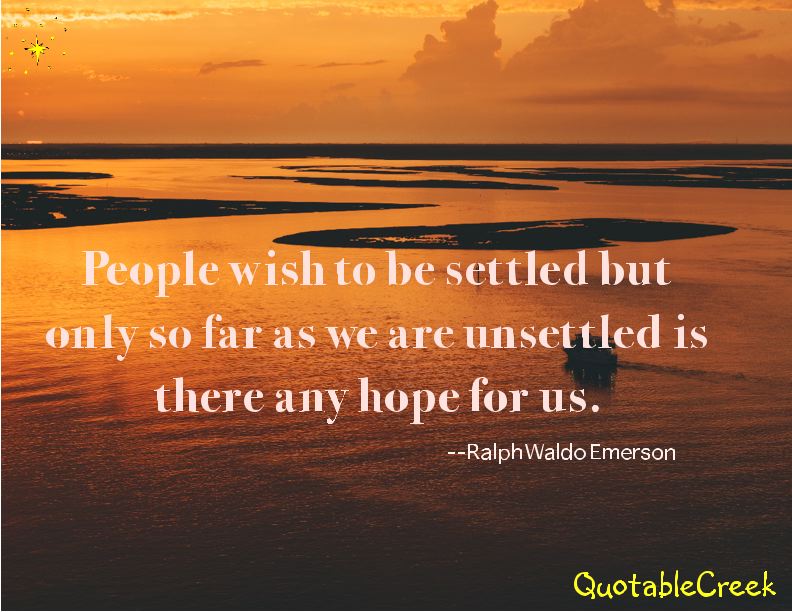
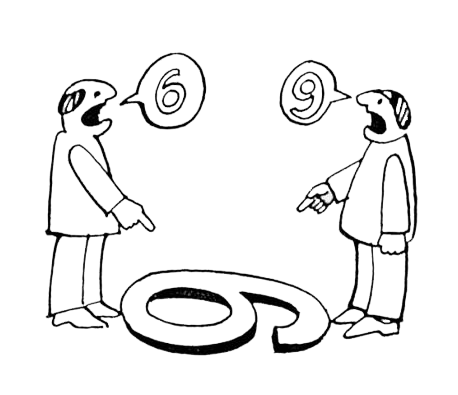
As you get older, do you think you know a lot or do you believe there is a lot that you don’t yet know? As young men and women, we think we have all the answers. But as we age, our experience shows us that there are many valid perspectives to something we thought was established. We learn that there is value in the multiple points of view in arriving at a more nuanced version of the truth. We realize that people can look at the same thing, but, because they are coming at the issue with different life experiences, they may see it differently and that both of those opinions may be true. In fact, it may well be that we have no hope of getting close to the concept of truth without the benefit of many points of view. We may be limited by the fetters of our own perceptions and filters.
In this very insightful TED talk, Pico Iyer shares his creeping realization that the more we know, the more we see we don’t know:
I don’t believe that ignorance is bliss. Science has unquestionably made our lives brighter and longer and healthier. And I am forever grateful to the teachers who showed me the laws of physics and pointed out that three times three makes nine. I can count that out on my fingers any time of night or day. But when a mathematician tells me that minus three times minus three makes nine, that’s a kind of logic that almost feels like trust.
The opposite of knowledge, in other words, isn’t always ignorance. It can be wonder. Or mystery. Possibility. And in my life, I’ve found it’s the things I don’t know that have lifted me up and pushed me forwards much more than the things I do know. It’s also the things I don’t know that have often brought me closer to everybody around me.
For eight straight Novembers, recently, I traveled every year across Japan with the Dalai Lama. And the one thing he said every day that most seemed to give people reassurance and confidence was, “I don’t know.”
“What’s going to happen to Tibet?” “When are we ever going to get world peace?” “What’s the best way to raise children?”
“Frankly,” says this very wise man, “I don’t know.”
It’s scary to admit we don’t know. We want to know. We want to believe that we are safe and that our futures are secure. We want to believe that if we behave in a certain way, it will result in predictable results.
The truth is harder. Honest people can be accused of deceit. Innocent people can die. Tragedy can strike. Relationships can fracture. But embracing uncertainty as the only truly certain thing in life can, in fact, be surprisingly grounding. Iyer continues:
Knowledge is a priceless gift. But the illusion of knowledge can be more dangerous than ignorance.
Thinking that you know your lover or your enemy can be more treacherous than acknowledging you’ll never know them. Every morning in Japan, as the sun is flooding into our little apartment, I take great pains not to consult the weather forecast, because if I do, my mind will be overclouded, distracted, even when the day is bright.
I’ve been a full-time writer now for 34 years. And the one thing that I have learned is that transformation comes when I’m not in charge, when I don’t know what’s coming next, when I can’t assume I am bigger than everything around me. And the same is true in love or in moments of crisis. Suddenly, we’re back in that trishaw again and we’re bumping off the broad, well-lit streets; and we’re reminded, really, of the first law of travel and, therefore, of life: you’re only as strong as your readiness to surrender.
In the end, perhaps, being human is much more important than being fully in the know.
Today embrace the uncertainty of life and enjoy the present moment right here in front of you. Around the corner, there may well be a surprise insight waiting to stretch you and challenge the very things you think you know. Embrace that, too.
 QuotableCreek.com