What should you NOT do?

You were born to be a blessing to others. To shine your light where there is dark. To sing songs of praise. To give of yourself without holding back.
That’s kind of out there, isn’t it? Scary. Who are you to be shining a light in the dark places of the world, after all?
Marianne Williamson answers this question brilliantly:
“Our deepest fear is not that we are inadequate. Our deepest fear is that we are powerful beyond measure. It is our light, not our darkness that most frightens us. We ask ourselves, Who am I to be brilliant, gorgeous, talented, fabulous? Actually, who are you not to be? You are a child of God. Your playing small does not serve the world. There is nothing enlightened about shrinking so that other people won’t feel insecure around you. We are all meant to shine, as children do. We were born to make manifest the glory of God that is within us. It’s not just in some of us; it’s in everyone. And as we let our own light shine, we unconsciously give other people permission to do the same. As we are liberated from our own fear, our presence automatically liberates others.
Shine, Baby, Shine!
Something there is in each of us that yearns for home. Sometimes we confuse that yearning with a physical place. We travel back to that place and wonder why it feels different. What has changed? Why doesn’t it still feel like home? Sometimes we confuse that yearning with a particular time, a past perhaps that wasn’t complicated with today’s troubles, and lose ourselves in nostalgia. Sometimes we confuse that yearning with a particular person and, if we lose that person, wonder if we will ever feel at home again.
But what if home is not a particular place in time but a feeling we can take steps to cultivate? Here are some suggestions that might bring that feeling of home into your life:
Embrace the Now
Think about those times when you felt a deep sense of belonging and contentedness. Chances are, it was when you were lost in some sort of activity, maybe with people you love, and you lost all sense of time. No checklists, no to-dos, no schedule. Just falling into the moment and letting it lift you out of the day into something bigger.
Welcome Others
Remember that old TV show, Cheers, when everyone shouted “Norm” when he came in? A place where “everyone knows your name?” That sense of welcome is something we can offer others. Greeting them, smiling, welcoming them into the conversation or community. That is a profound thing we can do, and that sense of home that we give to them will undoubtedly rebound to us and make that place in time feel more homey for everybody.
Lay Down Your Weapons
It is hard to enjoy someone else’s company when you’re disagreeing with them. Sure, some conflict is necessary and even healthy to life together, but set aside time to come together in harmony with people. Search for the common elements you agree on. Abandon the judgment and criticism. Enjoy a game or activity that deemphasizes competition. Savor the time together.
Use Your Own Definitions
It’s easy in a social media culture to look at other people’s homey pictures and events and think you need to duplicate those exact things if you want to feel the sense of home they’re experiencing. In fact, that’s one of the strategies behind advertising: “Look at these happy people. Don’t you want to be just like them? If you buy our product, you will be!’ But that comparative decision-making is a set up for disappointment. Instead, look at your people and experiences and find ways to enjoy them that are uniquely your own. And then maybe consider holding those moments a bit sacred, away from the instinct to share. Savoring your home life beats bragging about it every day.
Realize Life is Difficult
For many people, that feeling of home doesn’t include suffering or loss or heartbreak, but is this the way it should be? Isn’t that comforting of each other through the ups and downs of life exactly what home should feel like? We don’t need to run from the hardships in life, we just need to be there with each other through them. Everyone’s life has bumps and bruises. We are all vulnerable. Pretending we aren’t and that we have the perfect home life is just a set-up for disappointment. For those of us who have weathered storms, having a friend or family member down in the trenches with us has made all the difference and made even the horrible experience feel like home.
Make Time for Your People
Who are the people you love and make you feel at home? Are you finding time to spend with them? Sometimes, even when we love people and hold them close to our hearts, we need to schedule time to spend together. It’s a fast-paced world, finding an opportunity to slow it down to spend time with your loved ones is important, even if you have to pencil it in on your schedule.
Your Roots are Global
The connections between you and anyone else in this world exist, no matter how far removed. For an eye-opening experiment into just this theory exactly, take a look at this DNA experiment. That knowledge of connection to others, even those seemingly nothing like you or even those you hate, can ground you to see others as yourself, to greet others, to befriend others, to join into a global community where you can feel at home wherever you go.
Today, come home.
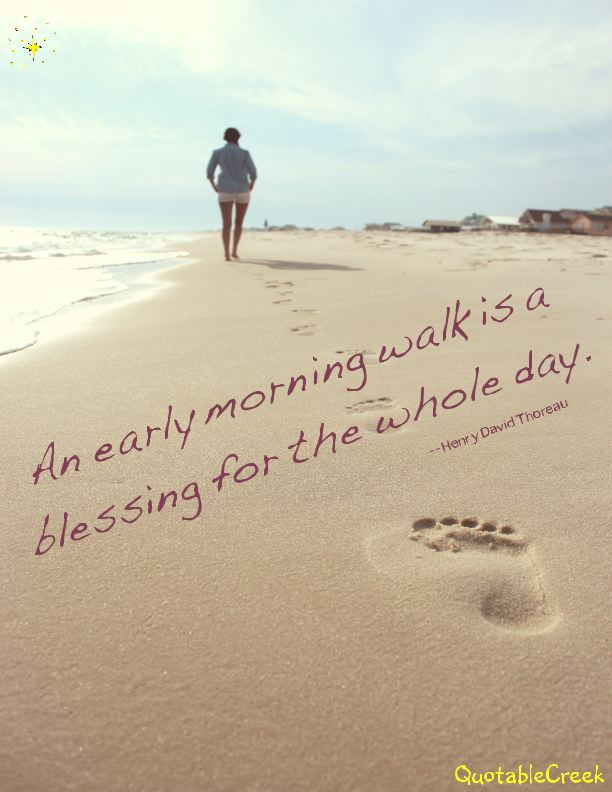
There is something magical about walking at sunrise. The world is waking up, the day is brand new, the possibilities seem endless. When that sky begins to light up, it’s like you are present for a secret fireworks display or an unveiling of a masterpiece. It is hard not to gape in awe, frankly. And that experience– awe– is powerful.
Awe can make us at once feel very small in the enormity of the universe,
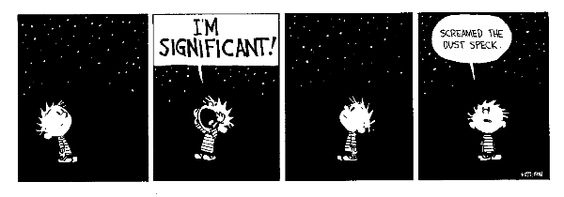
but also as if we are very special and uniquely privileged to be let in on a secret. We are part of something beautiful and mysterious and far greater than our own worries and concerns.
In fact, experiencing awe changes us, making us more generous and, maybe, even, more, ethical. That sense of being part of something far larger than ourselves is therapeutic:
Participants consistently reported that awe produced “a reduced sense of self importance relative to something larger and more powerful that they felt connected to,” says Piff. And subsequent analysis confirmed that this feeling of the “small self” was responsible for their ethical behavior. This seems to suggest that experiencing awe prompts people to help others.
And there is something pretty magical about walking, too, especially in nature. Undoubtedly, the physical benefits of walking are many. But the psychological benefits can’t be denied either.
And then there are the benefits to our creative lives. Beethoven was known for his long walks, often incorporating the sounds he heard in the woods into his compositions. In fact, many musicians, artists and philosophers swore by the benefits of walking to their creative lives.
So maybe today, the answer to the stresses facing you, the tumult of disagreement, the anxiety over the future, is to open the front door and hit the pavement or, better yet, the open trail.
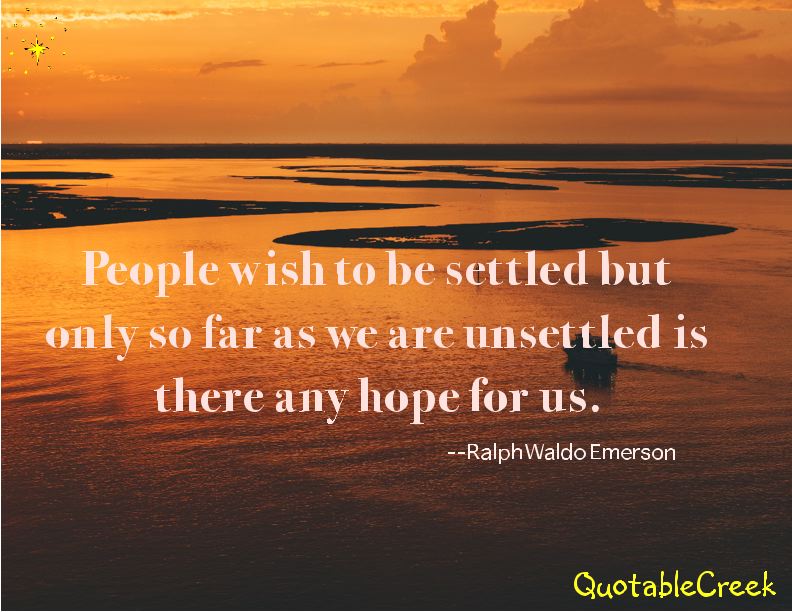
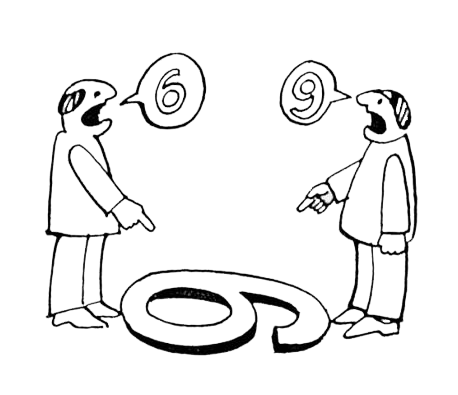
As you get older, do you think you know a lot or do you believe there is a lot that you don’t yet know? As young men and women, we think we have all the answers. But as we age, our experience shows us that there are many valid perspectives to something we thought was established. We learn that there is value in the multiple points of view in arriving at a more nuanced version of the truth. We realize that people can look at the same thing, but, because they are coming at the issue with different life experiences, they may see it differently and that both of those opinions may be true. In fact, it may well be that we have no hope of getting close to the concept of truth without the benefit of many points of view. We may be limited by the fetters of our own perceptions and filters.
In this very insightful TED talk, Pico Iyer shares his creeping realization that the more we know, the more we see we don’t know:
I don’t believe that ignorance is bliss. Science has unquestionably made our lives brighter and longer and healthier. And I am forever grateful to the teachers who showed me the laws of physics and pointed out that three times three makes nine. I can count that out on my fingers any time of night or day. But when a mathematician tells me that minus three times minus three makes nine, that’s a kind of logic that almost feels like trust.
The opposite of knowledge, in other words, isn’t always ignorance. It can be wonder. Or mystery. Possibility. And in my life, I’ve found it’s the things I don’t know that have lifted me up and pushed me forwards much more than the things I do know. It’s also the things I don’t know that have often brought me closer to everybody around me.
For eight straight Novembers, recently, I traveled every year across Japan with the Dalai Lama. And the one thing he said every day that most seemed to give people reassurance and confidence was, “I don’t know.”
“What’s going to happen to Tibet?” “When are we ever going to get world peace?” “What’s the best way to raise children?”
“Frankly,” says this very wise man, “I don’t know.”
It’s scary to admit we don’t know. We want to know. We want to believe that we are safe and that our futures are secure. We want to believe that if we behave in a certain way, it will result in predictable results.
The truth is harder. Honest people can be accused of deceit. Innocent people can die. Tragedy can strike. Relationships can fracture. But embracing uncertainty as the only truly certain thing in life can, in fact, be surprisingly grounding. Iyer continues:
Knowledge is a priceless gift. But the illusion of knowledge can be more dangerous than ignorance.
Thinking that you know your lover or your enemy can be more treacherous than acknowledging you’ll never know them. Every morning in Japan, as the sun is flooding into our little apartment, I take great pains not to consult the weather forecast, because if I do, my mind will be overclouded, distracted, even when the day is bright.
I’ve been a full-time writer now for 34 years. And the one thing that I have learned is that transformation comes when I’m not in charge, when I don’t know what’s coming next, when I can’t assume I am bigger than everything around me. And the same is true in love or in moments of crisis. Suddenly, we’re back in that trishaw again and we’re bumping off the broad, well-lit streets; and we’re reminded, really, of the first law of travel and, therefore, of life: you’re only as strong as your readiness to surrender.
In the end, perhaps, being human is much more important than being fully in the know.
Today embrace the uncertainty of life and enjoy the present moment right here in front of you. Around the corner, there may well be a surprise insight waiting to stretch you and challenge the very things you think you know. Embrace that, too.
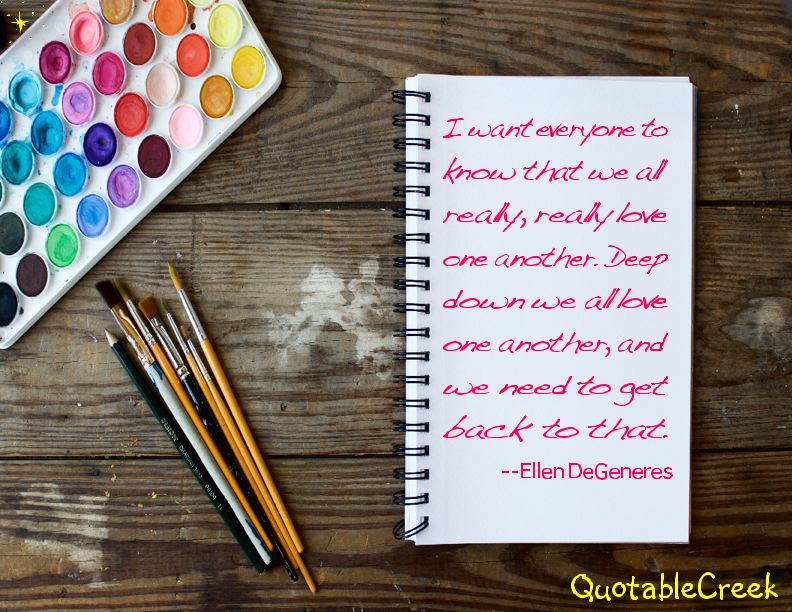
Recently Ellen DeGeneres won a People’s Choice Humanitarian Award for the tremendous work she has done across many areas of concern: bullying, natural disasters, gay rights, and so on. Underneath each of her generous gestures lies her empathetic heart and willingness to not look away, to offer her help. In her inspiring acceptance speech, Ellen wonders ‘What if there is no such thing as love, just proof of love.’ What would the world look like? What would our little corner of the world look like if it was filled with proof of love?
We may not all be able to give millions of dollars away, but each of us can approach people with kindness. We may not have a talk show, but we can each champion those without a voice. We can acknowledge the pain and suffering of others and do something to help. We can offer the encouraging word and understanding heart. We can show compassion. We can insist that, while we may not be able to stop hate, we certainly won’t spread it.
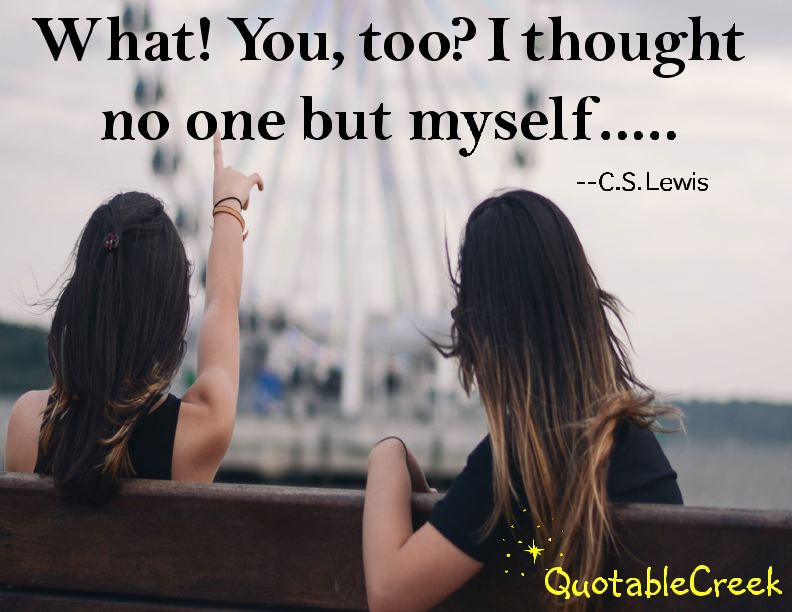
Do you remember that spark of commonality that started a friendship? What was the spark? A shared passion, shared interest, shared way of looking at things, shared love? Something joined the two of you together and made you realize you were not alone in this universe, but that there was someone like you out there. And then as that friendship blossomed, shared moments helped cement the bond. Mutual concern continues to uplift you both. Trust lets you relax into the friendship and blossom. Today, celebrate your friendships. Without friendships, where would any of us be?
In a difficult and challenging place and time, we are called to continue the fight for what is right and good, true and just, honorable and compassionate. We push forward– listening more, caring more, giving more. We can drown out the din and listen to our hearts which strive for peace and harmony, communion, reconciliation. We must hold fast to our principles and to hope as our anchor, especially now.
 Fear is a crippler.
Fear keeps us from trying, from stepping out, from baring our hearts. It makes us smaller than we are. When we fear heartbreak, we flee from love or offer only a superficial version of ourselves, practically guaranteeing the relationship will lack depth. When we fear failure, we don’t try, or try only halfheartedly, practically assuring a lack of success. When we fear others, we keep to those we perceive to be like ourselves, thereby ensuring that we will not enrich our relationships with diversity.
Fear tells us to cower, to not show up, to be less than we know we are.
We build our fears and then act in ways that reinforce them until they become self-fulfilling prophecies. Our fears become so much a part of our reality that we begin to accept them as ‘truth’. But when we analyze our fears critically, we can harness our inner strength and step through our limitations. So the antidote to fear may well be truth, cultivating it relentlessly, forcing ourselves to examine our fear with a microscope, and dissect it into harmless pieces.
In this powerful TED talk, Issac Lidsky explores how his fears that blindness would rob him of joy and meaning in his life fell aside when he critically examined them and chose to push through those fears to a full and rich life– lacking in sight, but abundant in vision. He urges us to push through our own fears, challenge our assumptions, and correct our misconceptions:
Hold yourself accountable for every moment, every thought, every detail. See beyond your fears.Recognize your assumptions. Harness your internal strength. Silence your internal critic. Correct your misconceptions about luck and about success. Accept your strengths and your weaknesses, and understand the difference. Open your hearts to your bountiful blessings.
Your fears, your critics, your heroes, your villains — they are your excuses, rationalizations, shortcuts,justifications, your surrender. They are fictions you perceive as reality. Choose to see through them.Choose to let them go. You are the creator of your reality. With that empowerment comes complete responsibility.
Today, consider what’s holding you back and challenge your assumptions.
 QuotableCreek.com